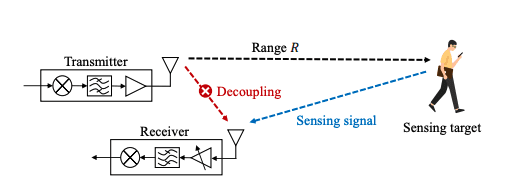
In an article titled Realizing Quantum Wireless Sensing Without Extra Reference Sources published on April 29, 2025, researchers Mingyao Cui, Qunsong Zeng, Zhanwei Wang, and Kaibin Huang present a self-heterodyne architecture for Rydberg Atomic Receivers (RAREs) that removes the need for external reference sources, thereby improving bandwidth capabilities and reducing system size.
The study introduces self-heterodyne technology for Rydberg Atomic REceivers (RAREs), eliminating the need for external reference signals while enabling wider bandwidth support compared to conventional heterodyne methods. A two-stage algorithm achieves near-optimal range estimation, approaching the Cramer-Rao lower bound. Additionally, power-trajectory design optimizes sensitivity through time-varying transmission power, with practical implementations accounting for transmitter constraints. Numerical results demonstrate the superiority of these designs in wireless communication applications.
In an era where invisible electromagnetic fields permeate our environment, the quest for precise detection tools has never been more crucial. Enter Rydberg atoms, a groundbreaking innovation in quantum sensing that is unlocking unprecedented capabilities in measuring these elusive phenomena.
The Science Behind Rydberg Atoms
Rydberg atoms, named after physicist Johannes Rydberg, are unique due to their high sensitivity to external electromagnetic fields. When an atom is excited to a Rydberg state, its outermost electron is pushed far from the nucleus, making it highly susceptible to even minute changes in electric or magnetic fields. This property allows researchers to detect weak signals with extraordinary precision. By exposing these atoms to controlled environments and measuring their responses, scientists can extract detailed information about the fields they encounter. This sensitivity not only enhances detection capabilities but also improves selectivity, enabling the identification of specific signals amidst noise or interference.
Applications in Radar and Electrometry
The potential applications of Rydberg-based sensing are vast and transformative. In radar technology, traditional systems often struggle with detecting weak signals, limiting their effectiveness. By integrating Rydberg atoms into radar systems, researchers have demonstrated the ability to detect weaker signals with greater accuracy. This advancement could lead to improvements in surveillance, navigation, and communication technologies.
Additionally, Rydberg atoms are being explored for use in electrometry—the measurement of electric fields. Their high sensitivity makes them ideal for detecting subtle changes in electric fields, which could be invaluable in environmental monitoring, medical imaging, and the development of advanced communication systems.
A New Framework for Quantum Sensing
To further enhance the capabilities of Rydberg-based sensing, researchers have developed a novel graph-based paradigm called RydIQule. This framework provides a new way to model and analyze the interactions between Rydberg atoms and their environment, enabling more efficient data processing and improved accuracy in signal detection. By leveraging the unique properties of Rydberg atoms within this framework, scientists can better understand complex systems and develop more sophisticated sensing technologies.
Looking Ahead
The potential applications of Rydberg-based quantum sensing are vast and varied. From improving radar systems to advancing medical diagnostics, this technology has the potential to revolutionize numerous fields. As research continues, we can expect further advancements that could evolve across various industries, offering new ways to interact with and understand our invisible electromagnetic world.
In conclusion, Rydberg atoms represent a significant leap forward in quantum sensing, promising to enhance our ability to detect and measure the unseen forces around us.
👉 More information
🗞 Realizing Quantum Wireless Sensing Without Extra Reference Sources: Architecture, Algorithm, and Sensitivity Maximization
🧠 DOI: https://doi.org/10.48550/arXiv.2504.21234