

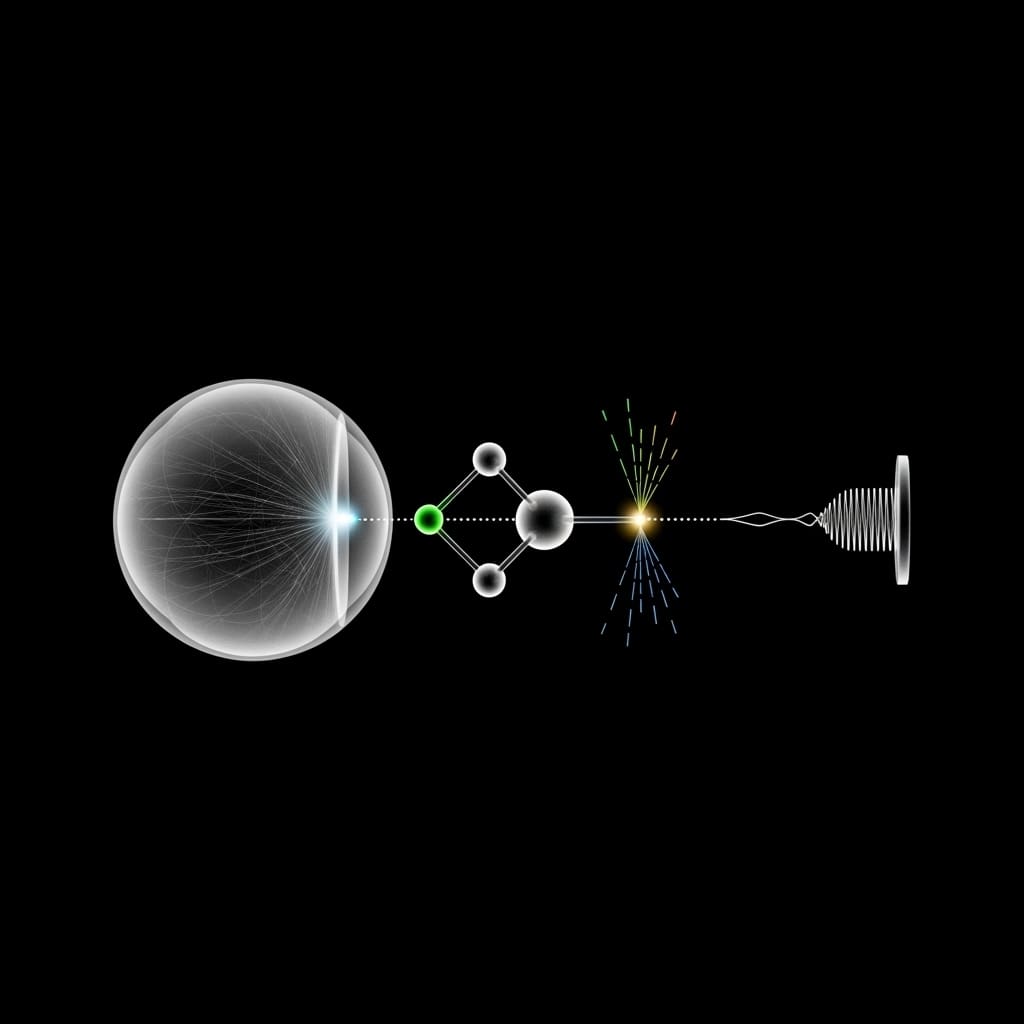
Hybrid molecular cavity optomechanical systems represent a promising frontier in science and technology, offering the potential for strong light-matter interactions and enhanced system control, and Jian Tang, Baijun Li, and Bin Yin from Hunan Normal University, alongside Ran Huang and Franco Nori from RIKEN and The University of Michigan, now demonstrate a significant step forward in this field. Their research focuses on achieving robust photon blockade, a phenomenon where only one photon can occupy a system at a time, under a wide range of conditions. The team successfully realises near-perfect optomechanical photon blockade even at room temperature, a result notable for its resilience to environmental factors and dissipation, and importantly, their method relaxes the need for extremely precise timing typically required for observing this effect. This achievement paves the way for exploring novel quantum effects within these hybrid systems and opens exciting possibilities for applications in advanced sensing, non-classical light generation, and precision photonic measurements.
Molecular cavity optomechanical systems, offering ultrahigh vibrational frequencies and strong light-matter interactions, promise advancements in quantum science and technology. Introducing metallic nanoparticles into micro-cavities creates hybrid systems that enhance optical quality factors and system tunabilities, enabling scalable and controllable quantum platforms. Researchers have developed a method to realize robust photon blockade, a strong form of photon antibunching, even under varying conditions, by combining.
Cavity Optomechanics, Quantum Light, and Entanglement
The research field encompasses quantum optics, cavity optomechanics, and related topics such as photon blockade, entanglement, and non-classical light generation. Investigations center on controlling the interaction between light and mechanical motion within cavities to achieve quantum phenomena. A key focus is generating and manipulating non-classical states of light, including preventing multiple photons from occupying a cavity simultaneously, creating macroscopic superpositions of mechanical motion, emitting multiple correlated photons, and reducing quantum noise in electromagnetic fields. Generating and characterizing entanglement between photons and mechanical oscillators is also central, utilizing both continuous-variable and discrete-variable approaches.
Parametric amplification, a process enhancing light-matter interactions, frequently appears as a recurring technique. Researchers also explore utilizing plasmonic nanostructures to enhance light-matter interactions at the nanoscale and engineer systems to overcome noise and dissipation. Some studies investigate using these systems as platforms for quantum information processing.
Robust Room-Temperature Photon Blockade Demonstrated
Researchers have demonstrated a robust method for achieving photon blockade, the suppression of simultaneous photon emission, within a hybrid molecular cavity optomechanical system. By integrating a molecular cavity with metallic nanoparticles and employing degenerate parametric amplification, the team generated near-perfect photon blockade even at room temperature, a significant improvement over previous approaches. This system exhibits resilience against temperature fluctuations and optical dissipation, maintaining nonclassical photon statistics under practical conditions. The achieved photon blockade combines characteristics of both conventional and unconventional forms, eliminating temporal oscillations and allowing for reliable observation without requiring extremely high temporal resolution in detection.
This simplification improves the feasibility of experimental verification and opens avenues for exploring quantum phenomena, including light-motion entanglement, optomechanical cat states, and correlated states. While the system’s performance is robust, researchers acknowledge that environmental factors still influence it and that improving coherence times would be beneficial. Future work will focus on expanding the functionalities of these hybrid optomechanical architectures for integrated quantum photonics and exploring applications in quantum sensing and precision measurement.
👉 More information
🗞 Robust photon blockade with hybrid molecular optomechanics
🧠 ArXiv: https://arxiv.org/abs/2512.21035