

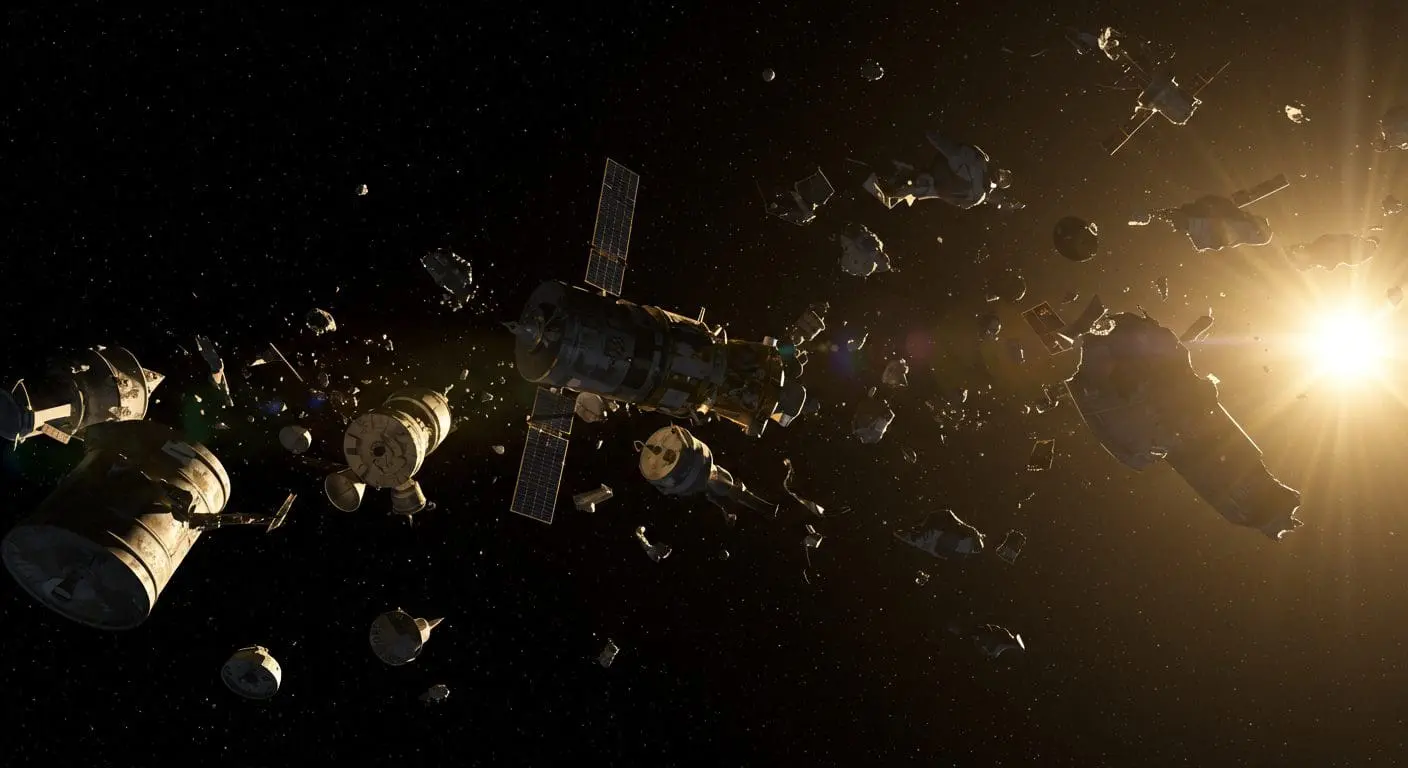
The proliferation of space rocket launches has led to a growing concern about the risks posed by uncontrolled re-entries of rocket debris into the Earth’s atmosphere, with a 26 percent annual probability of such events occurring in busy airspace.
As the number of rocket launches and flights continues to increase, the likelihood of disruptions to air traffic and potential collisions with aircraft becomes more pronounced, underscoring the need for policymakers to take proactive measures to mitigate these risks.
With over 2,300 rocket bodies still in orbit and a record 120 uncontrolled re-entries in 2024, the space industry’s practice of exporting risk to airlines and passengers has sparked calls for collective international action to adopt new standards for controlled re-entry designs, which could significantly reduce the potential for harm and minimize the economic costs associated with airspace closures and flight diversions.
Introduction to Space Rocket Junk and Air Traffic Disruption
The increasing number of rocket launches and flights has raised concerns about the potential disruption of air traffic due to space rocket junk re-entering the atmosphere. A recent study published in Scientific Reports found that there is a 26% annual chance of space rocket junk passing through busy flight areas, highlighting the need for policymakers to take action. The research emphasizes that while the probability of debris hitting an aircraft is low, the potential for uncontrolled space rocket junk to disrupt flights and create additional costs for airlines and passengers is significant.
The study’s findings are based on a decade of data and took into account the number of aircraft on the busiest day of 2023. The researchers matched this data to the probability of rocket pieces re-entering above various levels of air traffic, using Denver, Colorado as their peak air traffic density reference point. With over 2,300 rocket bodies still in orbit and a record 120 uncontrolled rocket debris re-entries in 2024, the risk of space rocket junk disrupting air traffic is becoming increasingly pressing. As air passenger numbers are expected to increase by almost 7% in 2025, according to the International Air Transport Association, the need for effective mitigation strategies becomes more urgent.
The issue of space rocket junk disrupting air traffic is not new, with instances such as the 2022 closure of parts of Spanish and French airspace due to a re-entering 20-tonne piece of rocket. The recent explosion of a SpaceX Starship shortly after launch also demonstrated the challenges of having to suddenly close airspace, with authorities setting up a “keep out” zone for aircraft that had to turn around or divert their flight path. These events highlight the importance of addressing the problem of uncontrolled space rocket junk re-entering the atmosphere and the need for policymakers to take collective international action.
The Risk of Space Rocket Junk Re-Entering the Atmosphere
When objects such as satellites are launched into space, large portions of the rockets are often left in orbit. If these leftover rocket stages have a low enough orbit, they can re-enter the atmosphere in an uncontrolled way, posing a risk to air traffic. Most of the material will burn up in the atmosphere, but many pieces still hurtle towards the ground, potentially disrupting flights and creating additional costs for airlines and passengers. The researchers calculated the probability of rocket junk re-entering the atmosphere over different air traffic density thresholds, finding that regions with 10% of the peak air traffic density or higher have a 26% chance per year of rocket junk re-entering.
The study’s findings suggest that the airspace over southern Europe, which was closed in 2022, is only 5% of the peak air traffic density, and there is a 75% chance of a re-entry in such regions each year. This highlights the need for effective mitigation strategies to be implemented, particularly in areas with high air traffic density. The researchers also calculated the annual probability of space rocket junk colliding with an aircraft at one in 430,000, emphasizing that while the risk is low, it is still a concern that needs to be addressed.
The issue of space rocket junk re-entering the atmosphere is complex and requires a comprehensive approach to mitigate its risks. The study’s authors suggest that the space industry could use rockets designed to re-enter the atmosphere in a controlled way after use, crashing harmlessly into the ocean. This solution would require collective international action, with countries and companies that launch satellites working together to adopt new standards for rocket design.
Mitigating the Risks of Space Rocket Junk
The researchers argue that uncontrolled rocket body re-entries are a design choice, not a necessity, and that the space industry is effectively exporting its risk to airlines and passengers. To mitigate this risk, the industry could use rockets designed to re-enter the atmosphere in a controlled way after use, reducing the likelihood of disruption to air traffic. This solution would require significant investment and cooperation from countries and companies involved in satellite launches.
The study’s authors emphasize that collective international action is necessary to address the problem of space rocket junk re-entering the atmosphere. Governments need to come together and adopt new standards for rocket design, requiring companies to use controlled re-entry systems. This would ensure that the risk of space rocket junk disrupting air traffic is minimized, and airlines and passengers are protected from potential harm.
The implementation of controlled re-entry systems would also have environmental benefits, reducing the amount of debris in orbit and minimizing the risk of damage to satellites and other spacecraft. The study’s findings highlight the need for a comprehensive approach to mitigating the risks of space rocket junk, one that involves cooperation and collective action from governments, companies, and international organizations.
Recommendations
To address the problem of space rocket junk, governments and international organizations should work together to develop and implement new standards for rocket design, requiring companies to use controlled re-entry systems. This would ensure that the risk of space rocket junk disrupting air traffic is minimized, and airlines and passengers are protected from potential harm. The study’s findings also highlight the need for continued research and monitoring of space rocket junk, to better understand its risks and develop effective mitigation strategies.
Ultimately, addressing the problem of space rocket junk requires a comprehensive approach that involves cooperation and collective action from governments, companies, and international organizations. By working together, we can minimize the risks associated with uncontrolled space rocket junk and ensure space activities’ safe and sustainable development.
External Link: Click Here For More


