

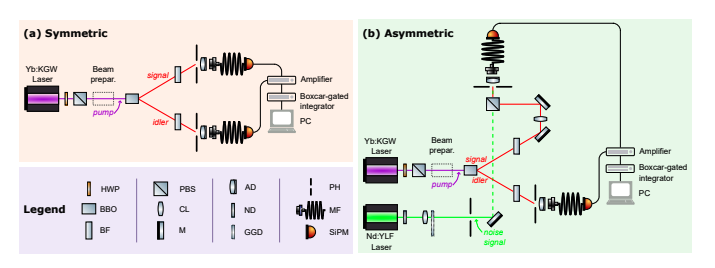
Researchers demonstrate secure communication utilising robust states of light in the mesoscopic intensity regime. The system employs photon-number-resolving detectors to discriminate binary thermal signals and twin-beam states to enhance security against eavesdropping, offering a scalable approach for robust communication.
The pursuit of secure communication continually demands innovation in quantum technologies, particularly methods that balance robustness against practical limitations. Current protocols frequently rely on either coherent light states or highly fragile single photons, presenting challenges for real-world implementation. Researchers are now exploring alternative approaches utilising states of light with higher photon numbers, known as the mesoscopic regime, to enhance resilience. A new study, detailed in a forthcoming publication, proposes a hybrid discrimination strategy employing photon-number-resolving detectors and twin-beam states to achieve both reliable state identification and a degree of security against eavesdropping. This work is the result of collaboration between Luca Razzoli, affiliated with both the Center for Nonlinear and Complex Systems and the INFN Sezione di Milano, and Alex Pozzoli and Alessia Allevi, both from the Como Lake Institute of Photonics, all within the Department of Science and High Technology at the University of Insubria. Their research, titled “Hybrid discrimination strategy based on photon-number-resolving detectors and mesoscopic twin-beam states”, presents a scalable method for secure communication operating within this mesoscopic intensity domain.
Secure communication continually faces challenges in reliably distinguishing between signal states, often relying on either coherent light or delicate single photons. Recent work presents a hybrid communication strategy operating within the mesoscopic intensity regime, combining robustness with security, and demonstrates reliable state discrimination by measuring the mean photon number of binary thermal signals, a classical property of light. Simultaneously, the system leverages the inherent sensitivity of twin-beam states to eavesdropping attacks for enhanced security.
The core innovation lies in bridging the gap
The core innovation lies in bridging the gap between purely classical and quantum communication. Researchers employ photon-number-resolving detectors to access this mean photon number, enabling accurate differentiation between signal states. Twin beams, which are correlated photon pairs exhibiting quantum entanglement, serve as the communication channel, introducing non-classical correlations that enhance security. Unlike conventional quantum key distribution protocols which rely on the transmission of single photons, this approach operates with thermal states, making it more resilient to channel loss and detector imperfections.
This work demonstrates a viable strategy for state discrimination that balances robustness and security. The sensitivity of twin-beam states to eavesdropping attempts arises from the correlated nature of the photons; any attempt to intercept or measure the photons disrupts this correlation, making the eavesdropping detectable. Scalability represents a key strength, and the methodology readily extends to accommodate more complex signal alphabets beyond simple binary encoding.
Researchers validate the system’s performance through rigorous statistical analysis, utilising methods such as the bootstrap and jackknife resampling techniques to assess uncertainty in the measurements. Performance evaluation incorporates Receiver Operating Characteristic (ROC) curves and the Area Under the ROC Curve (AUC) to quantify the system’s diagnostic ability, effectively measuring its capacity to distinguish between signal states. Adherence to established metrological standards, including the JCGM 101 guide for uncertainty expression and Monte Carlo methods, ensures the reliability of the results. Publications detail the experimental setup, data analysis techniques, and performance metrics, providing a comprehensive understanding of the system’s capabilities. Future research directions include exploring different modulation schemes, optimising the system parameters, and investigating the potential for integration with quantum key distribution protocols.
👉 More information🗞Hybrid discrimination strategy based on photon-number-resolving
🗞 Hybrid discrimination strategy based on photon-number-resolving detectors and mesoscopic twin-beam states
🧠 DOI: https://doi.org/10.48550/arXiv.2506.10160


