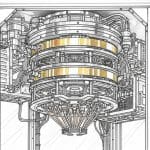
Steve Brierley from Riverlane announced the deployment of Deltaflow 2 at Oak Ridge National Laboratory, a real‑time quantum error‑correction system that decodes quantum data with ultra‑low latency and is engineered to support millions of reliable quantum operations per second, ultimately scaling to trillions. The installation, slated for completion by the end of September 2025, represents the first dedicated real‑time QEC integration at a U.S. national laboratory and demonstrates how quantum processors can be coupled with high‑performance computing infrastructure to achieve a 10,000‑fold reduction in system errors. Travis Humble, director of the Quantum Science Center at Oak Ridge National Laboratory, underscored that QEC tools will enable the lab to evaluate pathways for integrating quantum computing with HPC systems and to identify the critical components needed for scalable hybrid architectures.
On 4 September 2025 Riverlane, a UK‑based quantum‑error‑correction specialist, announced that its Deltaflow 2 platform would be installed at Oak Ridge National Laboratory (ORNL) in Tennessee, with the installation slated for completion by the end of September 2025. Deltaflow 2 is the world’s first dedicated real‑time quantum‑error‑correction (QEC) platform, engineered to decode syndrome data from quantum processors with ultra‑low latency. Built on Riverlane’s proprietary QEC chip stack and compiler, the system is capable of correcting millions of quantum operations per second, with a long‑term goal of supporting trillions of reliable quantum operations (QuOps). Its specialised semiconductor core performs syndrome extraction and error decoding in real time, preventing error accumulation during long or complex quantum programmes.
The platform will be woven into ORNL’s Oak Ridge Leadership Computing Facility (OLCF) HPC ecosystem, which hosts the Frontier supercomputer. As a dedicated QEC layer within this hybrid quantum‑HPC architecture, Deltaflow 2 frees the quantum processor from error‑handling duties, allowing it to focus on algorithmic tasks while the classical subsystem manages fault tolerance. Researchers will be able to evaluate how classical high‑performance computing resources can support quantum processors in real time, and a subsequent phase is planned to link Deltaflow 2 directly to quantum hardware, making it the first real‑time QEC integration at a U.S. national laboratory.
“This milestone brings us closer to utility‑scale quantum computing and shows that the world’s top national labs are acting now to make quantum computing useful,” said Steve Brierley, Founder & CEO of Riverlane. “By demonstrating real‑time QEC as a core layer in high‑performance computing, we are proving that large‑scale, fault‑tolerant quantum systems can be built on existing HPC infrastructure.” “QEC tools will enable the laboratory to evaluate pathways for integrating quantum computing with HPC systems and examine the critical components needed to create scalable hybrid computing systems,” added Travis Humble, director of the Quantum Science Center at ORNL. Deltaflow 2 builds on Riverlane’s earlier collaboration with ORNL on the QStone project, which produced the first benchmarking suite for quantum-HPC integration. The new platform delivers the performance required to advance that work, reinforcing Riverlane’s role as a trusted partner in hybrid quantum-HPC development.
Embedded beneath the Frontier supercomputer, Deltaflow 2 will correct millions or billions of errors per second in real time – a capability essential for scaling fault‑tolerant quantum operations to the throughput of a petascale machine. This integration demonstrates the feasibility of scaling fault‑tolerant quantum operations to the demands of the world’s most powerful computing platforms, accelerating progress toward practical, real‑world applications that require the combined strengths of quantum and classical processors.
The collaboration underscores the Department of Energy’s strategy to advance national science, energy, and security priorities through quantum technology. By integrating Deltaflow 2 into OLCF, researchers can test hybrid workloads that combine quantum and classical algorithms in a single environment, signalling a growing partnership between private quantum‑technology firms and U.S. national laboratories. The milestone brings the quantum community closer to the realization of utility‑scale quantum‑HPC systems capable of tackling problems beyond the reach of classical supercomputers alone.
Original Press Release
Source: Riverlane (corporate press release)
View Original Source