

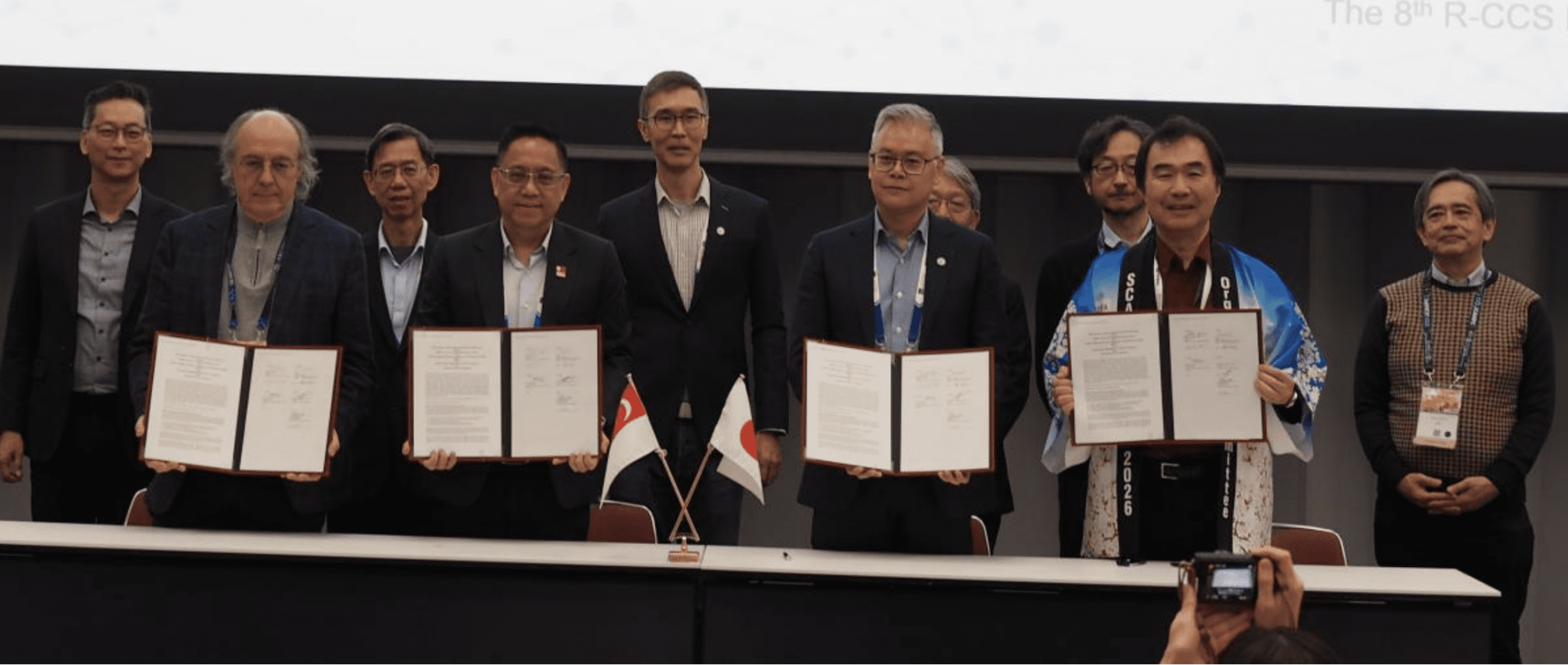
Researchers in Japan and Singapore have formalized a collaboration to accelerate the development of hybrid quantum-classical computing platforms. The RIKEN Center for Computational Science and Singapore’s National Quantum Computing Hub signed a Memorandum of Understanding to integrate RIKEN’s high-performance computing capabilities with Singapore’s expertise in quantum technologies, middleware development, and applications. This three-year partnership will focus on jointly developing and evaluating system software for these hybrid platforms, with access to both nations’ quantum-HPC resources for testing and benchmarking. “This partnership with R-CCS strengthens Singapore’s progress in hybrid computing research and development,” said Dr Su Yi, Lead Principal Investigator at NQCH, adding that combining expertise will advance applications in fields like computational biology and finance. The agreement builds upon a broader governmental commitment to quantum collaboration between Singapore and Japan.
RIKEN-NQCH MoU Advances Hybrid Quantum-HPC Collaboration
This initiative builds on a governmental agreement signed in January 2026, marking Singapore’s first quantum-specific collaboration at the government-to-government level and leveraging RIKEN’s supercomputer Fugaku alongside quantum computers supported by Japan’s New Energy and Industrial Technology Development Organization (NEDO). The partnership aims to address complex computational challenges across diverse fields, including chemistry, materials science, and fluid dynamics. The collaboration will focus on two key areas: joint development of middleware and system software for hybrid platforms, and collaborative research into quantum-HPC applications. Both R-CCS and NQCH will provide access to their respective quantum-HPC resources for testing and benchmarking, facilitating advancements in workflow management tools. Researchers will explore applications in quantum chemistry, linear systems, logistics, optimization, and even decarbonization efforts, capitalizing on the growing global interest in hybrid approaches to harness the potential of quantum computing.
NQCH’s Hybrid Quantum-Classical Computing (HQCC 1.0) programme, launched in 2025, underpins this collaboration by focusing on middleware, algorithms, and software tools. The MoU signing occurred at the 8th R-CCS International Symposium, held alongside SupercomputingAsia and the International Conference on High Performance Computing in the Asia-Pacific Region 2026 (SCA/HPCAsia 2026) in Osaka, Japan, signifying a commitment to international cooperation in the rapidly evolving field of quantum computing.
HQCC 1.0 Middleware & Application Research Focus
The current landscape of hybrid quantum-classical computing sees increasing investment in platforms designed to bridge the gap between nascent quantum processors and established high-performance computing infrastructure. This initiative is now bolstered by a three-year Memorandum of Understanding (MoU) with RIKEN’s Center for Computational Science (R-CCS), aiming to create a collaborative framework for quantum-HPC integration and application development. This partnership prioritizes joint development and evaluation of middleware and system software, specifically workflow management tools, to optimize performance across both quantum and classical resources. Collaborative research will extend to diverse application areas including quantum chemistry, fluid dynamics, logistics, optimization, and even decarbonization efforts, reflecting a broad scope of potential impact.
This partnership with R-CCS strengthens Singapore’s progress in hybrid computing research and development.
Dr Su Yi, Lead Principal Investigator at NQCH
Source: http://ml.riken.jp/


