

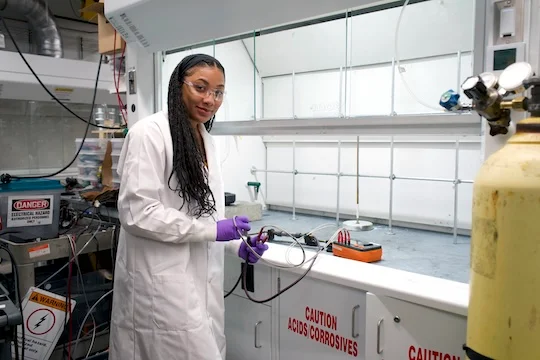
Rice University researchers have developed a method to remove per- and polyfluoroalkyl substances (PFAS) from water using flash joule heating (FJH), converting granular activated carbon into graphene. Published in Nature Water on March 31, 2025, the study led by James Tour and Phelecia Scotland demonstrates over 96% defluorination efficiency and 99.98% removal of perfluorooctanoic acid (PFOA). The process is cost-effective, sustainable, and scalable and eliminates secondary waste while producing valuable materials like graphene.
Per- and polyfluoroalkyl substances (PFAS), often referred to as forever chemicals due to their persistence in the environment, pose significant threats to ecosystems and human health. These chemicals are widely used in various industries, leading to contamination of water sources and soil. A groundbreaking study by researchers at Rice University has developed a novel method to address this critical issue.
The innovative technique, known as flash joule heating (FJH), involves subjecting granular activated carbon (GAC) saturated with PFAS to a rapid high-voltage flash. This process generates intense heat, effectively breaking down the strong carbon-fluorine bonds that make PFAS so persistent. The result is the conversion of PFAS into inert fluoride salts, rendering them harmless.
The FJH method has demonstrated remarkable efficiency, achieving a 96% defluorination rate and removing 99.98% of perfluorooctanoic acid (PFOA), one of the most concerning PFAS compounds. Importantly, this process avoids the production of harmful byproducts, making it an environmentally sound solution.
Beyond its effectiveness in PFAS remediation, the FJH method offers a unique dual benefit. The GAC used in the process is transformed into high-quality graphene, a material with extensive applications in electronics, energy storage, and composite materials. This upcycling of waste not only enhances the economic viability of the treatment but also contributes to reducing environmental impact.
The implications of this research extend far beyond the laboratory. The scalability of the FJH method suggests its potential application in large-scale water treatment facilities and environmental remediation projects. Its ability to handle a variety of PFAS compounds underscores its versatility as a solution to the pressing issue of chemical contamination.
This breakthrough by Rice University researchers represents a significant step forward in addressing the global challenge of PFAS pollution, offering both an effective remediation strategy and a sustainable approach to resource utilization.
More information
External Link: Click Here For More


