Quantum neuromorphic computing (QNC) is a revolutionary approach to machine learning that leverages the inherent system dynamics of quantum hardware. This cutting-edge field has the potential to solve complex problems that are currently beyond the reach of classical computers. At its core, QNC relies on a building block called quantum perceptrons (QPs), which can compute based on the analog dynamics of interacting qubits with tunable coupling constants.
These QPs have been shown to be theoretically capable of producing any unitary operation, making them computationally more expressive than their classical counterparts. By mitigating barren plateaus and implementing new techniques, researchers are unlocking the full potential of QNC, paving the way for a new era in machine learning that combines the power of quantum computing with the flexibility of neuromorphic architectures.
Quantum neuromorphic computing (QNC) is a quantum machine learning (QML) subfield that leverages the inherent system dynamics to run on contemporary noisy quantum hardware. This approach has the potential to realize challenging algorithms in the near term, making it an exciting area of research. However, one key issue in QNC is the characterization of the requisite dynamics for ensuring expressive quantum neuromorphic computation.
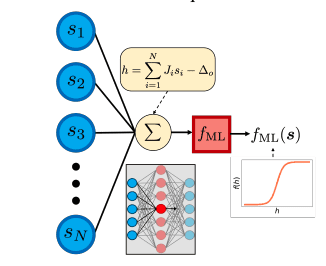
Researchers have proposed a building block for QNC architectures called quantum perceptrons (QPs) to address this challenge. These QPs compute based on the analog dynamics of interacting qubits with tunable coupling constants. Theoretical studies have shown that QPs are a quantum equivalent to the classical perceptron, a simple mathematical model for a neuron that is the building block of various machine learning architectures. Moreover, QPs are theoretically capable of producing any unitary operation, making them computationally more expressive than their classical counterparts.
The proposed QPs are based on the concept
The proposed QPs are based on the concept of interacting qubits with tunable coupling constants. This approach allows for the computation of complex quantum dynamics using a restricted number of resources. Theoretically, QPs can be used to produce any unitary operation, making them a powerful tool for QNC architectures. Furthermore, researchers have introduced a technique called entanglement thinning to mitigate barren plateaus in QPs, which is essential for their practical implementation.
The effectiveness of QPs has been demonstrated by applying them to various quantum machine learning (QML) problems, including calculating the inner products between quantum states, energy measurements, and time-reversal. These applications showcase the potential of QPs in solving complex quantum problems efficiently. Additionally, researchers have discussed potential implementations of QPs and how they can be used to build more complex QNC architectures.
QNC is a new paradigm that combines the principles of quantum mechanics with machine learning algorithms. This approach has the potential to deliver noiseresilient, scalable algorithms for QML implementations in the near term. By leveraging the inherent system dynamics, QNC can run on contemporary noisy quantum hardware, making it an attractive area of research.
Quantum memristors have already been used to realize quantum versions of realistic neuronal models such as the Hodgkin-Huxley model. However, these models are too complex to serve as scalable building blocks for QNC architectures. A more straightforward approach aims to quantize a mathematical model inspired by single neuron dynamics, such as the perceptron.
The theoretical foundations of QPs have been established
The theoretical foundations of QPs have been established through rigorous mathematical derivations. These studies demonstrate that QPs are computationally more expressive than their classical counterparts, making them a powerful tool for QNC architectures. Future directions include exploring the practical implementation of QPs and developing more complex QNC architectures using these building blocks.
Conclusion
Quantum neuromorphic computing (QNC) is an exciting area of research that leverages the inherent system dynamics to run on contemporary noisy quantum hardware. The proposed quantum perceptrons (QPs) are a building block for QNC architectures, offering a theoretical framework for computationally more expressive and scalable algorithms. By mitigating barren plateaus in QPs using entanglement thinning, researchers can unlock their full potential in solving complex quantum problems efficiently. As the field continues to evolve, we can expect to see new applications and implementations of QPs that will further push the boundaries of QNC.
Publication Date: 2024-12-16
Authors: Rodrigo Araiza Bravo, Taylor L. Patti, Khadijeh Najafi, Xun Gao, et al.
Source: Quantum Science and Technology
DOI: https://doi.org/10.1088/2058-9565/ad9fa4