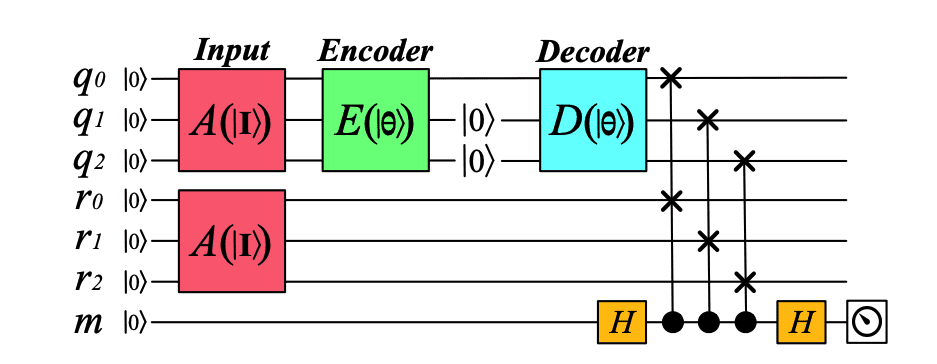
On April 17, 2025, researchers Jason Zev Ludmir, Sophia Rebello, Jacob Ruiz, and Tirthak Patel introduced Quorum, an innovative unsupervised anomaly detection framework utilizing quantum autoencoders to function without traditional model training. This development tackles key challenges in identifying anomalies across sectors including finance, healthcare, and energy.
Detecting mission-critical anomalies in finance, healthcare, and energy is vital. While quantum computing aids machine learning tasks, training models remains challenging due to gradient calculation issues, especially for anomaly detection requiring unsupervised methods. To address this, Quorum—a novel anomaly detection framework—was developed as the first unsupervised approach that operates without training, offering a practical solution for industries reliant on real-time anomaly identification.
Applications in Anomaly Detection
Anomaly detection is a critical area where quantum computing is making significant strides. Identifying outliers in large datasets—such as detecting fraudulent transactions or system failures—requires both speed and accuracy. Recent research has shown that hybrid classical-quantum systems, which combine traditional computers with quantum processors, can enhance anomaly detection capabilities. These systems leverage quantum algorithms to identify patterns that may elude classical methods.
For instance, a study published in Quantum Machine Intelligence demonstrated how a hybrid approach improved fraud detection in financial transactions by enhancing pattern recognition. This application underscores the potential of quantum computing to address challenges where subtle anomalies can have significant consequences.
Financial Forecasting and Risk Management
The finance sector has been an early adopter of quantum computing, particularly in portfolio optimization and risk assessment. Traditional methods often rely on simplifying assumptions due to the complexity of financial systems. In contrast, quantum algorithms can process vast amounts of data without such constraints, offering more accurate predictions.
A 2024 study by Quantum Machine Intelligence highlighted how quantum-enhanced models could improve financial forecasting by incorporating a wider range of variables and scenarios. This approach not only enhances accuracy but also reduces computational time, making it feasible for real-time decision-making. Additionally, researchers have explored the use of quantum computing in optimizing investment portfolios, where evaluating multiple outcomes simultaneously provides a significant advantage over classical methods.
Energy Sector Innovations
The energy sector is another area benefiting from quantum computing. As power grids grow more complex and renewable energy sources become more prevalent, managing energy distribution efficiently has become critical. Quantum algorithms can optimize energy flow in power grids, reducing waste and improving reliability.
For example, researchers at the University of California have developed quantum-enhanced models to analyze and predict energy demand with greater accuracy. These models account for variables such as weather patterns, consumer behavior, and grid infrastructure, providing a comprehensive view that classical systems cannot match. This capability is particularly valuable in balancing the intermittent nature of renewable energy sources with consistent energy demand.
Challenges and Future Prospects
Despite these advancements, significant challenges remain. Quantum computing hardware is still in its infancy, with limited scalability and error rates that can affect accuracy. Additionally, the high cost of quantum processors and the need for specialized expertise pose barriers to widespread adoption.
However, ongoing research is addressing these issues. Innovations in quantum error correction and the development of more robust hardware are expected to make quantum computing more accessible in the coming years. As the technology matures, its applications are likely to expand into new domains, further solidifying its role as a transformative force.
👉 More information
🗞 Quorum: Zero-Training Unsupervised Anomaly Detection using Quantum Autoencoders
🧠 DOI: https://doi.org/10.48550/arXiv.2504.13113