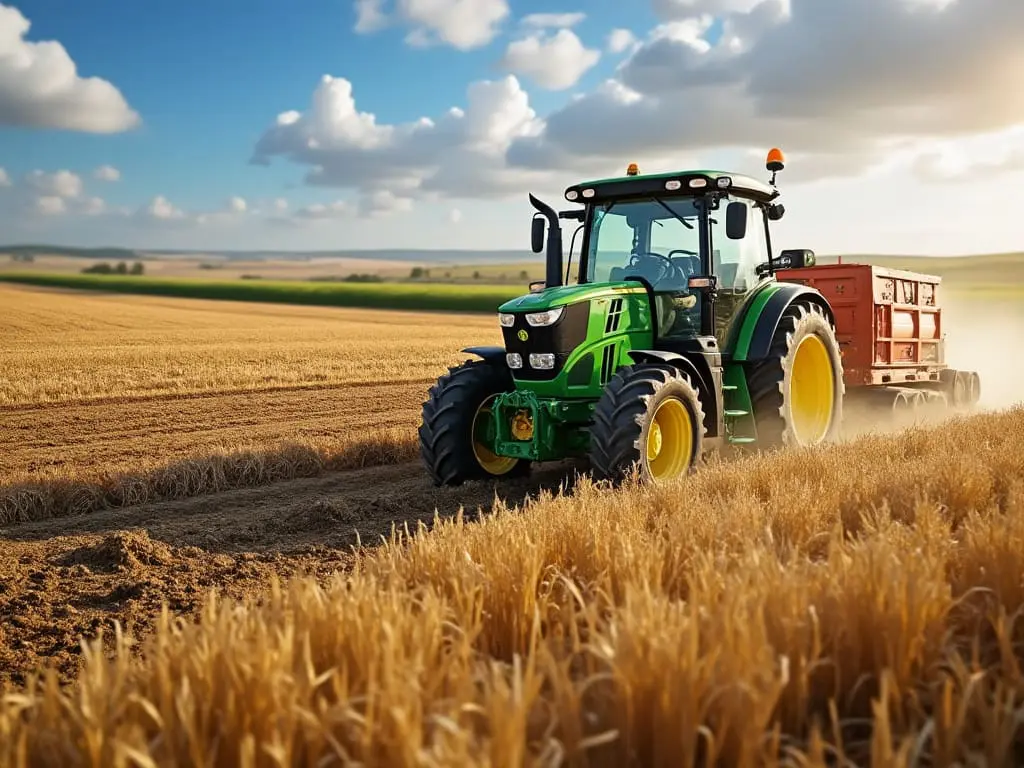
The world’s food production is on the cusp of a revolution, thanks to the emergence of Large Language Model (LLM) technology. This innovative tool has the potential to transform agriculture operations by optimizing crop yields, reducing waste, and improving overall efficiency. By leveraging AI-powered tools, farmers can make informed decisions about irrigation, fertilization, and pest control, leading to improved food security and reduced greenhouse gas emissions.
Researchers are exploring various applications of LLM technology in agriculture, including precision farming tools that analyze data from weather patterns, soil conditions, and crop health. Mobile robots equipped with grippers can also be designed for effective harvesting, minimizing waste and improving overall crop yields. However, the adoption of this technology raises concerns about job displacement and the need for workers to adapt to new roles.
As the agriculture industry faces challenges related to climate change, soil degradation, and water scarcity, LLM technology offers a promising solution. With careful consideration of factors such as terrain, crop type, and gripper design, mobile robots can be developed for effective harvesting. The potential benefits of using LLM technology in agriculture operations are numerous, including improved efficiency, reduced waste, and increased food security.
However, the next steps for researching the application of LLM technology in agriculture involve addressing key areas of focus, such as developing more precise and efficient harvesting systems and exploring ways to apply LLM technology in precision farming tools. The adoption of this technology also raises potential implications for workers in agriculture operations, including job displacement and the need for adaptation to new roles.
Ultimately, the successful integration of LLM technology into agriculture operations will depend on addressing the associated risks and challenges, such as data security and privacy concerns, significant investment requirements, and worker dislocation. As researchers continue to explore the potential benefits and implications of this technology, one thing is clear: the future of food production has never looked brighter.
Can LLM Technology Revolutionize Agriculture Operations?
The impact of Large Language Model (LLM) technology on agriculture operations is a topic of growing interest. The mention of LLM, specifically ChatGPT, has become ubiquitous worldwide, spanning various industries, art, movies, product storytelling, and more since its unveiling in March 2023. Several analysts have noted that the impact of this technology is akin to the steam revolution of the 1700s, suggesting a profound transformation.
The release of ChatGPT by OpenAI marked a
The release of ChatGPT by OpenAI marked a significant shift in technological paradigms and social dynamics, influencing everything and everywhere within our communities and businesses. The basic theory behind this technology may not be complex, but its impact is substantial. Consequently, numerous companies and countries are interested in developing or utilizing related technologies.
LLM, specifically ChatGPT, employs a learning system that combines supervised, unsupervised, and reinforcement learning to train language models. This technology has the potential to revolutionize various sectors, including agriculture, by providing insights into complex processes through data analysis.
How Can LLM Technology Be Applied in Agriculture Operations?
The application of LLM technology in agriculture operations is a promising area of research. By studying the influence of LLMs on various fields, researchers can understand how these models can be adapted for use in agriculture. This includes reviewing several LLMs and their capabilities in editing works, providing advice, code development using huge data, and more.
The introduction of LLM technology into agriculture, particularly vegetable harvests, is a critical area of study. Vegetable harvests are among the current issues facing agricultures worldwide. The design of mobile robots and grippers for effective vegetable harvesting is an essential aspect of this research. This involves simulating before designing and producing mobile robots with hardware (HW) and software (SW).
What Are the Current Issues in Agriculture Operations?
Agriculture operations face numerous challenges, particularly in vegetable harvests. The current issues include the aging farmer population and the lack of young generations entering agriculture sites. Farmers must continue to work despite these challenges, as farming is essential for food production. Governments are trying to innovate with various methods but often fail to reach farmers.
Vegetable agriculture is crucial but lacks technology due to its complex process. This paper aims to address this issue by studying the impact of LLM technology on agriculture operations and simulating before designing mobile robots and grippers for perilla harvests in Korean country sites.
How Can Mobile Robots and Grippers Be Designed for Effective Vegetable Harvesting?
The design of mobile robots and grippers for effective vegetable harvesting is a critical aspect of this research. After simulation, the next step involves designing and producing mobile robots with HW and SW. This requires a deep understanding of the complex process involved in vegetable harvests.
The use of LLM technology can provide insights
The use of LLM technology can provide insights into optimizing the design of mobile robots and grippers for perilla harvests. By analyzing data from various sources, researchers can identify patterns and trends that can inform the development of more effective harvesting systems.
What Are the Benefits of Using LLM Technology in Agriculture Operations?
The use of LLM technology in agriculture operations has several benefits. Firstly, it can provide insights into complex processes through data analysis, allowing for more informed decision-making. Secondly, it can help optimize the design of mobile robots and grippers for effective vegetable harvesting.
Furthermore, the use of LLM technology can improve communication between farmers, researchers, and policymakers, leading to better collaboration and more effective solutions. By leveraging the capabilities of LLMs, agriculture operations can become more efficient, productive, and sustainable.
Can LLM Technology Help Address the Current Issues in Agriculture Operations?
Yes, LLM technology has the potential to help address the current issues in agriculture operations. By providing insights into complex processes through data analysis, it can inform the design of more effective harvesting systems. Additionally, it can improve communication between stakeholders, leading to better collaboration and more effective solutions.
However, further research is needed to fully understand the impact of LLM technology on agriculture operations and to develop practical applications that address the current issues facing farmers and policymakers.
Publication Date: 2024-09-10
Authors: Dong Hwa Kim and Seong Min Bak
Source: IARJSET
DOI: https://doi.org/10.17148/iarjset.2024.11904