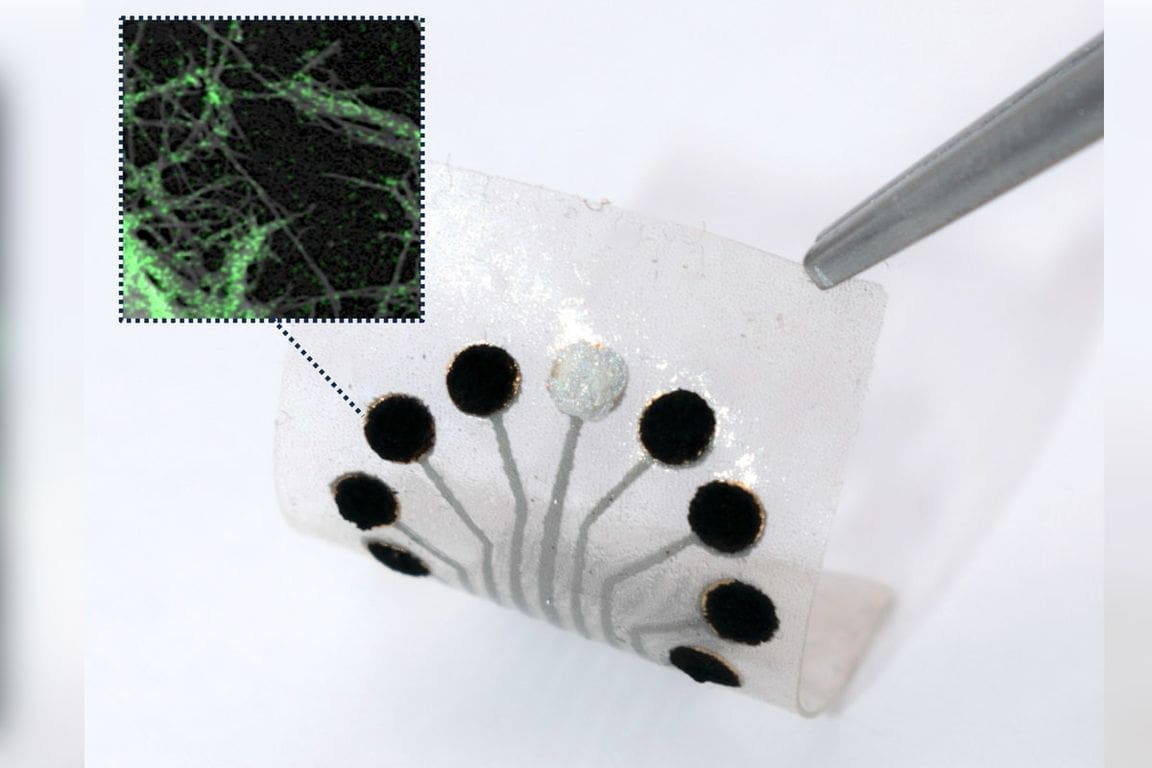
A UCLA-led research team has developed a novel sensor platform that mimics natural metabolic pathways to monitor metabolites in real-time continuously. The technology, described in a study published in Proceedings of the National Academy of Sciences, uses enzymes and cofactors to detect over 800 metabolites, far exceeding traditional sensors’ capabilities. This advancement enables continuous tracking of multiple metabolites across various biological settings, offering potential applications in disease diagnosis, drug development, fitness optimization, and understanding complex biological systems such as gut-brain interactions.
The UCLA team has pioneered an innovative approach to metabolite detection using sensors that integrate enzymes, cofactors, and single-wall carbon nanotubes. This technology enables real-time monitoring of metabolites, offering significant potential across various fields including medicine, fitness, industry, and biomedical research.
These sensors provide continuous metabolite monitoring, crucial for understanding health conditions such as epilepsy and metabolic disorders. By employing non-invasive methods, they reduce patient discomfort while enhancing early detection capabilities, paving the way for improved treatments.
Traditional challenges in metabolite monitoring include accuracy and responsiveness in dynamic environments. The UCLA sensors overcome these issues by leveraging enzymes and nanotubes, which enhance sensitivity and speed, ensuring precise and timely detection of metabolites.
The gut-brain axis is a focal point for understanding mental health, as the gut produces neurotransmitters affecting mood and cognition. These sensors facilitate continuous monitoring of metabolites, potentially revealing how diet and stress influence mental well-being, offering new avenues for research and treatment.
These sensors have practical uses beyond healthcare in industries like food production and pharmaceuticals. They ensure product consistency and safety by detecting specific metabolites, enhancing quality control processes and expanding their utility beyond medical applications.
In biomedical research, the sensors support personalized medicine by tailoring treatments to individual metabolite profiles, improving efficacy and reducing side effects. Early detection of diseases through metabolite changes is another promising application, highlighting their role in preventive healthcare.
Looking ahead, miniaturization of these sensors could make them more accessible, especially for wearable devices. Artificial intelligence (AI) integration could enhance data analysis, providing deeper insights from metabolite data collected, thus expanding their analytical capabilities.
While the technology is promising, questions remain about the mechanisms of enzyme-nanotube interaction and potential limitations such as interference or sensor lifespan. Differentiation between various gut microbiome metabolites and risks of cross-reactivity are also areas needing exploration.
The UCLA sensors represent a significant advancement with broad applications in healthcare, fitness, industry, and research. While further technical details and real-world testing would enhance understanding, their potential to revolutionize health monitoring is undeniable, offering hope for improved diagnostics and personalized treatments.
More information
External Link: Click Here For More