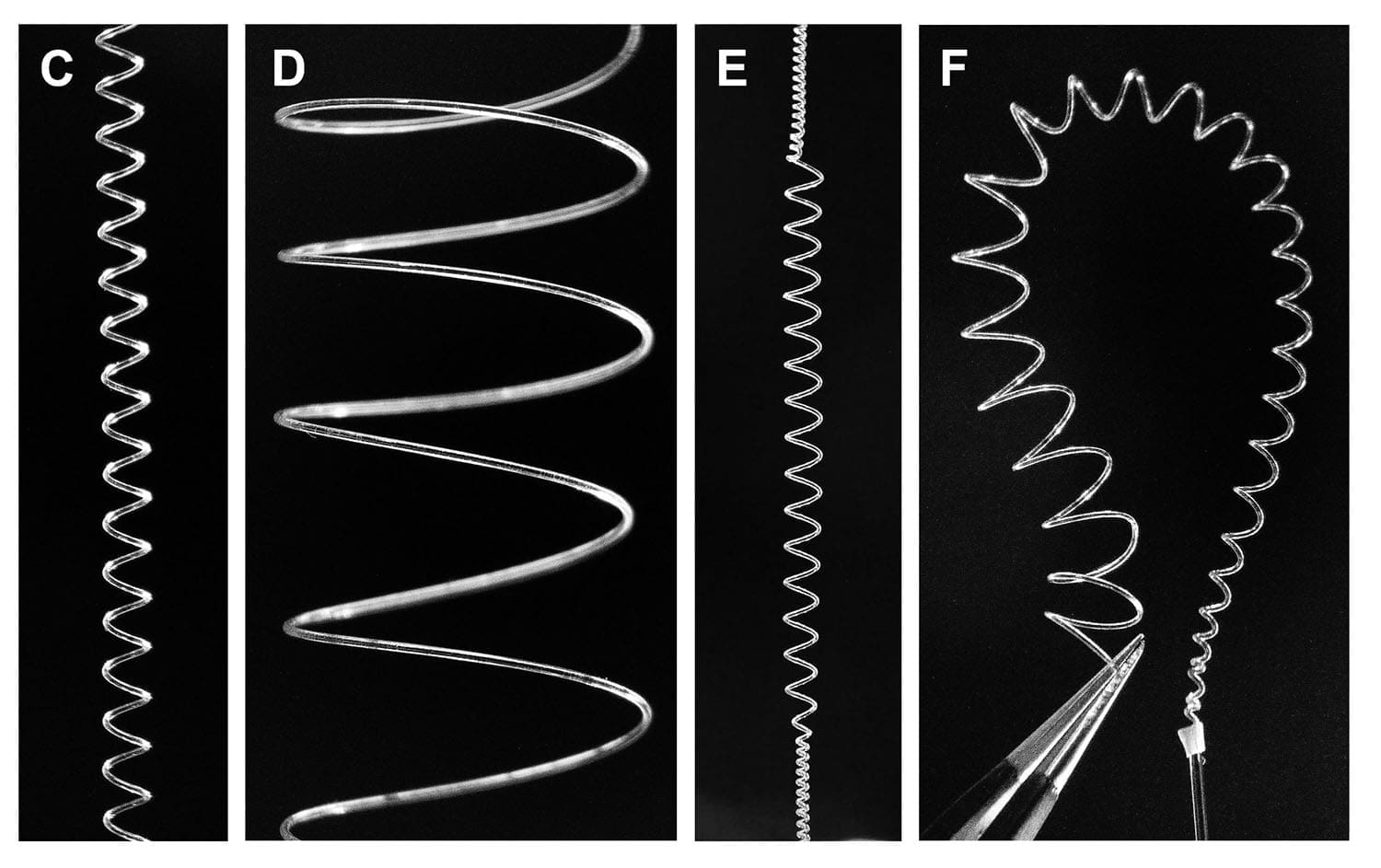
Researchers at The University of Texas at Dallas have developed a novel, cost-effective method for fabricating artificial muscles without using a mandrel, addressing previous limitations in production. This innovation enables the creation of high-spring-index polymer fibers that can stretch up to 97% of their original length, with applications ranging from temperature-adjusting jackets to mechanical energy harvesting. The process involves twisting individual fibers and plying them together to form springlike coils, eliminating the need for a spindle and reducing costs. This advancement could facilitate the commercialization of adaptive clothing and other technologies reliant on artificial muscles.
Innovative Fabrication Method for Artificial Muscles
Researchers at The University of Texas at Dallas have developed an innovative fabrication method for artificial muscles, eliminating the need for a mandrel and significantly reducing costs. This new approach, detailed in a study published in Science, allows for the creation of high-spring-index coiled polymer fibers that are both flexible and efficient.
The mandrel-free process involves twisting individual fibers below their coiling threshold and then plying them to form springlike coils. Each fiber acts as a temporary mandrel for others during this process, resulting in a structure that is more efficient and less wasteful than previous methods. This technique not only reduces material waste but also lowers production costs, making it a viable option for large-scale applications.
The artificial muscles produced using this method can stretch up to 97% of their original length, offering versatility in design and functionality. Their high spring index makes them ideal for use in smart textiles, such as jackets that adapt to environmental changes, and energy harvesting devices that convert mechanical energy into electrical power.
This advancement holds significant potential for commercialization across various industries. The elimination of the mandrel not only streamlines production but also opens avenues for further innovation in material design and application.
Applications in Robotics and Adaptive Clothing
The development of these artificial muscles has opened new possibilities in robotics, where flexibility and adaptability are crucial. Potential applications include advanced prosthetics and soft robotics, where the ability to mimic natural muscle movement could revolutionize the field.
In adaptive clothing, these materials can respond dynamically to environmental changes, such as temperature or pressure. For instance, jackets could automatically regulate warmth by tightening or loosening fibers based on external conditions, enhancing comfort and functionality in performance wear.
Carbon Nanotube Yarns for Energy Harvesting
The mandrel-free fabrication method has also enabled advancements in the production of carbon nanotube yarns. These materials demonstrate exceptional potential for energy harvesting due to their high flexibility and efficiency in converting mechanical energy into electrical power through piezoelectricity.
The twisting and plying process allows for greater control over the yarn’s properties, enabling tailored spring indexes that optimize performance for specific applications. This approach results in durable materials capable of generating electricity under various mechanical stresses, making them suitable for integration into wearable devices or other systems requiring continuous power supply.
This method represents a substantial improvement over traditional fabrication techniques by offering higher efficiency and reduced environmental impact. The ability to produce carbon nanotube yarns without mandrels opens new possibilities for advancing energy-harvesting technologies, particularly in applications where flexibility, durability, and sustainability are critical.
More information
External Link: Click Here For More