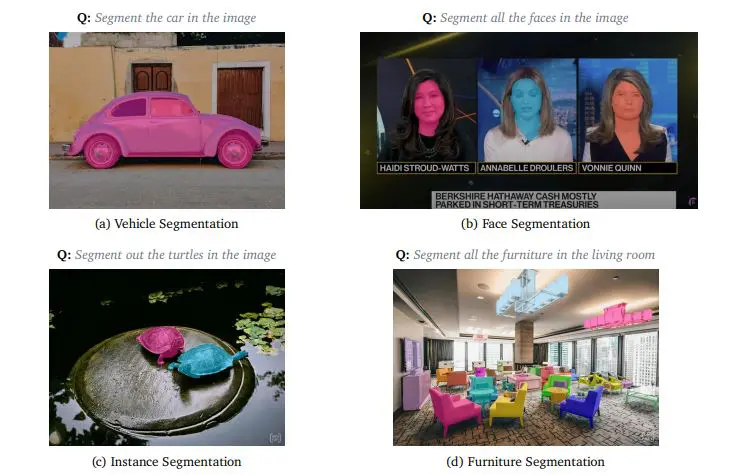
Visual artificial intelligence takes a significant step forward with the introduction of Orion, a novel framework developed by N Dinesh Reddy and Sudeep Pillai. This system moves beyond simply understanding images, instead actively engaging with the visual world to perform complex tasks, much like a human would. Orion achieves this by combining the strengths of neural perception with symbolic execution, allowing it to orchestrate a range of specialized vision tools, such as object detection and geometric analysis, to complete multi-step workflows. The resulting agent demonstrates competitive performance on challenging benchmarks and represents a transition towards production-grade visual intelligence, enabling autonomous visual reasoning and active problem-solving.
Tool Orchestration for Visual Reasoning
This research introduces Orion, a novel visual AI system that combines the strengths of large vision-language models with the precision of specialized computer vision tools. It’s essentially an agent that can orchestrate these tools to perform complex visual tasks, rather than relying solely on internal knowledge. Orion plans which tools to use, executes them, and interprets the results, functioning as an agent capable of making decisions and adapting to changing circumstances. This approach bridges the gap between the flexibility of large models and the accuracy of dedicated computer vision tools.
Orion can create multi-step plans to solve complex visual tasks, intelligently selecting the appropriate tools for each step. The system processes both visual and textual information, demonstrating potential applications in areas like document processing, medical image analysis, accessibility enhancement, and quality control in manufacturing. This represents a significant step towards more capable and versatile visual AI systems, promising to unlock new possibilities and potentially democratizing computer vision by making sophisticated capabilities accessible to non-experts.
Neural Perception and Symbolic Execution for Agents
Scientists engineered Orion, a novel visual agent framework capable of processing and generating outputs across any modality, achieving state-of-the-art results in visual artificial intelligence. Unlike traditional vision-language models, Orion orchestrates a suite of specialized vision tools, including object detection, keypoint localization, panoptic segmentation, character recognition, and geometric analysis, to execute complex, multi-step visual workflows. This agentic architecture allows the system to tackle intricate tasks by breaking them down into manageable steps, leveraging the strengths of each specialized tool, and pioneering a method of combining neural perception with symbolic execution. To comprehensively assess Orion’s performance, scientists conducted a large-scale human evaluation comparing its outputs against those of leading models.
The evaluation methodology implemented several bias prevention measures, including double-blinding evaluators and randomizing task order, ensuring objective and reliable assessment. Ten independent evaluators assessed each task, with each receiving evaluations from at least three different reviewers, and all evaluators underwent calibration training with practice tasks to establish consistent scoring standards. The team developed a Composite Quality Score, ranging from 0 to 100%, that aggregates multiple dimensions of output quality, task completion, output accuracy, visual quality, and task appropriateness, into a single metric. Benchmark results demonstrate Orion’s superior performance across multiple vision capabilities, consistently outperforming other leading models, and revealing that its agentic architecture enables more accurate and reliable performance across diverse visual understanding tasks compared to monolithic models, with reduced hallucination and enhanced accuracy.
Orion Achieves Multimodal Visual AI Breakthrough
Scientists introduced Orion, a novel visual agent framework capable of processing and generating data across any modality, achieving state-of-the-art results in visual AI tasks. The system distinguishes itself from traditional vision-language models by orchestrating a suite of specialized computer vision tools, including object detection, keypoint localization, panoptic segmentation, optical character recognition, and geometric analysis, to execute complex, multi-step visual workflows. Experiments demonstrate Orion’s full support for image and video understanding, reasoning, and the generation of structured outputs, alongside robust tool-calling capabilities. The research team achieved comprehensive capabilities across all modalities and tasks, as evidenced by a comparative analysis against leading models.
Unlike these models, Orion delivers full support for specialized skills such as object localization, segmentation, image generation, and geometric tools typically found in dedicated computer vision applications. The framework’s multiple tool-calling capabilities enable it to tackle a wide spectrum of visual AI tasks, including extracting structured data from invoices, analyzing medical imaging, and tracking objects in video sequences. Through its agentic architecture, Orion dynamically reasons about task requirements, selects appropriate tools, and composes them into sophisticated workflows, achieving a higher degree of task success. This research redefines the capabilities of visual AI systems in complex and production-critical environments.
Orion Achieves Agentic Visual Tool Augmentation
Orion represents a significant advance in visual artificial intelligence, establishing a new framework for agentic tool-augmented reasoning. Unlike conventional vision-language models that generate descriptive outputs, this system actively orchestrates a suite of specialized computer vision tools, including object detection, segmentation, and optical character recognition, to execute complex visual workflows. The team demonstrates that this approach achieves competitive performance on established benchmarks and extends the capabilities of existing models towards production-grade visual intelligence, enabling automated tasks such as product inspection with measurements and defect detection. The research acknowledges limitations in tool selection accuracy and long-horizon planning, where performance declines in complex, multi-step workflows.
Future work will focus on improving tool selection through learning from historical data and cost-aware strategies, as well as enhancing the system’s ability to maintain coherence and revise decisions over extended sequences. The team also recognises the computational cost associated with complex workflows and multiple large language model calls, identifying optimisation as an ongoing area of investigation. Beyond technical performance, the development of Orion has broader implications, potentially democratising access to sophisticated computer vision capabilities and fostering greater interpretability and trust through transparent execution traces, while also highlighting the importance of responsible development and ethical considerations regarding privacy and potential misuse.
🗞 Orion: A Unified Visual Agent for Multimodal Perception, Advanced Visual Reasoning and Execution
🧠 ArXiv: https://arxiv.org/abs/2511.14210