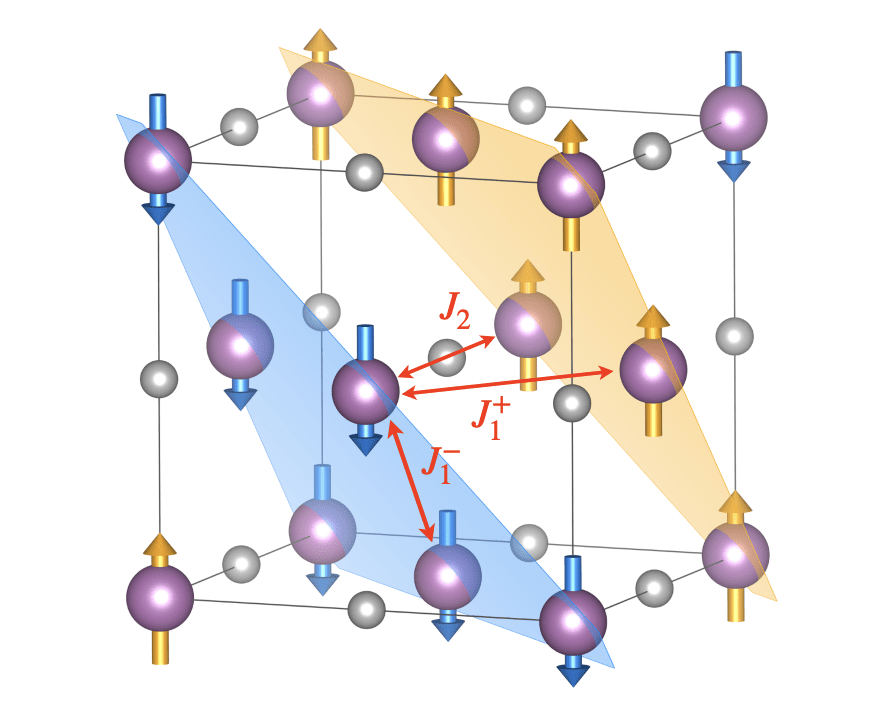
Understanding the behaviour of magnetic materials is crucial for developing future technologies, and accurately modelling their spin excitations remains a significant challenge. Flaviano José dos Santos from PSI, Luca Binci from the University of California Berkeley, and Guido Menichetti from the University of Pisa, alongside their colleagues, address this by comparing three advanced computational methods for determining magnetic properties in nickel oxide and manganese oxide. The team’s research benchmarks the accuracy of these state-of-the-art techniques, which calculate magnetic exchange parameters and magnon dispersions, essentially, how spin waves propagate through the materials. Their findings demonstrate that a method involving time-dependent density-functional perturbation theory closely aligns with experimental neutron scattering data, offering a more reliable approach for studying and ultimately designing improved magnetic materials than alternative computational techniques. This work contributes to the development of robust tools for predicting and understanding the behaviour of magnetic materials, paving the way for advancements in data storage and communication technologies.
Spin Waves and Advanced Magnetic Material Analysis
Spin-wave excitations, also known as magnons, are fundamental to understanding the behavior of magnetic materials and govern their response to external stimuli. A comprehensive understanding of spin-wave dynamics is crucial for developing advanced magnetic technologies, including data storage, spintronics, and magnetic sensors. Recent advances in experimental techniques now allow researchers to probe spin-wave dynamics with unprecedented resolution, but interpreting these results requires sophisticated theoretical models. This research addresses the need for a more accurate and efficient theoretical framework for investigating spin-wave dynamics in magnetic materials, aiming to provide a detailed understanding of the factors governing spin-wave spectra and establish a predictive capability for designing novel magnetic materials with tailored properties.
NiO and MnO Magnetic Interactions Investigated
This research details a first-principles investigation into the magnetic properties of Nickel Oxide (NiO) and Manganese Oxide (MnO). The study utilizes Density Functional Theory (DFT) combined with advanced computational techniques to calculate exchange parameters and magnon dispersions, aiming to provide a detailed understanding of the magnetic behavior of these materials. Calculations were based on DFT, employing pseudopotentials and a plane-wave basis set, and the DFT+U approach was implemented to address strong on-site Coulomb interactions. Rigorous convergence criteria were applied to ensure accurate results, and the AiiDA infrastructure ensured that all calculations were well-documented and reproducible. Expected outcomes include accurate values for exchange parameters, detailed magnon dispersion curves, and a comprehensive understanding of the magnetic interactions and dynamic magnetic response in NiO and MnO.
Accurate Magnetism Modeling Benchmarks Key Methods
Researchers have achieved a significant advancement in accurately modeling the behavior of magnetic materials, crucial for developing future technologies like improved data storage and spintronics. Understanding spin excitations has proven challenging due to limitations in standard computational methods, so this study benchmarks several state-of-the-art techniques to determine the most reliable approach for predicting magnetic properties. The team compared methods for calculating magnetic exchange parameters and magnon dispersions in nickel oxide and manganese oxide, demonstrating that time-dependent perturbation theory, combined with a model based on derived parameters, aligns remarkably well with experimental data obtained from neutron scattering. This finding highlights the need for careful selection of computational techniques when modeling magnetic materials, and provides a foundation for designing more accurate and reliable computational tools.
Hubbard Correction Accurately Models Magnetic Excitations
This study presents a comparative analysis of three advanced computational methods used to model magnetic excitations in nickel oxide and manganese oxide. Researchers investigated techniques that calculate magnetic exchange parameters and magnon dispersions to determine their accuracy and reliability. The results demonstrate that time-dependent density-functional perturbation theory, combined with a Hubbard correction, aligns well with experimental neutron scattering data, providing a robust framework for understanding these materials. This research contributes to the development of dependable computational tools for studying and designing magnetic materials.
👉 More information
🗞 Comparative study of magnetic exchange parameters and magnon dispersions in NiO and MnO from first principles
🧠 ArXiv: https://arxiv.org/abs/2508.12153