The quest to reconcile general relativity with quantum mechanics continues to drive theoretical physicists towards novel approaches to quantum gravity. One promising avenue explores modifications to the standard formulation of gravity, incorporating degrees of freedom beyond those associated with spacetime distances. Recent research investigates the behaviour of ‘area-metric’ gravity, a theory which extends the conventional description by including information about the intrinsic geometry of surfaces. Johanna Borissova, from the Perimeter Institute for Theoretical Physics and University of Waterloo, Bianca Dittrich, also of the Perimeter Institute, Astrid Eichhorn from the Institute for Theoretical Physics, Heidelberg University, and Marc Schiffer from Radboud University, present their analysis of ‘renormalization group flows’ within this framework, detailed in their article, Renormalization group flows in area-metric gravity. Their work examines how the fundamental parameters of the theory evolve at different energy scales, revealing crucial insights into its potential viability as a consistent quantum theory of gravity and the decoupling of additional geometric degrees of freedom.
The pursuit of a consistent theory of quantum gravity currently motivates research beyond conventional perturbative techniques, with asymptotic safety emerging as a promising candidate for establishing a well-defined quantum gravity applicable across all energy scales. Researchers actively investigate theories incorporating fixed points within the renormalization group flow, demonstrating the critical influence of matter content on maintaining this asymptotic safety. The renormalization group is a mathematical framework used to analyse how physical quantities change with varying scales, and a fixed point represents a scale where the theory remains invariant. Calculations reveal that particle masses frequently exceed the Planck mass, effectively suppressing unwanted degrees of freedom and validating the theory’s potential as a description of gravity at the quantum level.
Ongoing investigations also explore loop quantum gravity (LQG), a theory postulating a discrete structure for spacetime at the Planck scale, and employ spin foam models, a path integral formulation of LQG. Spin foam models represent spacetime as a network of interconnected surfaces. Increasingly, numerical techniques like decorated tensor networks are utilised to probe the theory’s behaviour. Decorated tensor networks are a computational method for approximating high-dimensional quantum systems. Recent work provides numerical evidence suggesting potential phase transitions within these spin foam models, furthering understanding of the theory’s fundamental properties and offering insights into the quantum nature of spacetime. These simulations prove crucial for navigating the non-perturbative regime, where analytical solutions remain elusive, allowing researchers to explore gravity’s behaviour in extreme conditions. The non-perturbative regime refers to situations where standard approximation methods fail.
A growing trend involves combining different theoretical approaches,
A growing trend involves combining different theoretical approaches, with studies actively integrating LQG with asymptotic safety, seeking a more comprehensive framework for quantum gravity and leveraging the strengths of both theories to resolve long-standing challenges in the field. This synthesis aims to create a more robust and complete picture of quantum gravity, incorporating insights from multiple perspectives.
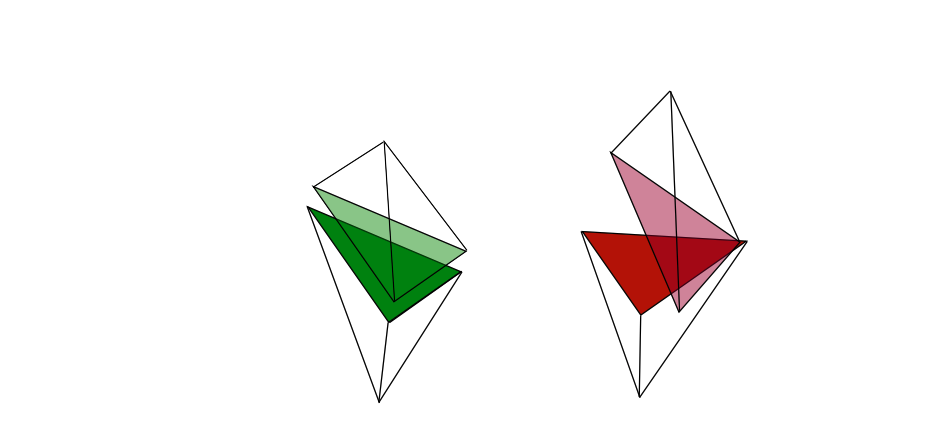
Analysis of area-metric theory, motivated by spin-foam models, reveals that shape-mismatching degrees of freedom decouple under renormalization group flow, a crucial requirement for phenomenological viability and a significant step towards a realistic quantum theory of gravity. Area-metric theory is a formulation of gravity where the fundamental variables are areas rather than metrics. Researchers present the first analysis of renormalization group flows within this framework, incorporating both the standard length-metric degrees of freedom and additional shape-mismatching degrees of freedom, and demonstrate that relevant masses generally exceed predictions based on their canonical scaling dimension. This increased relevance results in masses significantly larger than the Planck mass, effectively ensuring the decoupling of shape-mismatching degrees of freedom and validating the approach.
Furthermore, the shape-mismatching degrees of freedom split into left-handed and right-handed sectors, and analysis reveals that parity symmetry does not emerge naturally under the renormalization group flow. Researchers extracted the renormalization group flow of the Immirzi parameter from this setup, finding its beta function exhibits zeros at both vanishing and infinite Immirzi parameter values. The Immirzi parameter is a free parameter appearing in loop quantum gravity, related to the relative quantum of area and volume. This indicates complex behaviour under renormalization and provides valuable insights into the fundamental properties of the theory.
The consistent application of the renormalization group provides
The consistent application of the renormalization group provides a powerful tool for analysing the behaviour of these theories at different energy scales and assessing their consistency, contributing to a growing body of evidence suggesting that asymptotic safety may offer a consistent framework for quantising gravity. This work underscores the intricate nature of quantum gravity and the need for continued investigation using both analytical and numerical methods.
🗞 Renormalization group flows in area-metric gravity
🧠 DOI: https://doi.org/10.48550/arXiv.2507.02034