

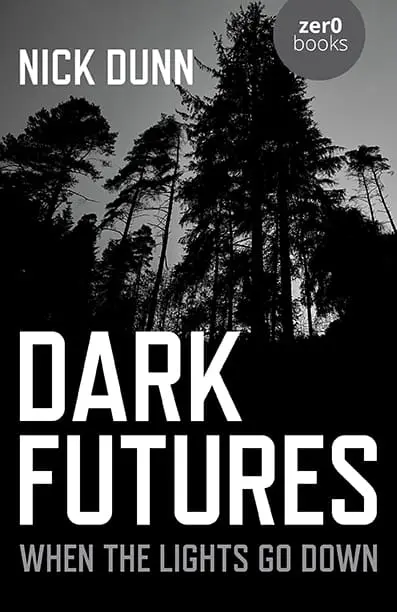
The book Dark Futures from Zer0 Books challenges conventional visions of future scenarios by reimagining darkness as a positive force for sustainability and ethical relationships with nature and technology. It argues against the typical utopian or dystopian narratives, instead presenting darkness as essential to well-being, offering a new philosophy that embraces it as an emancipatory space for creative expression and sustainable futures.
The Importance of Darkness in Reimagining Futures
Darkness, often dismissed or feared in contemporary society, plays a crucial role in our well-being, ecosystems, and planetary health. Despite its essential nature, it is frequently unwanted, overshadowed by the ubiquity of light in modern life.
Current imaginings of future societies tend to polarize into two extremes: either a gleaming, frictionless world dominated by technology or dystopian visions steeped in shadows and chaos. These narratives often overlook alternative possibilities that could offer more balanced and sustainable outcomes.
The book “Dark Futures” challenges these conventional perspectives by advocating for the embrace of darkness as a constructive force. It posits that darkness can serve as a catalyst for positive thought, creativity, and innovative approaches to future planning.
By reimagining darkness in this context, the book suggests pathways toward fostering sustainable and ethical interactions with both natural environments and technological advancements. This approach not only enriches our understanding of potential futures but also encourages a more harmonious coexistence with the world around us.
Embracing Darkness for Sustainability and Ethics
The book “Dark Futures” challenges dominant narratives about progress by reframing darkness as a vital component of sustainability and ethical living. It argues that our current fixation on light—both literal and metaphorical—has obscured the value of darkness in fostering balance and resilience. By embracing darkness, we can cultivate new ways of thinking that prioritize harmony with natural systems over relentless technological advancement.
This perspective encourages a reevaluation of how we interact with both ecological and technological landscapes. Rather than viewing darkness as a void or threat, it becomes a space for reflection, innovation, and sustainable practices. The book suggests that this shift in mindset could lead to more ethical and environmentally conscious approaches to future development, emphasizing the importance of coexistence with nature rather than domination.
Through its exploration of alternative futures, “Dark Futures” offers a nuanced critique of utopian and dystopian visions alike. It advocates for a middle ground where darkness is not merely tolerated but actively embraced as a foundation for positive change. This approach challenges readers to consider how embracing the unknown and the unlit might pave the way for more equitable and sustainable societies.
The book highlights the importance of moderation in our relationship with light and dark, both literally and metaphorically. It suggests that by fostering a balance between these forces, we can create futures that are neither environmentally catastrophic nor technologically evangelical. This approach not only enriches our understanding of potential futures but also encourages a more harmonious coexistence with the world around us.
Ultimately, “Dark Futures” invites readers to rethink their assumptions about progress and sustainability. By embracing darkness as a constructive force, we can envision alternative futures that are more balanced, ethical, and sustainable. This perspective challenges existing power structures and societal norms, offering new pathways for development that prioritize inclusivity and harmony with nature.
More information
External Link: Click Here For More


