
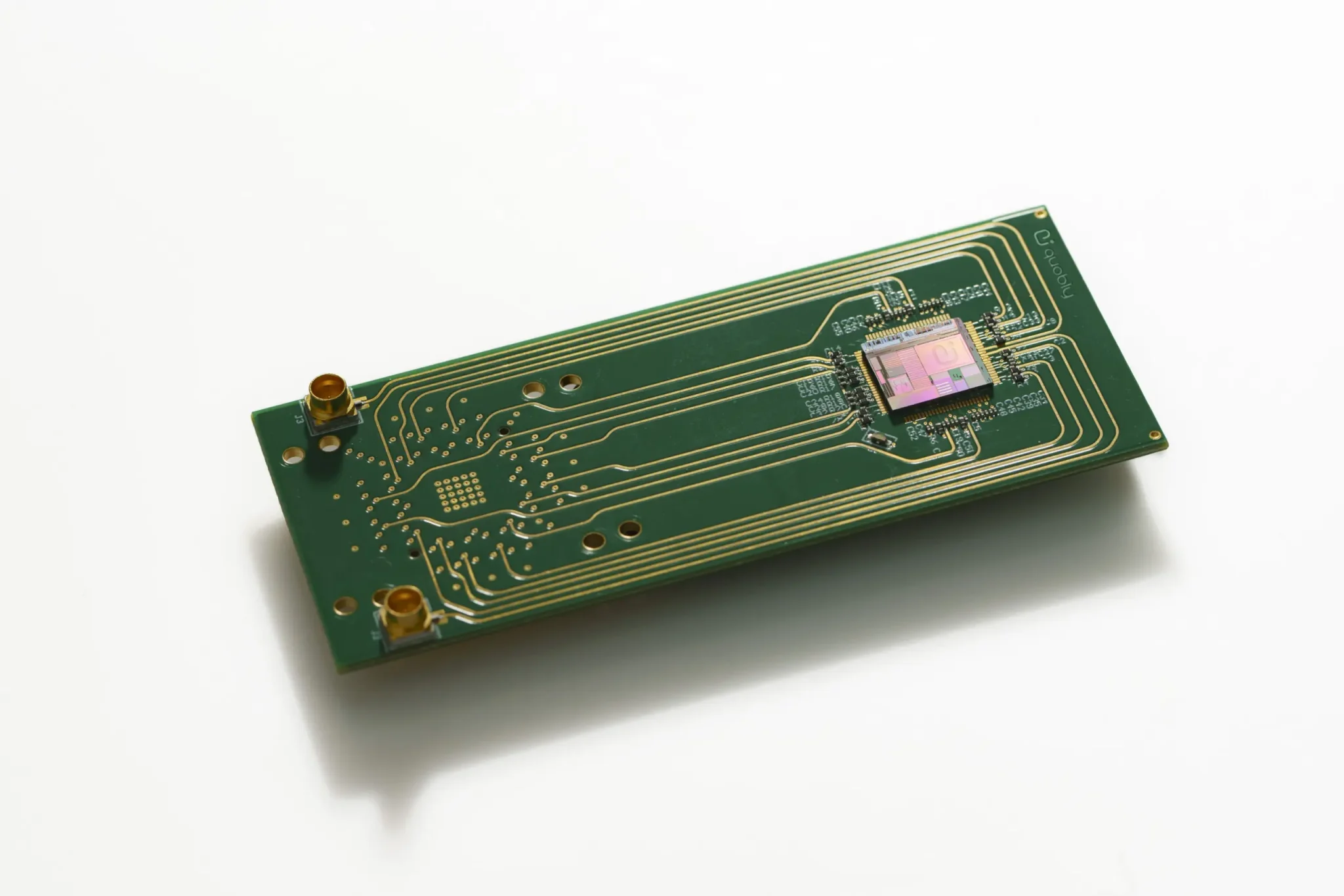
Quobly has launched a software emulator, developed in partnership with QPerfect and hosted on OVHcloud, to facilitate algorithm design and testing in preparation for its forthcoming quantum computer. This emulator, compatible with existing quantum programming languages such as Cirq and Qiskit, currently simulates between 27 and 31 error-free logical qubits and serves as a training and development platform for sectors including logistics, finance, pharmaceuticals and defence. The launch forms part of Quobly’s industrialisation strategy, underpinned by a manufacturing partnership with STMicroelectronics utilising 28nm FD-SOI processes, and aims to accelerate the transition from software development to quantum hardware deployment.
Quobly Unveils Advanced Quantum Emulator, Driving Industrialization of Scalable Quantum Computing
Quobly centres its strategy on a vertically integrated approach, uniting software development with hardware manufacturing to accelerate scalable quantum computing solutions. This integration streamlines the transition from simulated environments to physical realisation, establishing a robust value chain and enabling independent component development and testing. The emulator’s modular architecture facilitates future hardware improvements and algorithmic advancements, delivering detailed performance metrics including qubit coherence times, gate fidelities, and algorithm execution times.
The emulation environment provides developers with valuable insights into algorithm performance, supporting debugging tools that allow them to step through algorithm execution and identify errors. Quobly designed the software interface for ease of use, prioritising a streamlined workflow for algorithm development and testing while supporting a variety of programming languages and quantum computing frameworks. The company maintains the emulator’s compatibility with existing quantum software ecosystems through continuous updates and integration of new frameworks, ensuring developers can seamlessly transition their algorithms from simulation to real quantum hardware.
In commercial logistics, the emulator facilitates algorithm development for complex combinatorial optimisation, potentially improving supply chain efficiency. Quantitative finance utilises the emulator for modelling complex financial instruments and portfolio optimisation, while pharmaceutical development leverages it for drug discovery and molecular modelling. In materials science and quantum chemistry, the emulator supports simulating molecular interactions and discovering novel materials.
The emulator’s architecture prioritises a modular design, facilitating the integration of future hardware improvements and algorithmic advancements and employing a high-performance computing infrastructure to manage the computational demands of simulating a large number of qubits. Quobly actively explores advanced techniques such as distributed computing and tensor network contraction to address the challenges of scaling to 100 qubits, collaborating with leading research institutions to develop new algorithms and software tools for simulating large-scale quantum systems.
Future development focuses on enhancing the realism of the emulation environment by incorporating more detailed models of qubit behaviour and noise characteristics, including crosstalk between qubits, variations in qubit frequencies, and the impact of environmental noise. This progression from error-free simulation to realistic modelling validates algorithm performance and identifies challenges in transitioning to physical quantum computers. Quobly’s integration of manufacturing considerations into the design process streamlines the transition from software simulation to hardware realisation.
The emulator supports sovereign applications in defence and bioinformatics, allowing development and demonstration of quantum algorithms relevant to national security and enabling analysis of complex biological datasets and development of algorithms for genomic sequencing and protein folding.
More information
External Link: Click Here For More