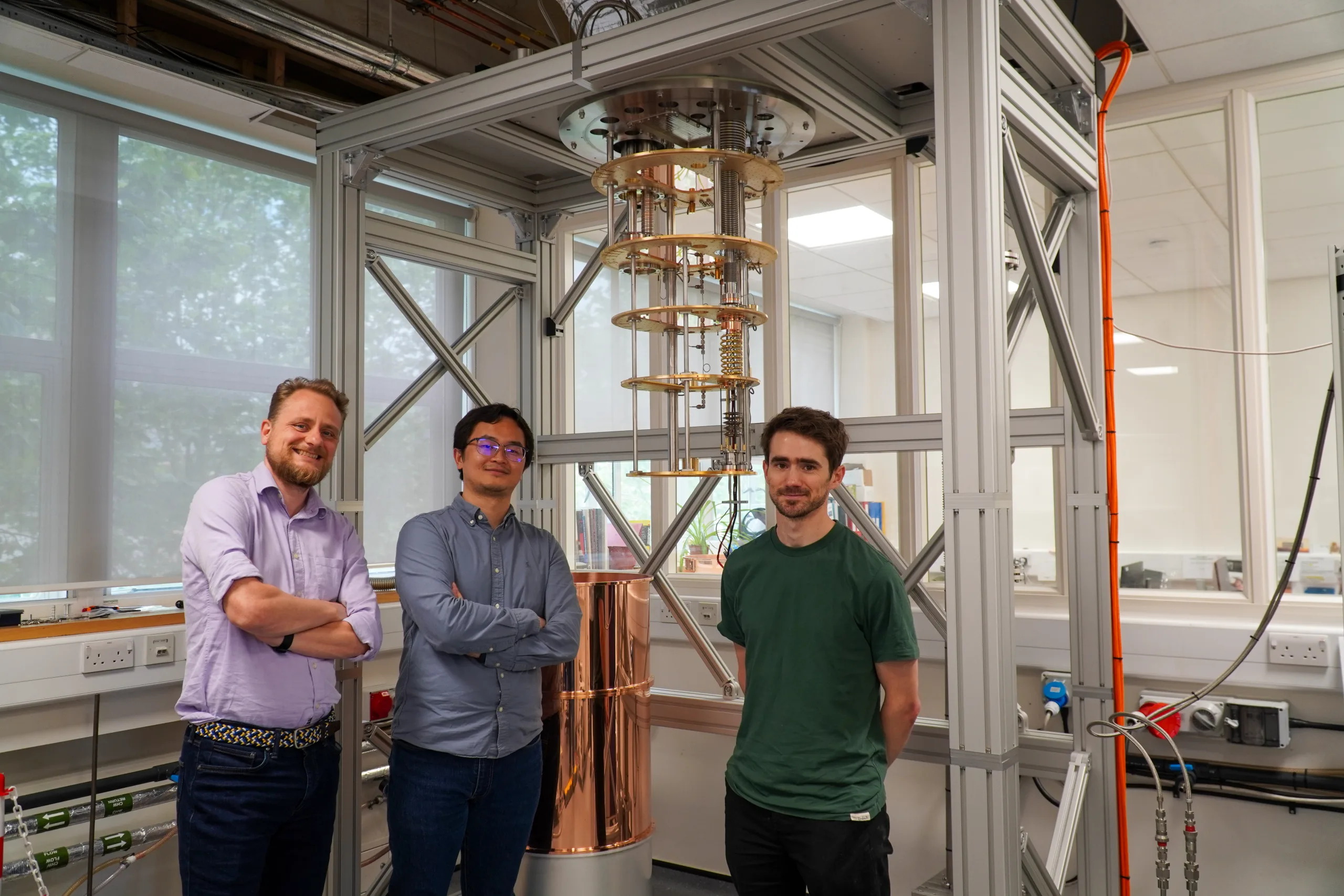
Queen Mary University of London has expanded its quantum research activities with the installation of a dilution refrigerator from Oxford Instruments NanoScience. The ProteoxMX allows the team to conduct more experiments at extremely low temperatures, aiding the development of quantum computing architectures. The research, led by Dr. Jan Mol, focuses on engineering quantum systems and could contribute to the creation of high-performing, low-power quantum computers. The ProteoxMX’s flexibility and adaptability were key factors in its selection, as it allows for easy swapping of experimental setups and minimizes downtime. The university recently hired three new lecturers to use the ProteoxMX with their students.
Quantum Research Expansion at Queen Mary University of London
Queen Mary University of London’s School of Physical and Chemical Sciences has recently enhanced its quantum research capabilities with the installation of a dilution refrigerator from Oxford Instruments NanoScience. This new addition, known as the ProteoxMX, allows the research team to conduct more experiments at millikelvin temperatures, a critical condition for the development of quantum computing architectures.
The research team, led by Dr. Jan Mol, Director of Research and Professor of Physics at Queen Mary, is focused on engineering quantum systems with atomic precision. They aim to create molecules with specific quantum properties through chemical design, a process that involves investigating single-electron transport and potentially manipulating the spin states of individual molecules. This research is fundamental to the development of quantum computing, and could potentially lead to the creation of high-performing, low-power quantum computers.
The ProteoxMX: A Tool for Advanced Quantum Research
The ProteoxMX from Oxford Instruments NanoScience is designed for researchers who require a high degree of experimental capacity and adaptability. It is particularly suited for quantum technology research, spin and superconducting quantum computing, and for multi-user, multi-experiment labs.
One of the key reasons Queen Mary chose this system is its flexibility. The ProteoxMX features a customisable, modular, side-loading Secondary Insert and multiple line-of-sight ports. These features allow for the easy swapping of experimental setups and the addition of future experiments. This means that experiments can be set up offline, reducing the fridge downtime when changing experimental configurations. This is particularly beneficial for multi-user facilities, as it minimises cool down periods when switching between experimental setups.
The Impact of Advanced Equipment on Quantum Research and Talent Attraction
The addition of the ProteoxMX to Queen Mary’s facilities not only enhances the university’s research output, but also helps attract and retain top talent in the field of quantum research. As Dr. Mol notes, the availability of advanced equipment like the ProteoxMX is essential in making universities more attractive to the talent needed to advance research, especially in a field as competitive as quantum research.
Expanding the Quantum Research Team
In line with the expansion of its quantum research activities, Queen Mary has also recently hired three new lecturers: Dr. James Thomas, Dr. Nicola McConkey, and Dr. Junjie Liu. These new hires will use the ProteoxMX with their students, further integrating this advanced equipment into the university’s research activities. This move not only strengthens the university’s research capabilities, but also provides students with hands-on experience using cutting-edge technology in the field of quantum research.
External Link: Click Here For More