No matter where you are on your quantum computer journey, you cannot go alone. You’ll need to know what quantum tools and services you can use. Whether that means quantum computing languages, quantum frameworks, or simulation frameworks. We’ve collected some more widely used quantum tools to help you navigate the quantum landscape.
This is a growing list of projects, quantum tools, languages, and frameworks. The list will be updated, so contact us if you find projects we have not already included or if you would like to see your project here. If you want to learn more about quantum programming or developing quantum computers, please follow one of our tutorials.
In the context of quantum computers, a quantum tool refers to any software, hardware, or framework that facilitates the use, development, and application of quantum computing technologies. These tools are designed to help researchers, developers, and businesses leverage the power of quantum computing for various tasks, including algorithm development, problem-solving, and simulation. Quantum tools can be broadly categorized into several types, each serving a specific purpose within the quantum computing ecosystem.
Software Development Kits (SDKs)
Quantum SDKs, such as IBM’s Qiskit, Microsoft’s Quantum Development Kit (QDK), and Google’s Cirq, provide a suite of programming tools and libraries that enable users to write, test, and optimize quantum algorithms. These kits often include quantum programming languages like Qiskit’s Python-based language, Microsoft’s Q#, and Cirq’s Python framework, which abstract the complexities of quantum operations and make it easier to develop quantum software.
Quantum Simulators
Quantum simulators are software tools that emulate the behavior of quantum computers on classical machines. They allow users to test and debug quantum algorithms without needing access to actual quantum hardware. Examples include IBM’s Aer, which is part of Qiskit, and Microsoft’s local simulator in the Quantum Development Kit. These simulators are crucial for developing and validating quantum algorithms in environments where quantum hardware may be limited or unavailable.
Quantum Hardware
Quantum hardware refers to the physical quantum processors that perform quantum computations. These include various types of qubits, such as superconducting qubits used by IBM and Google, trapped ion qubits used by IonQ, and topological qubits being developed by Microsoft. Quantum hardware is often accessible through cloud-based platforms, enabling remote execution of quantum algorithms on real quantum processors.
Cloud-Based Quantum Platforms (QCaaS)
Cloud-based quantum platforms, such as IBM Quantum Experience, Microsoft Azure Quantum, and AWS Braket, provide access to quantum computing resources over the internet. These platforms offer users the ability to run quantum algorithms on real quantum hardware or high-fidelity simulators. They typically include integrated development environments (IDEs), libraries, and tools for managing quantum experiments and workflows.
Quantum Algorithm Libraries
Quantum algorithm libraries contain pre-built quantum algorithms and functions that can be used for various applications, such as optimization, machine learning, and cryptography. These libraries help users quickly implement and experiment with quantum algorithms without having to build them from scratch. Examples include Qiskit’s Aqua and the Quantum Machine Learning Library in Microsoft’s QDK.
Error Correction and Noise Mitigation Quantum Tools
Error correction and noise mitigation tools are designed to improve the reliability and accuracy of quantum computations by addressing errors and decoherence that occur in quantum systems. These tools include error-correcting codes, algorithms for error detection and correction, and techniques for mitigating the effects of noise on quantum computations. Effective error correction is essential for scaling quantum computers to handle more complex and longer computations.
Quantum Compilers. The ultimate Power Quantum Tool
Quantum compilers translate high-level quantum algorithms written in quantum programming languages into low-level instructions that can be executed on quantum hardware. These compilers optimize quantum circuits to reduce the number of gates and improve overall performance. Examples include IBM’s Qiskit Terra and the Quil compiler used by Rigetti’s Forest platform.
In summary, a quantum tool in the context of quantum computers encompasses a wide range of software, hardware, and frameworks designed to facilitate the effective use and development of quantum computing technologies. These tools play a crucial role in advancing the field of quantum computing, enabling users to harness the potential of quantum mechanics for solving complex problems across various domains.
Quantum Tools: The List!
Qiskit
Developed by IBM, Qiskit is an open-source quantum computing software development framework. Qiskit allows users to design quantum circuits, run experiments on IBM’s quantum processors, and simulate outcomes on classical computers. The software is particularly known for its user-friendly interface and comprehensive documentation, making it accessible to both beginners and experienced practitioners in the field of quantum computing.
Qiskit circuits rely on Python, a widely used programming language, thus lowering the barrier to entry for new users. The project’s GitHub repository is a hub for ongoing development, where contributions from a global community of developers are welcomed. IBM’s significant investment in quantum computing research and development is evident in the continuous updates and enhancements to Qiskit. This makes Qiskit a very flexible and popular quantum tool arsenal among developers.
Cirq
Cirq, developed by Google’s Quantum AI team, is another open-source quantum computing software tool. Cirq is designed to enable users to specify, simulate, and run quantum circuits on Google’s quantum processors, particularly focusing on noisy intermediate-scale quantum (NISQ) devices. The software is known for its emphasis on fine-tuning quantum algorithms and circuits for specific hardware, a crucial aspect for achieving optimal performance in quantum experiments. Cirq is also written in Python, aligning with the trend of using this versatile language in scientific and research-oriented software development. Google’s backing ensures that Cirq is not only well-maintained but also aligned with the latest advancements in quantum hardware and algorithms. The community around Cirq is vibrant and actively contributes to its development, making it a dynamic tool for quantum computing research and application development.
ProjectQ
ProjectQ, an open-source quantum computing framework, was developed by a team at ETH Zurich. This software tool stands out for its modular design, allowing users to develop quantum algorithms and run them on various backends, including simulators and actual quantum hardware. ProjectQ is known for its high-level features and the ability to generate optimized circuit representations, which are crucial for efficient quantum computation. The tool is implemented in Python, making it accessible to a broad audience, especially in the academic community. The involvement of a leading technical university like ETH Zurich ensures that ProjectQ incorporates cutting-edge research and methodologies in quantum computing. The ProjectQ community, though smaller compared to Qiskit and Cirq, is engaged and contributes to the tool’s development, reflecting the collaborative nature of the quantum computing research field.
Forest
Developed by Rigetti Computing, Forest is an open-source quantum computing software suite. Forest is designed to facilitate the development of quantum algorithms, primarily focusing on hybrid quantum-classical computing models. This approach is particularly relevant for current quantum technologies, which operate in the noisy intermediate-scale quantum (NISQ) era. Forest includes PyQuil, a Python library for quantum programming, and QCS (Quantum Cloud Services), which provides access to Rigetti’s quantum processors. The tool is known for its emphasis on integration with classical computing resources, reflecting the practical trajectory of quantum computing development. Rigetti’s involvement ensures that Forest is closely aligned with the latest hardware advancements, making it a valuable tool for researchers and developers aiming to harness the power of quantum computing in real-world applications.
Strawberry Fields
Strawberry Fields, developed by Xanadu Quantum Technologies, is an open-source quantum computing framework focused on photonic quantum computing. This software is unique in its specialization in continuous-variable (CV) quantum computing, which is based on quantum states of light. Strawberry Fields is integrated with Xanadu’s photonic quantum hardware, allowing users to design, simulate, and optimize quantum optical circuits. The tool is implemented in Python and is known for its user-friendly interface and comprehensive tutorials, making it accessible to a wide audience. Xanadu’s commitment to advancing photonic quantum computing is evident in the continuous updates and enhancements to Strawberry Fields, positioning it as a leading tool in this specialized area of quantum computing.
Strawberry Fields GitHub Repository
Ocean Software
Developed by D-Wave Systems, Ocean Software is an open-source suite of tools for programming and using D-Wave’s quantum annealers. Ocean Software is designed to facilitate the development of quantum applications that leverage D-Wave’s quantum annealing technology, which is particularly suited for solving optimization and sampling problems. The suite includes tools for building, debugging, and deploying quantum applications, making it a comprehensive resource for users of D-Wave’s quantum systems. Ocean Software is primarily written in Python, aligning with the broader trend in quantum computing software. D-Wave’s pioneering work in commercial quantum annealing is reflected in the robustness and sophistication of the Ocean Software suite, making it a crucial tool for researchers and practitioners in fields where quantum annealing can provide significant advantages.
Ocean Software GitHub Repository
Quantum Espresso
Quantum Espresso is an open-source suite of tools for electronic-structure calculations and materials modeling at the nanoscale. It is primarily used in physics and materials science for simulations of the electronic structure of materials. Quantum Espresso operates under the principles of density functional theory, pseudopotentials, and plane waves. The tool is known for its robustness and flexibility, making it a popular choice in the materials science community. It is written in Fortran, a language often used in scientific computing for its computational efficiency. The continuous development of Quantum Espresso reflects the collaborative effort of an international group of researchers, ensuring it remains a state-of-the-art tool for nanoscale materials science.
OpenFermion
OpenFermion, developed by Google in collaboration with other institutions, is an open-source library for quantum computations of molecular and materials electronic structure. This tool is particularly focused on transforming problems in chemistry and materials science into forms that are suitable for quantum computers. OpenFermion integrates with other quantum computing frameworks like Cirq and Qiskit, allowing users to build and simulate quantum algorithms for these specific applications. The tool is implemented in Python, making it accessible to a broad scientific audience. Google’s involvement ensures that OpenFermion is closely aligned with the latest developments in quantum algorithms for chemistry and materials science.
Tequila
Tequila (Tool for Extensible Quantum Instruction and Learning Algorithms) is an open-source Python library for quantum algorithm development. Tequila is designed to be hardware-agnostic, allowing users to write quantum algorithms without specific syntax for quantum gates or measurements. This makes it a flexible tool for researchers and developers, enabling them to focus on algorithm design rather than hardware-specific implementations. Tequila integrates with other quantum computing frameworks and quantum hardware, providing a versatile environment for quantum algorithm development. The tool’s development is driven by a community of researchers aiming to simplify and unify the process of quantum algorithm design.
QuantumKat
QuantumKat, developed as an open-source tool, is a quantum circuit simulator that emphasizes educational and practical applications. It is designed to be user-friendly, making it suitable for educational purposes, while still offering the robustness required for research simulations. QuantumKat’s implementation in Python makes it accessible to a wide range of users, from students to experienced researchers. The tool’s development reflects a growing trend in the quantum computing community to make learning resources more available and user-friendly, thereby broadening the field’s accessibility.
QCGPU
QCGPU is an open-source quantum computing simulation software. It is designed to run on high-performance GPU hardware, leveraging the parallel processing capabilities of GPUs to achieve fast quantum circuit simulations. This makes QCGPU particularly useful for researchers and developers who require efficient simulations of large quantum systems. The tool is implemented in Python, providing ease of use and integration with other scientific computing tools. QCGPU’s focus on GPU acceleration reflects the ongoing efforts in the quantum computing field to leverage existing high-performance computing technologies to advance quantum research and development.
Qiskit Metal
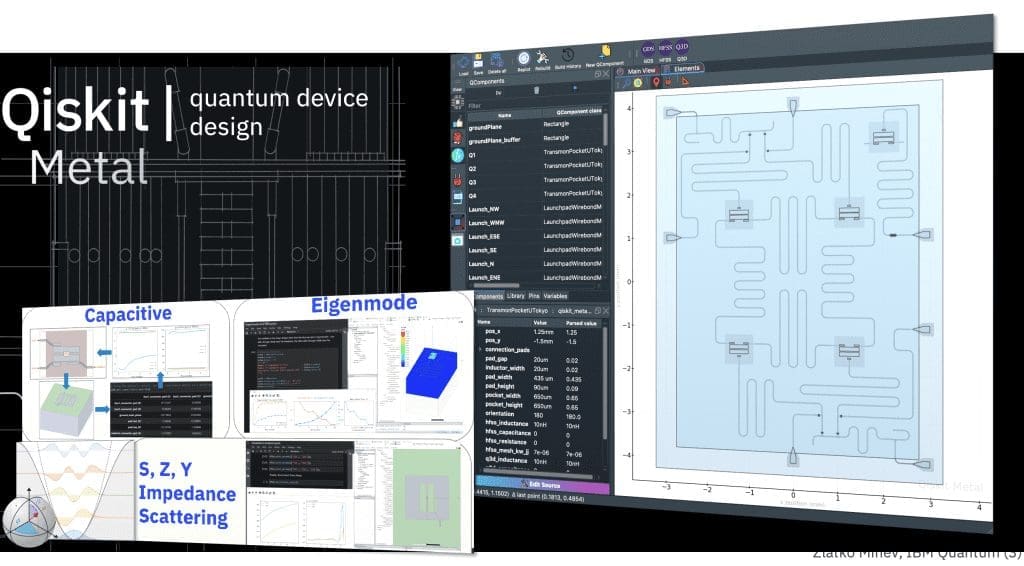
Qiskit Metal, part of IBM’s Qiskit framework, is an open-source tool for designing superconducting quantum devices and circuits. This tool is specifically tailored for the design and analysis of quantum circuits at the physical level, addressing a critical aspect of quantum computing hardware development. Qiskit Metal provides an interactive interface for designing quantum circuits and components, integrating simulation and analysis tools to optimize designs before fabrication. Its integration with the broader Qiskit ecosystem allows for seamless transition from physical design to quantum algorithm development. IBM’s backing ensures that Qiskit Metal stays at the forefront of quantum hardware design technology.
Qiskit Metal GitHub Repository
Quantum++
Quantum++ is a modern C++ library for quantum computing simulation. It is designed to be versatile and high-performance, catering to users who prefer C++ over Python. Quantum++ is notable for its efficiency and scalability, making it suitable for simulating complex quantum systems. The tool is not tied to any specific quantum computing platform, offering a hardware-agnostic approach to quantum simulation. Quantum++ appeals to a segment of the quantum computing community that requires the performance optimizations possible in C++, particularly in research and development environments where computational efficiency is paramount.
t|ket⟩
t|ket⟩, developed by Cambridge Quantum Computing (CQC), is an open-source quantum software development kit. This tool stands out for its high-performance quantum circuit optimization and qubit routing algorithms. t|ket⟩ is designed to be hardware-agnostic, translating quantum circuits to various quantum computing platforms, including IBM Q, Rigetti, and Google’s Cirq, among others. The tool’s emphasis on optimizing quantum circuits for specific hardware constraints makes it a valuable asset in the practical implementation of quantum algorithms. CQC’s focus on developing tools that bridge the gap between quantum algorithms and real-world quantum hardware is evident in t|ket⟩’s capabilities.
Q-CTRL
Q-CTRL specializes in quantum control infrastructure software. Q-CTRL provides solutions to enhance the performance of quantum devices by reducing noise and errors, which is crucial for the practical implementation of quantum computing. Their software is designed to be compatible with various quantum hardware platforms, making it a versatile tool for researchers and developers working across different quantum systems. The company’s expertise in quantum control theory is evident in the sophisticated features and capabilities of their software, positioning Q-CTRL as a leader in this niche but critical area of quantum computing.
Quipper
Quipper, a quantum programming language, is an open-source tool developed primarily by academic researchers. It is designed for scalable quantum computing and offers a high-level programming interface, making it suitable for a wide range of quantum computing tasks. Quipper is implemented in Haskell, a functional programming language known for its expressiveness and strong type system. This choice reflects the tool’s emphasis on correctness and scalability in quantum algorithm design. The development of Quipper is driven by the need for robust and efficient quantum programming tools in both research and practical applications.
Quantum Development Kit for Visual Studio
The Quantum Development Kit for Visual Studio, developed by Microsoft, extends the capabilities of Visual Studio to quantum programming using Q#. This integration provides a seamless development environment for quantum programmers, combining the familiar features of Visual Studio with the specialized tools of the Quantum Development Kit. It includes features like syntax highlighting, debugging tools, and integration with quantum simulators and resource estimators. This tool is particularly appealing to developers who are accustomed to the Visual Studio environment and are looking to venture into quantum programming. Microsoft’s ongoing investment in quantum computing is evident in the continuous enhancement of their development tools, making quantum programming more accessible to the broader developer community.
Quantum Development Kit for Visual Studio
Quantum Machine Learning Library (QMLL)
The Quantum Machine Learning Library (QMLL), developed by Rigetti Computing, is a Python-based library designed for implementing quantum machine learning algorithms. QMLL is part of Rigetti’s Forest suite of quantum programming tools and is specifically tailored for hybrid quantum-classical machine learning models. This library allows users to leverage quantum computing for machine learning tasks, potentially achieving enhanced performance for certain types of problems. Rigetti’s focus on integrating quantum computing with machine learning reflects the growing interest in exploring the synergies between these two fields.
sQULearn
sQUlearn is a Python library tailored for quantum machine learning (QML), designed to be user-friendly and compatible with Noisy Intermediate-Scale Quantum (NISQ) devices. It seamlessly integrates with classical machine learning tools, particularly scikit-learn, facilitating a smooth combination of quantum and classical approaches. The library is structured with a dual-layer architecture, catering to both QML researchers and practitioners. This design supports efficient prototyping, experimentation, and the development of complex pipelines.
Quantum Information Software Kit (Qisk)
The Quantum Information Software Kit (Qisk), distinct from IBM’s Qiskit, is an independent open-source project. It is designed to provide tools and libraries for quantum information research, including quantum cryptography, quantum algorithms, and quantum error correction. Qisk’s development is driven by the quantum information science community, aiming to provide a comprehensive set of tools for researchers in the field. The tool’s emphasis on quantum information theory makes it a valuable resource for academic and research-oriented applications.
Quantum Programming Studio
Quantum Programming Studio is a web-based quantum programming and simulation environment. This tool allows users to design quantum circuits using a graphical interface, simulate them, and run them on actual quantum hardware. One of the key features of Quantum Programming Studio is its accessibility, as it does not require any installations or configurations, making it an excellent tool for educational purposes and quick prototyping. The platform supports various quantum computing backends, including IBM Q and Rigetti, allowing users to experiment with different quantum systems.
Quantum Programming Studio Website
Quantum Inspire
Quantum Inspire, developed by QuTech, is a quantum computing platform that provides access to various quantum processors. This platform is unique in that it offers users the ability to run algorithms on different types of quantum hardware, including spin-qubit and superconducting-qubit processors. Quantum Inspire is designed to be accessible to a wide audience, from researchers and students to industry professionals, facilitating experimentation and learning in quantum computing. QuTech, a collaboration between TU Delft and TNO, ensures that Quantum Inspire stays at the forefront of quantum technology and education.
Blueqat
Blueqat, developed by Blueqat Inc., is an open-source quantum computing framework for designing and simulating quantum algorithms. Blueqat stands out for its ease of use and flexibility, making it suitable for both beginners and experienced quantum programmers. It offers a Python-based SDK (Software Development Kit) that allows users to construct quantum circuits and run simulations efficiently. The tool’s intuitive syntax and comprehensive documentation make it an excellent choice for educational purposes and for those new to quantum computing. Blueqat Inc.’s commitment to making quantum computing accessible is evident in the continuous development and enhancement of the framework.
Qubiter
Qubiter, developed by Artiste-qb.net, is an open-source quantum computing software that focuses on quantum circuit simulation and quantum computer language design. Qubiter is unique in its approach to quantum circuit design, offering tools for both forward and reverse quantum compiling. This feature allows for the optimization of quantum circuits, which is crucial for efficient quantum computation. The tool is written in Python, making it accessible to a broad audience. Artiste-qb.net’s dedication to advancing quantum computing technology is reflected in Qubiter’s innovative features and ongoing development.
Qiskit Aer
Qiskit Aer, part of the Qiskit framework developed by IBM, is an open-source quantum computing simulator. Qiskit Aer focuses on high-performance simulations of quantum circuits, including statevector, density matrix, and stabilizer simulations. It is particularly useful for researchers and developers who need to simulate and test quantum algorithms in a noise-free environment or with customizable noise models. The integration of Qiskit Aer with the broader Qiskit ecosystem allows for seamless transition from simulation to running experiments on actual quantum hardware. IBM’s continuous investment in Qiskit Aer ensures its alignment with the latest advancements in quantum computing and simulation technologies.
SeaQure
SeaQure, developed by a collaborative community effort, is an open-source tool for quantum error correction. It is designed to provide researchers and developers with tools to implement and test quantum error correction codes, a critical aspect of making quantum computing practical and reliable. SeaQure’s development reflects the quantum computing community’s focus on overcoming one of the major challenges in the field: the susceptibility of quantum computers to errors. The tool’s emphasis on quantum error correction makes it a valuable resource for advancing the reliability and scalability of quantum computing systems.
QuantumFlow
QuantumFlow, developed by an independent team, is an open-source quantum computing framework that emphasizes speed and efficiency. QuantumFlow is designed for high-performance simulations of quantum algorithms, leveraging modern computing architectures to achieve fast and efficient simulations. This tool is particularly appealing to researchers and developers who require rapid prototyping and testing of quantum algorithms. QuantumFlow’s focus on performance optimization showcases the ongoing efforts in the quantum computing field to leverage existing high-performance computing technologies to advance quantum research and development.
Quantum Development Kit Extensions (QDK-Ext)
The Quantum Development Kit Extensions (QDK-Ext), developed by Microsoft, are additional tools and libraries that extend the capabilities of the Quantum Development Kit. These extensions provide additional features and functionalities for quantum programming in Q#, including chemistry libraries, machine learning tools, and optimization algorithms. QDK-Ext is particularly useful for developers and researchers who are looking to explore specific applications of quantum computing, such as quantum chemistry or quantum-enhanced machine learning.
QuEST
QuEST (Quantum Exact Simulation Toolkit) is an open-source, high-performance simulator of quantum circuits and states. It is designed to be versatile and efficient, capable of running on classical multicore processors, GPUs, and distributed environments. QuEST’s ability to simulate large quantum systems with high performance makes it a valuable tool for researchers and developers who need to test and validate quantum algorithms and circuits under various conditions.
myQLM
myQLM, developed by Atos, is a quantum programming environment aimed at providing tools for quantum algorithm design and simulation. myQLM is a part of the Atos Quantum Learning Machine offering and is designed to be accessible to a wide range of users, from students to professionals. It provides a Python-based environment for writing, simulating, and optimizing quantum algorithms. The tool’s focus on ease of use and accessibility makes it particularly suitable for educational purposes and for those new to quantum computing.
Qiskit Finance
Qiskit Finance, part of IBM’s Qiskit framework, is an open-source tool specifically designed for applications in finance. This tool provides algorithms and utilities for researching and experimenting with quantum computing in the context of finance, such as portfolio optimization, option pricing, and risk analysis. Qiskit Finance leverages the broader Qiskit ecosystem, allowing users to apply quantum algorithms to solve complex financial problems. IBM’s continuous development of Qiskit Finance reflects the growing interest in exploring how quantum computing can impact and transform the financial industry.
Qiskit Finance GitHub Repository
QuTiP
The Quantum Toolbox in Python (QuTiP) is an open-source software for simulating the dynamics of open quantum systems. This tool is particularly renowned in the quantum physics community for its ability to simulate a wide range of quantum phenomena, making it a valuable resource for researchers in quantum optics, quantum information, and other areas. QuTiP is not directly tied to any specific quantum computing hardware but rather provides a versatile framework for quantum system simulations. Its Python-based implementation makes it accessible and widely used in academic and research settings. The continuous development and maintenance of QuTiP reflect the collaborative effort of a global community of quantum physicists and engineers.
Qiskit Machine Learning
Qiskit Machine Learning, part of IBM’s Qiskit framework, is an open-source library designed for quantum machine learning applications. This library integrates quantum computing with machine learning algorithms, enabling the exploration of quantum-enhanced machine learning models. Qiskit Machine Learning provides tools for implementing both supervised and unsupervised learning algorithms on quantum computers. The integration with the broader Qiskit ecosystem allows users to leverage quantum algorithms in conjunction with classical machine-learning techniques, potentially leading to improved performance for certain types of problems.
Qiskit Machine Learning GitHub Repository
Scaffold
Scaffold, developed by the University of Maryland, is a quantum programming language that extends C++ with quantum constructs. It is designed to provide a familiar syntax for programmers who are already experienced in C++, with additional features specific to quantum computing. Scaffold is particularly useful for writing complex quantum algorithms, offering a balance between high-level abstraction and low-level control over quantum operations. The development of Scaffold reflects the ongoing efforts to make quantum programming more accessible to developers from different backgrounds.
XACC (Extreme-scale Accelerator)
XACC, developed by Oak Ridge National Laboratory, is an open-source framework that facilitates the integration of quantum computing into existing high-performance computing ecosystems. It is designed to be extensible and hardware-agnostic, supporting a variety of quantum processors and simulators. XACC provides a unified interface for quantum-classical programming, enabling researchers and developers to leverage quantum computing alongside classical computing resources. The tool’s focus on integrating with high-performance computing systems makes it particularly relevant for complex scientific computations and large-scale simulations.
Qulacs
Qulacs is an open-source quantum circuit simulator designed for high-speed simulation of large quantum circuits. Developed by researchers from the University of Tokyo and QunaSys, Qulacs is optimized for both classical and quantum computers. It is particularly known for its speed, making it one of the fastest quantum simulators available. Qulacs is suitable for researchers and developers who need to simulate quantum circuits with a large number of qubits and gates, providing an efficient tool for testing and validating complex quantum algorithms.
Yao.jl
Yao.jl is an open-source quantum computing framework written in Julia. This framework is designed for quantum algorithm design and research, offering a flexible and extensible environment. Yao.jl stands out for its high performance and ease of use, benefiting from Julia’s efficient computation capabilities. It is particularly suited for researchers and developers who prefer Julia’s mathematical and scientific computing strengths. Yao.jl’s design allows for the easy construction and manipulation of quantum circuits, making it a valuable tool for both educational purposes and advanced quantum research.
NetSquid
NetSquid, developed by QuTech, is a specialized simulator for quantum networks and communication protocols. NetSquid is designed to simulate the behavior of quantum bits (qubits) over long distances and the effects of quantum communication protocols in various conditions. This tool is crucial for the research and development of quantum internet and quantum communication technologies. NetSquid’s ability to model complex quantum networks and its emphasis on realism and accuracy make it a valuable resource for researchers in the field of quantum networking.
SimulaQron
SimulaQron is an open-source software for simulating quantum networks. Developed primarily for research and educational purposes, SimulaQron allows users to simulate the behavior of quantum networks and test quantum communication protocols without the need for actual quantum hardware. This tool is particularly useful for exploring the concepts of quantum internet and quantum cryptography. SimulaQron’s ability to create virtual quantum nodes and connections makes it a valuable tool for understanding and developing quantum network technologies.
Rigetti PyQuil
PyQuil, developed by Rigetti Computing, is an open-source Python library for quantum programming. PyQuil is part of Rigetti’s Forest suite of quantum programming tools and is designed for writing and executing quantum programs on Rigetti’s quantum computers and simulators. PyQuil stands out for its comprehensive and user-friendly interface, making it accessible to both beginners and experienced quantum programmers. Rigetti’s continuous development of PyQuil and its quantum hardware reflects their commitment to advancing practical quantum computing applications.