

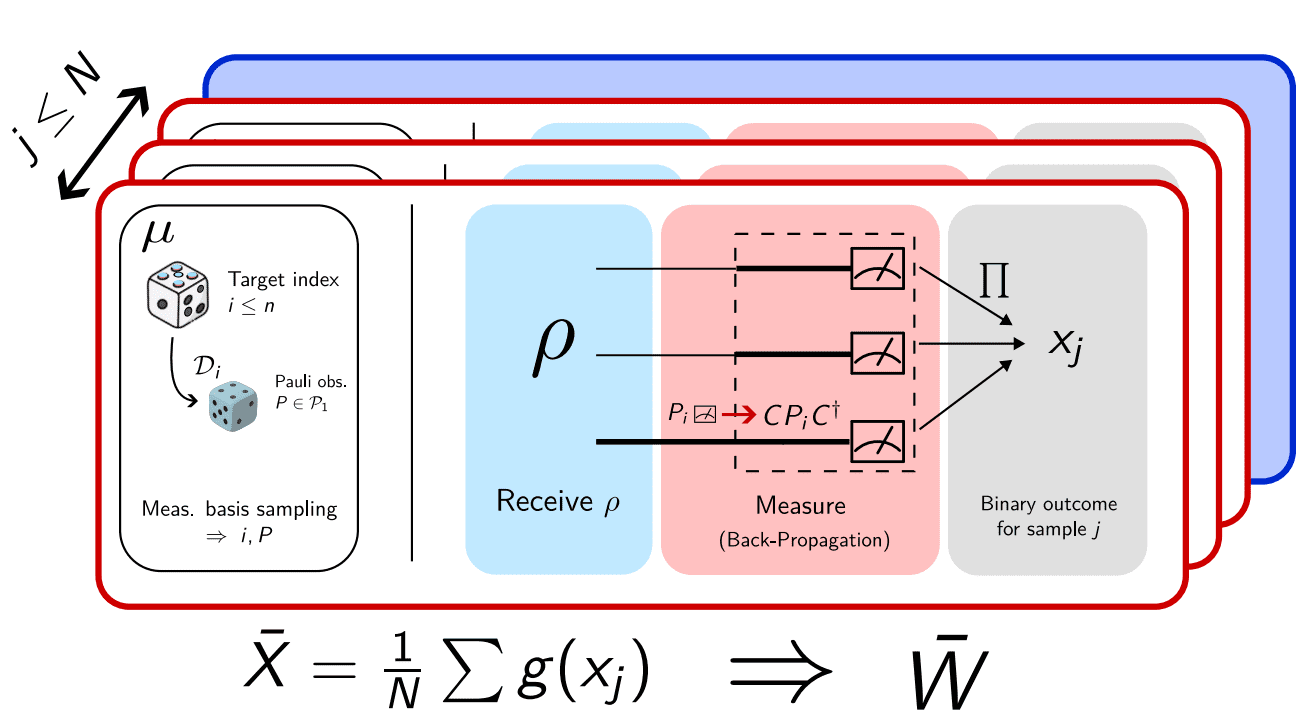
Verifying the accuracy of quantum states becomes increasingly vital as quantum computers progress towards fault tolerance, yet current methods struggle with states created using the Magic-State Injection model, a cornerstone of many promising architectures. Sami Abdul Sater, Maxime Garnier, Thierry Martinez, and colleagues at INRIA, DIENS, Ecole Normale Supérieure, PSL University, and CNRS now present an efficient protocol to address this challenge, successfully certifying a broad class of states known as Clifford-enhanced Product States. The team’s method relies solely on readily measurable single-qubit Pauli operators, combined with manageable classical data processing, and achieves efficient verification regardless of whether the quantum state is generated independently or through more complex adversarial means. This breakthrough bridges a critical gap between existing certification schemes, which are limited to specific state types or require impractical measurements, and offers the first practical, Pauli-only certification protocol for universal quantum computation under realistic experimental conditions.
Verifying Quantum Computation Against Errors and Noise
This research addresses a fundamental challenge in quantum computing: how to verify that a quantum computer is performing a calculation correctly. Quantum states are incredibly fragile and easily disturbed by noise, and directly observing a quantum state destroys it, making traditional verification methods impossible. This work explores techniques to gain confidence in quantum computation results without fully reconstructing the quantum state itself. The team investigated several verification methods, including measurement-based approaches and fidelity estimation using techniques like Randomized Benchmarking and Shadow Tomography.
State designs allow reconstruction of information about the quantum state without measuring it in all possible ways, while blind quantum computation enables delegation of calculations to a quantum server without revealing the computation itself, requiring robust verification protocols. The research also utilizes hypergraph and graph states, specific quantum states used in measurement-based quantum computation, and incorporates statistical tools to improve verification efficiency. A major obstacle in many verification protocols is the assumption of independent and identically distributed samples. Real-world quantum computers often exhibit noise and correlations that violate this assumption.
This research explores techniques to relax or remove this assumption, making verification protocols more robust. The team developed methods to achieve high confidence in computations with a minimal number of measurements, minimizing resource requirements. They also tailored techniques for verifying computations performed with photons or other bosons, and developed unconditionally verifiable blind quantum computation protocols, guaranteeing verification even with a malicious quantum server. The research leverages concepts from cryptography to provide a rigorous framework for verification. Shadow Tomography, a technique for reconstructing a quantum state from limited measurements, also plays a key role. This work highlights the importance of verification in demonstrating quantum advantage, ensuring that claimed advantages are real and not due to errors. This research advances quantum error mitigation and fault tolerance, provides practical tools for assessing quantum computer performance, and builds trust in quantum computing by ensuring accurate and reliable results.
Certifying Magic-State Injection with Pauli Measurements
Researchers have developed a rigorous methodology for verifying quantum states, crucial as experiments progress towards fault-tolerant quantum computation. This protocol relies solely on single-qubit Pauli measurements, combined with efficient classical data processing, offering a significant advantage over existing methods. The technique achieves efficient sample complexity, performing effectively whether the input states are independently generated or exhibit more complex distributions.
To accurately estimate the fidelity, the scientists employed Direct Fidelity Estimation (DFE), leveraging the characteristic function of a pure state to express the fidelity as an overlap calculable from measurement outcomes. By defining a probability distribution over Pauli operators, the team could estimate the fidelity by performing repeated Pauli measurements and averaging the results, achieving a scalable estimator. To ensure accuracy, the number of state copies required scales with system size and desired precision, as determined by Hoeffding’s inequality. Recognizing the limitations of DFE’s exponential scaling, the researchers also explored fidelity witnesses, quantities that provide a guaranteed lower bound on fidelity while remaining computationally efficient. They utilized a witness based on local fidelities, combining measurements of individual qubits to certify closeness to the target product state. This work addresses a key challenge in advancing fault-tolerant quantum computation by providing a practical method for state certification. The team’s approach relies solely on readily measurable single-qubit Pauli operators and standard classical data processing, simplifying experimental requirements. Experiments demonstrate that the protocol successfully certifies these states, even when produced in a non-ideal manner.
In the independent and identically distributed scenario, the protocol estimates a robust fidelity witness, allowing for efficient certification using only Pauli measurements. When dealing with states generated in a more complex manner, the protocol increases the number of samples and randomly partitions subsystems, maintaining efficient verification. Measurements confirm that, assuming a minimum of samples, the protocol rejects states with a fidelity below a threshold and accepts those with a fidelity greater than a threshold, with a high probability. The total number of samples required to verify a state with precision scales efficiently, enabling practical verification of complex quantum states. Furthermore, the team demonstrated that verifying the outcome of a quantum computation performed using the Magic-State Injection model can be reduced to certifying the initial state. The protocol efficiently certifies these states, even when produced in a non-ideal manner. In the independent and identically distributed scenario, the protocol estimates a robust fidelity witness, allowing for efficient certification using only Pauli measurements.
When dealing with states generated in a more complex manner, the protocol increases the number of samples and randomly partitions subsystems, maintaining efficient verification. Measurements confirm that, assuming a minimum of samples, the protocol rejects states with a fidelity below a threshold and accepts those with a fidelity greater than a threshold, with a high probability. The total number of samples required to verify a state with precision scales efficiently, enabling practical verification of complex quantum states. Furthermore, the team demonstrated that verifying the outcome of a quantum computation performed using the Magic-State Injection model can be reduced to certifying the initial state. This breakthrough delivers a pathway to verifying universal quantum computations with minimal experimental assumptions and polynomial scaling in system size.
👉 More information
🗞 Efficient certification of intractable quantum states with few Pauli measurements
🧠 ArXiv: https://arxiv.org/abs/2511.07300


