Researchers are now exploring novel ways to create lasers that harness the principles of topology, a branch of mathematics concerned with properties that remain unchanged under continuous deformations, to achieve robust and stable light emission. Alberto Muñoz de las Heras from Universidad de Castilla-La Mancha and Iacopo Carusotto from Universitá di Trento, along with their colleagues, demonstrate a theoretical framework for a new type of laser, the spin-Hall topological laser, built from arrays of ring resonators. This innovative design leverages the interaction between light and the unique geometry of these resonators to create a system where clockwise and counter-clockwise light beams behave as distinct pseudospin states, effectively mimicking magnetism without requiring magnetic materials. The team’s calculations reveal that this configuration overcomes limitations of conventional lasers, enabling robust, single-mode lasing even with imperfections and backscattering, which represents a significant step towards more stable and efficient laser technology.
Topological Lasers with Ring Resonators and Pseudospin States
Scientists theoretically investigate a quantum spin-Hall topological laser formed by an array of dielectric ring resonators incorporating saturable gain. The system preserves time-reversal symmetry, with the clockwise and counter-clockwise modes within each ring resonator acting as distinct pseudospin states. This configuration supports the emergence of topologically protected edge states, analogous to the quantum spin-Hall effect observed in electronic systems, sustaining unidirectional lasing and offering a new pathway for creating robust and coherent light sources. The analysis reveals that topological protection ensures resilience against disorder and imperfections, maintaining unidirectional lasing characteristics even under non-ideal conditions. Furthermore, the team explores how lasing properties depend on key parameters, such as gain saturation and coupling strength, providing insights into optimizing device performance.
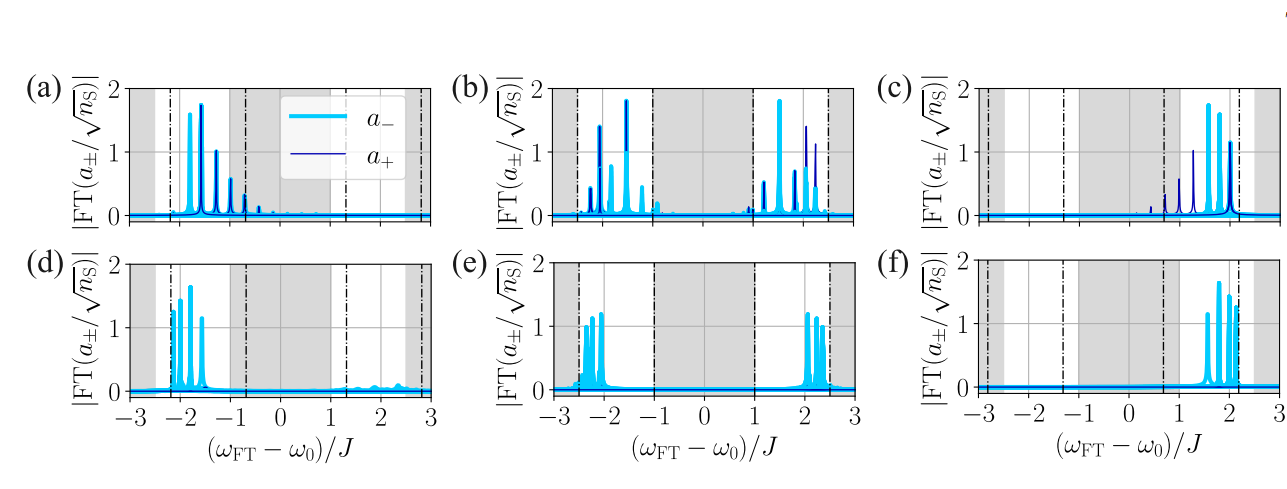
The research considers ring resonators featuring an internal S-shaped waveguide asymmetrically coupling the two pseudospin states. Despite being non-magnetic, the study demonstrates that an effective breaking of reciprocity is induced by the interplay of spatial asymmetry, saturable gain, and a Kerr optical nonlinearity.
Topological Photonics and Robust Laser Systems
This compilation of research papers focuses on topological photonics, lasers, and related nonlinear optical phenomena. Key themes include topological lasers, where topological edge states create lasers with enhanced stability and single-mode operation, and the interplay of nonlinear optical phenomena with topological systems, including PT-symmetric optics and nonreciprocal devices. A strong emphasis is placed on silicon-based photonic devices and their integration with quantum dots and other materials.
Specific topics covered include lasing in topological insulator edge states, higher-order topological insulators with corner states, silicon-on-insulator photonics, quantum dot lasers, and microcavity lasers. Researchers are actively exploring methods for breaking reciprocity in optical systems to create isolators and circulators, and integrating quantum dots with photonic crystals and cavities to enhance light-matter interactions. This body of work represents a comprehensive overview of current research in topological photonics and its applications to laser technology, a rapidly developing field.
Topological Lasing Without Magnetic Fields
This research demonstrates the creation of a novel topological laser based on an array of dielectric ring resonators, achieving robust single-mode lasing without external magnetic fields. Scientists engineered the system using ring resonators containing uniquely shaped internal waveguides, inducing a breaking of reciprocity through the interplay of spatial asymmetry, saturable gain, and a non-linear response. This design effectively creates two pseudospin states within each resonator, mimicking the behaviour typically achieved with magnetic materials, but without requiring them. The resulting device exhibits topological properties, ensuring inherent stability against imperfections and backscattering, and reliable laser operation.
The team’s work successfully demonstrates how carefully designed structural asymmetry can replace traditional magnetic control in photonic systems, opening new avenues for creating robust and efficient lasers. By manipulating the flow of light within the ring resonators, they achieved a configuration where clockwise and counter-clockwise modes experience opposing synthetic magnetic fields, leading to the observed topological behaviour. While the current study focuses on a specific lattice configuration and parameter set, the authors acknowledge that further investigation is needed to explore scalability and optimisation for practical applications, including exploring different resonator geometries and materials to enhance performance and reduce energy consumption.
🗞 Theory of quantum spin-Hall topological lasers
🧠 ArXiv: https://arxiv.org/abs/2509.20920