Meson scattering was simulated using a quantum approach on a simplified model of quantum chromodynamics. Researchers constructed high-fidelity meson wave packets and observed both elastic and inelastic scattering events, analysing energy transfer and particle production with reduced circuit complexity, demonstrating feasibility for near-term quantum devices.
Understanding the interactions between subatomic particles requires detailed modelling of scattering processes, a computationally intensive task for classical computers. Researchers are now exploring quantum simulation as a potential solution to overcome these limitations. A team led by Yahui Chai, Yibin Guo, and Stefan Kühn, all from the Deutsches Elektronen-Synchrotron (DESY) in Germany, detail their progress in simulating meson scattering – the interaction of composite particles made of quarks and gluons – within a simplified theoretical framework. Their work, entitled ‘Towards Quantum Simulation of Meson Scattering in a Z2 Lattice Gauge Theory’, presents a novel method for preparing the initial conditions for these simulations, reducing the computational resources required and demonstrating the simulation of both elastic and inelastic scattering events, offering a pathway to investigate the dynamics of strongly interacting matter on emerging quantum hardware.
Quantum Computation Advances Simulation of Meson Interactions
Researchers have successfully simulated inelastic scattering of mesons using a quantum computer, representing a development in the application of quantum computation to problems in high-energy physics. Previous quantum simulations in this area were largely confined to modelling elastic scattering – interactions where kinetic energy is conserved. Inelastic scattering, where energy is transferred and particles can be created or destroyed, presents a considerably more complex computational challenge.
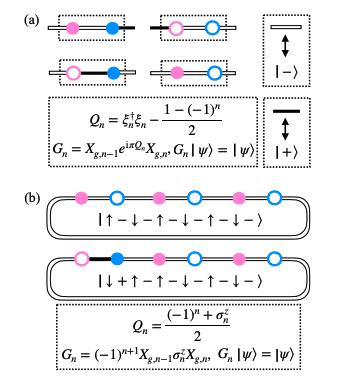
The simulation focused on a (1+1)-dimensional Z2 lattice gauge theory with staggered fermions – a simplified model used to study the strong force, one of the four fundamental forces of nature. This model describes the interactions between quarks and gluons, the constituents of protons and neutrons, and consequently, mesons – composite particles formed from quark-antiquark pairs.
A key aspect of the work involved developing an efficient quantum circuit decomposition to prepare the initial state representing meson wave packets. This optimisation reduced the computational resources required for the simulation. The researchers employed a technique called Subspace Expansion (QSE) to construct high-fidelity meson wave packets. QSE is a variational method used to approximate quantum states within a restricted computational space, improving the accuracy of the simulation.
The results were validated against classical simulations utilising Tensor Networks – a powerful method for approximating many-body quantum systems on classical computers. This comparison provided a crucial benchmark to assess the accuracy and reliability of the quantum simulation.
Analysis of the simulation data revealed insights into the dynamics of meson interactions, including energy transfer between particles, the development of quantum entanglement, and the potential for particle production. This work demonstrates a pathway towards utilising quantum computers to investigate complex phenomena within the strong force, potentially offering a complementary approach to traditional theoretical and experimental methods.
👉 More information
🗞 Towards Quantum Simulation of Meson Scattering in a Z2 Lattice Gauge Theory
🧠 DOI: https://doi.org/10.48550/arXiv.2505.21240