The challenge of simulating complex quantum phenomena represents a major hurdle in advancing our understanding of the universe, and researchers are increasingly turning to quantum computers to overcome it. Priyasheel Prasad, alongside Marco Russo and Bartolomeo Montrucchio from the Department of Control and Computer Engineering at Politecnico di Torino, investigates the ability of quantum computers to model single-photon experiments accurately. Their work focuses on simulating experiments involving both standard measurements and a more subtle technique called protective measurement, which preserves the delicate quantum state of a photon during observation. By comparing the simulation results with established theoretical predictions, the team demonstrates how effectively quantum computers can replicate real-world physical systems, particularly as the complexity of those systems increases, offering a promising pathway towards validating and refining quantum simulation techniques.
One of the main applications of quantum computing is the efficient simulation of the dynamics of a quantum system, offering computational advantages over classical computers. Two distinct approaches to quantum simulation exist; one allows a quantum state to fully change, while the other combines weak interactions with a protective mechanism, preserving the quantum state’s properties until measurement. This simulation provides insights into how efficiently quantum computers can model actual physical systems as computational complexity increases.
Photons Demonstrate Protective Measurement Principles
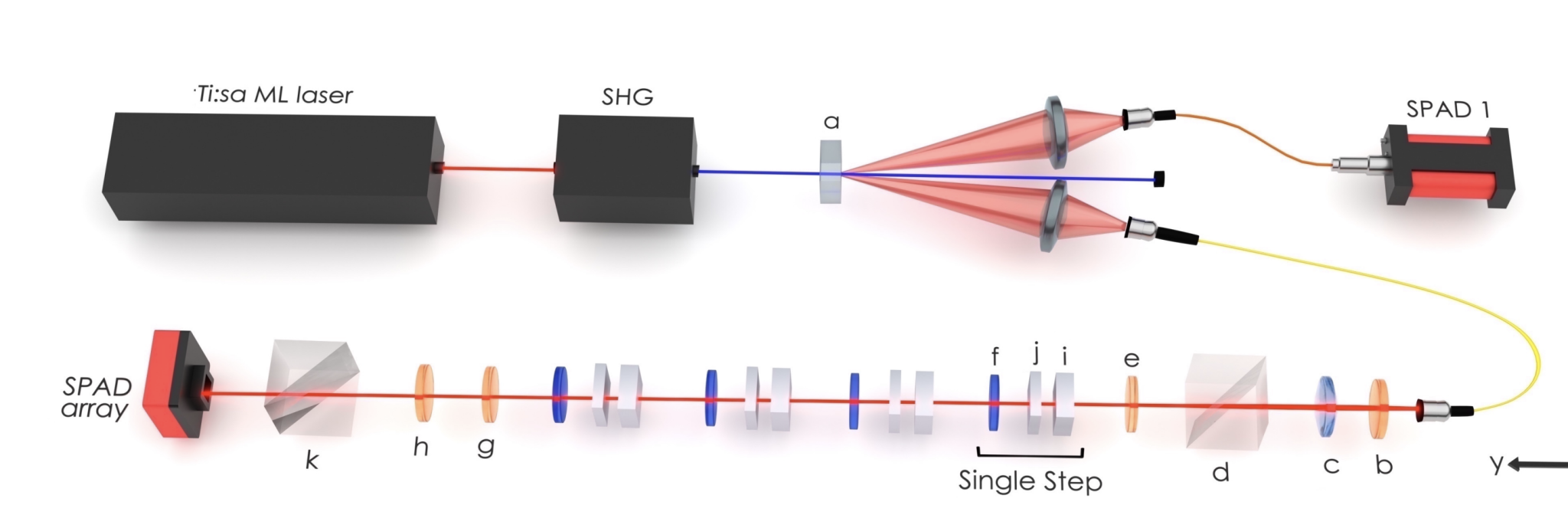
This research details a quantum experiment and its theoretical foundations, aiming to demonstrate and verify protective measurement, a novel approach that minimizes disturbance to the system being measured. The experiment involves photons passing through optical elements, including half-wave plates, polarizing beam splitters, and birefringent crystals, carefully controlled to manipulate polarization and introduce phase shifts crucial for the protective measurement process. A final polarizer measures the photon’s state. The central idea is to use weak interactions, through the birefringent crystals, to extract information about a quantum state without completely altering it. This is achieved by carefully controlling the interaction strength and using techniques to select specific measurement outcomes, amplifying weak effects. The research utilizes wave functions to describe the photon’s state, Fourier transforms to relate different representations, and the concept of weak values, alongside post-selection to amplify weak effects.
Quantum Simulation of Photon Measurement and Wavefunction Collapse
Researchers have demonstrated a quantum simulation of single photons traveling through a complex optical experiment, marking a significant step towards harnessing quantum computers for simulating physical systems. The study replicated an experiment involving protective and non-protective measurements of photons, where protective measurements preserve wave-like properties while standard measurements cause collapse. By simulating this process, the team assessed the efficiency of quantum computation in modeling real-world quantum phenomena. Theoretical calculations predicted how the photon’s wave function evolves, and the quantum simulation mirrored this evolution.
The results show the simulation accurately reproduces the behavior of photons in the experiment, demonstrating the potential of quantum computers to model complex quantum systems. Notably, the simulation successfully captured the increased survival probability achieved through protective measurements, a phenomenon difficult to model classically. The simulation’s success underscores the potential of quantum computers to tackle problems involving complex wave phenomena, opening doors for advancements in fields like quantum imaging and sensing.
Quantum Measurement Simulation Validates Theoretical Predictions
This research investigates the ability of quantum simulation to accurately model physical systems, specifically focusing on protective and non-protective measurements of quantum states. The team simulated these measurements using quantum circuits and compared the results with theoretical predictions, finding a strong correlation between the two. The simulations demonstrate that quantum approaches can effectively replicate the behaviour of these systems as the number of steps in the measurement process increases. The team observed that the simulations closely matched theoretical predictions, even with a limited number of computational steps. The authors acknowledge that the accuracy of the simulations is limited by finite sampling of the output state vector and that further research is needed to explore the impact of noise and more complex system interactions. Future work could focus on extending these simulations to more realistic scenarios and investigating the potential for using quantum simulation to solve practical problems in physics and other fields.
🗞 Simulating single-photon experiments with a quantum computer
🧠 ArXiv: https://arxiv.org/abs/2508.09095