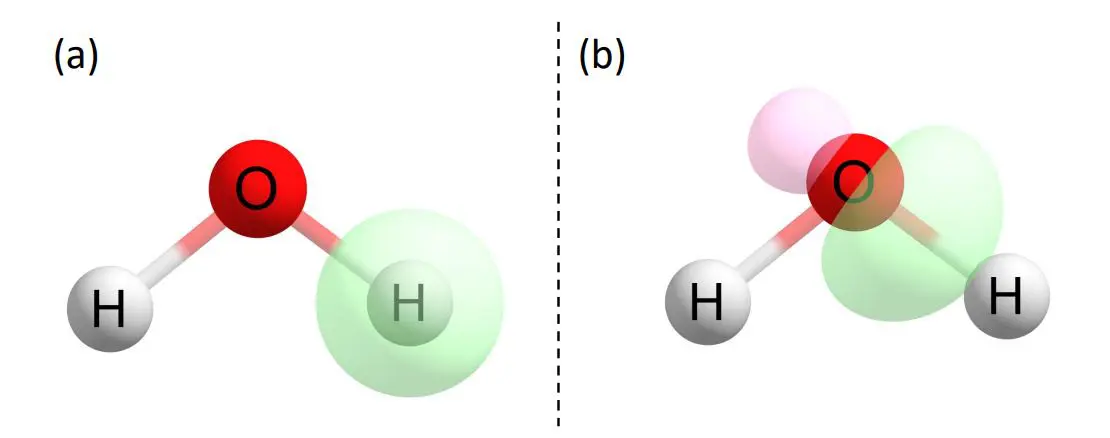
Calculating the behaviour of electrons in complex molecules presents a significant challenge for conventional computing methods, limiting progress in areas like materials science and drug discovery. Ashish Kumar Patra, Anurag K. S. V., and Sai Shankar P. from 1Qclairvoyance Quantum Labs, along with colleagues including Ruchika Bhat and Rahul Maitra, now demonstrate a new approach that combines Density Matrix Embedding Theory with a technique called Sample-based Diagonalization. This innovative method effectively breaks down large molecular systems into smaller, more manageable parts, and then leverages quantum hardware to calculate their properties with unprecedented accuracy. The team’s calculations, performed on a superconducting quantum computer, closely match highly accurate classical benchmarks, demonstrating the potential of this hybrid quantum-classical strategy to simulate complex molecules relevant to real-world applications, and paving the way for more efficient drug design and materials discovery.
Molecular Energy Calculations With Quantum Algorithms
Researchers detail the computational setup and results of a study investigating the performance of quantum algorithms for calculating the energies of small organic molecules. They utilize quantum computing to determine the ground state energies of these molecules, a fundamental problem in chemistry, and compare different quantum algorithms and hardware configurations. The smaller the molecule, the easier it is to simulate on current quantum hardware. The study relies on detailed geometric coordinates, defining the 3D structure of each molecule, which are essential for performing quantum chemical calculations.
Several software packages and libraries underpin the research, including ffsim, a faster simulator of fermionic quantum circuits, and Qiskit, an open-source quantum computing framework developed by IBM. The team addressed the challenges of mapping the quantum algorithm onto the physical qubits of a quantum computer, carefully assigning logical qubits to physical qubits and mitigating errors inherent in quantum systems. Providing the geometric coordinates allows other researchers to reproduce the calculations and verify the results. This work addresses the longstanding challenge of treating electron correlation in extended molecular systems. The team systematically fragmented molecules into smaller, embedded impurity subproblems using DMET, which reduces the computational burden and allows for more efficient quantum simulation. SQD then enabled the construction and classical diagonalization of reduced configuration spaces through quantum sampling, enhanced by an iterative configuration recovery process called S-CoRe.
This innovative approach leverages the strengths of both quantum and classical computation, minimizing the demands on current quantum hardware while maintaining high accuracy. Researchers performed these calculations on IBM’s Eagle R3 superconducting quantum hardware, exploring molecular energies with unprecedented precision. Results demonstrate strong agreement between the DMET-SQD energies and benchmark values obtained using DMET-FCI, with discrepancies consistently within chemical accuracy, less than 1 kcal/mol. This level of precision validates the effectiveness of the combined DMET-SQD method and showcases its potential for simulating chemically relevant molecular systems, particularly in the field of drug discovery. The team successfully extended quantum computation to tackle molecules with up to 36 spatial orbitals, demonstrating a significant advancement in the field of quantum chemistry.
Quantum Simulation Calculates Molecular Ground State Energies
Scientists achieved highly accurate ground-state energy calculations for a set of ligand-like molecules using a novel hybrid quantum-classical approach. DMET systematically fragments molecules into smaller, embedded impurity problems, while SQD efficiently constructs and diagonalizes reduced configuration spaces through quantum sampling enhanced by iterative configuration recovery. These calculations were performed on IBM’s Eagle R3 superconducting quantum hardware, demonstrating the potential of this combined methodology for tackling chemically relevant simulations.
Results demonstrate strong agreement between the DMET-SQD energies obtained and benchmark values calculated using DMET-FCI, achieving chemical accuracy within 1 kcal/mol. This level of precision confirms the reliability of the sample-based quantum methods when integrated with a robust embedding framework, enabling the extension of quantum computation to more complex molecular systems. Experiments revealed that this approach effectively addresses the limitations of current noisy intermediate-scale quantum (NISQ) hardware, offering a pathway to simulate larger molecules than previously possible. This breakthrough delivers a significant advancement in the field of quantum chemistry, showcasing potential applications in drug discovery by enabling the accurate modeling of pharmacologically relevant molecular fragments.
NISQ Simulation Achieves Chemical Accuracy
This work demonstrates a successful quantum simulation of several natural ligand-like molecules, achieving ground-state energies with high accuracy. The method systematically fragments molecules into smaller, manageable parts, then uses quantum computation to solve these fragments, followed by classical post-processing. The resulting energies agree closely with benchmark values obtained using DMET-FCI, remaining within a chemical accuracy of 1 kcal/mol.
This achievement indicates that current noisy intermediate-scale quantum (NISQ) hardware holds promise for performing quantum sampling experiments and extending computational simulations of chemically relevant systems. Potential applications include advancements in computer-aided drug design and materials science. The authors suggest that future research should focus on developing methods that explicitly prioritize compactness within the selected subspace, concentrating computational resources on the most relevant determinants. This would further reduce computational cost and improve the efficiency of the simulation process.
🗞 Quantum Simulation of Ligand-like Molecules through Sample-based Quantum Diagonalization in Density Matrix Embedding Framework
🧠 ArXiv: https://arxiv.org/abs/2511.22158