


Scientists at the University of Stuttgart, Germany, are developing a revolutionary new approach to controlling prosthetics using quantum sensors on the skin instead of implanting electrodes inside the body. Led by Prof. Dr. Jens Anders, the multidisciplinary consortium QHMI is harnessing the power of ultrasensitive quantum magnetometers to detect incredibly small and fast nerve signals through the skin.
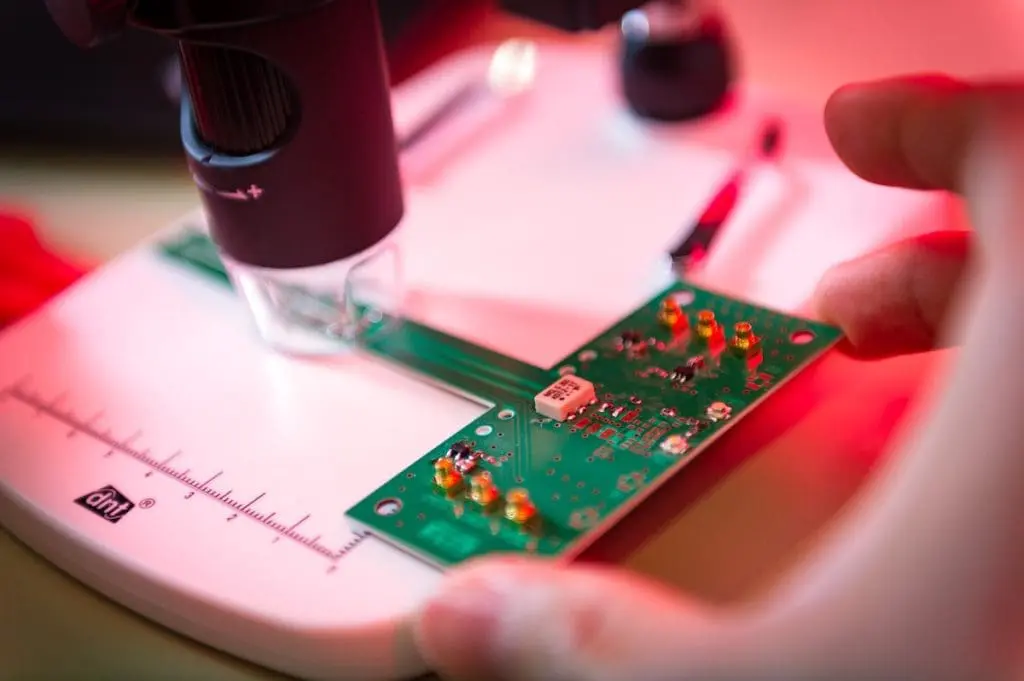
This technology has the potential to non-invasively detect neural signals in muscles and even the brain without breaking the skin. The team is using custom integrated circuits and Spectrum Instrumentation’s ultrafast digitizers and Arbitrary Waveform Generators to characterize the signals and design Application Specific Integrated Circuits (ASICs) and Photonic Integrated Circuits (PICs). The quantum sensor probes, currently matchbox-sized, will eventually be shrunk down to around one cubic centimeter, paving the way for prosthetics that can be controlled with unprecedented precision.
Quantum Sensors Revolutionize Prosthetic Control with Non-Invasive Neural Signal Detection
The development of quantum sensors has opened up new possibilities for controlling prosthetics in a non-invasive manner. A multidisciplinary consortium, QHMI, based in Stuttgart, Germany, has made significant progress in this area by using ultrasensitive quantum magnetometers to detect incredibly small and fast nerve signals through the skin. This approach eliminates the need for implanting electrodes, which can be invasive and prone to deterioration or movement.
The QHMI consortium, led by Prof. Dr. Jens Anders of the University of Stuttgart, has successfully demonstrated the ability of quantum sensors to detect neural signals in muscles with a sensitivity of 10 to 100 picoTeslas, six orders of magnitude smaller than the Earth’s magnetic field. This achievement is a significant milestone in the development of non-invasive prosthetic control systems.
The Science Behind Quantum Sensors
At the heart of this technology lies an optically detected, magnetic resonance (ODMR) device made of a tiny slice of diamond doped with nitrogen-vacancy centers (NV centers). These NV centers behave like tiny bar magnets and produce a red fluorescence signal when exposed to green laser light. By applying a suitable microwave magnetic field, the fluorescence signal becomes highly sensitive to external magnetic fields, allowing for the precise measurement of neural signals.
The microwave magnetic fields required to control the NV center spins are generated using coils driven by a microwave transmitter. The baseband signals for this transmitter are generated using an Arbitrary Waveform Generator (AWG) to provide the required phase and amplitude modulation of the carrier signal. This ensures that the excitation signal is robust against experimental non-idealities.
Advanced Signal Processing with Spectrum Instrumentation
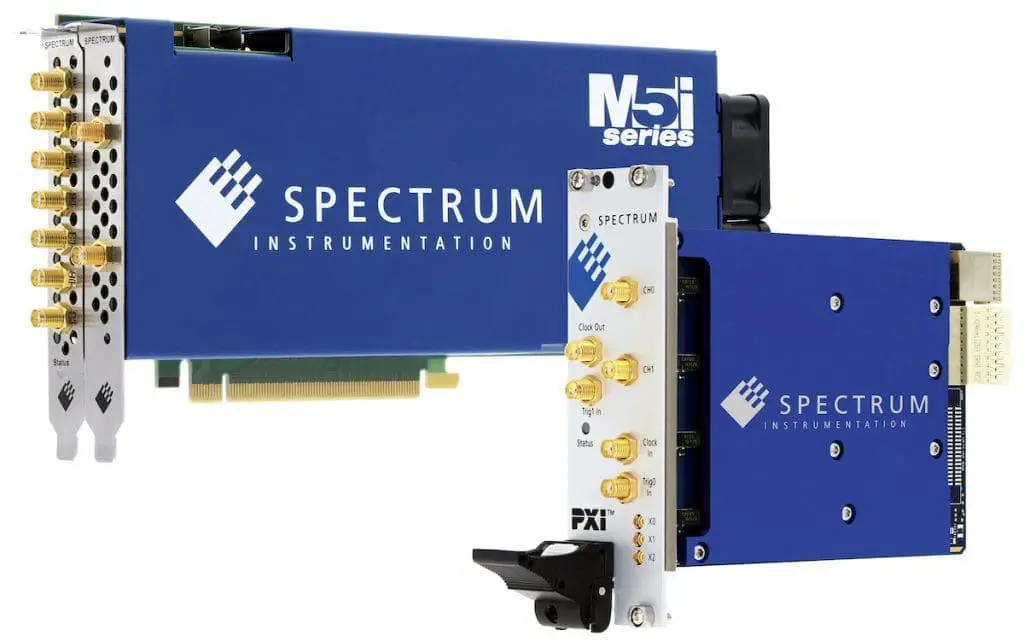
The QHMI consortium has utilized Spectrum Instrumentation’s ultrafast digitizers (M5i.3357) and Arbitrary Waveform Generators (M4x.6631) to characterize the signals and design the required Application Specific Integrated Circuits (ASICs) and Photonic Integrated Circuits (PICs). The team chose Spectrum’s cards due to their extremely high dynamic range, good noise performance, fast sampling rates, and excellent value in terms of performance-to-price ratio.
The five-year warranty provided by Spectrum Instrumentation also offers peace of mind for the researchers, ensuring that a critical component of the research is reliable for an extended period. This is particularly important in this field, where funding to replace failed equipment can be challenging to obtain.
Future Prospects and Potential Impact
The current matchbox-sized quantum sensor probes are expected to shrink to around one cubic centimeter in size, with the control box housing the processing electronics and battery being roughly the size of a large matchbox. The aim is to further miniaturize the control box using microelectronic and photonic integration, extending the battery life to provide a day of use before recharging.
It is hoped that prosthetics incorporating this technology will become available in three to four years, revolutionizing the lives of individuals with amputations or paralysis. The non-invasive nature of this approach could also open up new possibilities for neural signal detection and control in various fields, including medicine, robotics, and brain-computer interfaces.
About Spectrum Instrumentation
Spectrum Instrumentation is a leading manufacturer of digitizers and generator products, founded in 1989. The company’s unique modular concept has enabled the design and production of over 200 products as PC-cards (PCIe and PXIe) and stand-alone Ethernet units (LXI). With customers worldwide, including many A-brand industry leaders and prestigious universities, Spectrum is headquartered near Hamburg, Germany, and is known for its 5-year warranty and outstanding support provided directly by the design engineers.
External Link: Click Here For More


