

Researchers have been working on developing next-generation sensors that can probe minute quantum phase information. A crucial aspect of this endeavor is estimating the loss of coherence and entanglement degradation in matterwave interferometers with microparticles. This paper delves into noise analysis in frequency space, focusing on electromagnetic sources of dephasing. The authors identify key sources of dephasing, including Coulomb charge-induced dipole-charge interactions, permanent dipole interactions, and dipole-dipole interactions. Their findings have significant implications for the development of next-generation quantum sensors, providing a valuable framework for understanding and mitigating these effects.
Can Quantum Sensors Probe Minute Quantum Phase Information?
In the pursuit of advancing quantum technology, researchers have been exploring ways to develop next-generation sensors that can probe minute quantum phase information. One crucial aspect of this endeavor is estimating the loss of coherence and entanglement degradation in matterwave interferometers with microparticles. This paper delves into a noise analysis in frequency space, focusing on electromagnetic sources of dephasing.
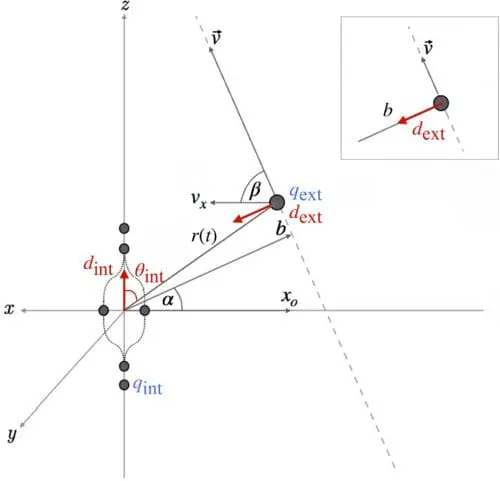
The authors assume that their matterwave interferometer has a residual charge or dipole that can interact with neighboring particles in the ambient environment. They investigate the dephasing due to Coulomb charge-induced dipole-charge and permanent dipole interactions. These interactions constitute electromagnetically driven dephasing channels that can affect single or multiple interferometers.
The researchers apply their obtained formulae to situations with two adjacent microparticles, providing insight into the noise analysis in the quantum gravity-induced entanglement of masses (QGEM) protocol and the CNOT gate. They compute the dephasing due to a gas of environmental particles interacting via dipole-dipole and charge-charge couplings, respectively.
To obtain simple analytical dephasing formulae, the authors employ uniform probability distributions for the impact parameter and angles characterizing the relative orientation with respect to the interferometer, as well as a Gaussian distribution for the velocities of the environmental particles. In both cases, they show that the dephasing rate grows with the number density of particles present in the vacuum chamber, as expected.
What are the Key Sources of Dephasing?
The authors identify several key sources of dephasing in matterwave interferometers with microparticles. These include:
- Coulomb charge-induced dipole-charge interactions
- Permanent dipole interactions
- Dipole-dipole interactions
These interactions can affect single or multiple interferometers, leading to a loss of coherence and entanglement degradation.
How do Electromagnetic Interactions Affect Dephasing?
The authors demonstrate that electromagnetic interactions play a crucial role in dephasing. They show that the dephasing rate grows with the number density of particles present in the vacuum chamber, as expected.
In particular, they investigate the dephasing due to:
- Charged interferometers
- Neutral interferometers
- Accelerations due to charged and neutral interactions
The authors employ uniform probability distributions for the impact parameter and angles characterizing the relative orientation with respect to the interferometer, as well as a Gaussian distribution for the velocities of the environmental particles.
What are the Implications for Quantum Sensors?
The authors’ findings have significant implications for the development of next-generation quantum sensors. They demonstrate that electromagnetic interactions can lead to dephasing and entanglement degradation in matterwave interferometers with microparticles.
This has important consequences for the design and operation of quantum sensors, particularly those relying on matterwave interferometry. The authors’ work provides a valuable framework for understanding and mitigating these effects, ultimately enabling the development of more accurate and reliable quantum sensors.
Can Quantum Gravity-Induced Entanglement be Probed?
The authors also explore the implications of their findings for the quantum gravity-induced entanglement of masses (QGEM) protocol. They demonstrate that their analytical formulae can be applied to situations with two adjacent microparticles, providing insight into the noise analysis in this protocol.
This has important consequences for our understanding of the interplay between gravity and quantum mechanics at the smallest scales. The authors’ work provides a valuable step towards developing more accurate and reliable methods for probing quantum gravity-induced entanglement.
What are the Future Directions?
The authors’ findings open up new avenues for research in the development of next-generation quantum sensors. Some potential future directions include:
- Investigating other sources of dephasing, such as thermal fluctuations or phonon interactions
- Developing more sophisticated analytical models to describe dephasing in matterwave interferometers with microparticles
- Experimentally verifying the authors’ predictions and exploring their implications for quantum sensor design and operation
By pursuing these directions, researchers can continue to advance our understanding of the fundamental limits and possibilities of quantum technology.
Publication Date: 2024-08-08
Authors: Martine Schut, Herre Bosma, Meng-Zhi Wu, Marko Toroš, et al.
Source: Physical review. A/Physical review, A
DOI: https://doi.org/10.1103/physreva.110.022412


