Detecting subtle changes in external fields is crucial for a range of technologies, and researchers continually seek more sensitive methods. Conan Alexander from the Indian Institute of Science Education and Research, Pune, and T S Mahesh now demonstrate a new approach using large clusters of correlated nuclear spins within solid-state nuclear magnetic resonance (NMR). Their work reveals that these clusters can sensitively detect imperfections in the radio-frequency control fields used in NMR, identifying jitters at the level of tens of nanoseconds. Importantly, the team discovered that there is an optimal level of complexity within these spin clusters that maximises detection efficiency, paving the way for more precise and robust quantum sensing using solid-state NMR as a valuable platform for exploring advanced metrology techniques.
The research investigates the critical interplay between enhanced sensitivity offered by large coherence orders, their relative distributions, and their varying susceptibility to decoherence by analysing the response of high-order quantum coherences to these control-field jitters. Furthermore, the team demonstrates that an optimal maximum coherence order exists within a non-uniform distribution of coherence orders, which maximizes sensing efficiency.
Quantum Metrology and Solid-State NMR Techniques
This collection details the principles and applications of quantum metrology, a field focused on enhancing measurement precision using quantum mechanics, and explores its use within Nuclear Magnetic Resonance (NMR) spectroscopy, particularly in solid-state systems. It covers theoretical foundations, including quantum mechanics, the behaviour of open quantum systems, and methods for calculating precision limits, alongside experimental techniques such as solid-state NMR, diamond-based sensors utilizing nitrogen-vacancy centers, trapped ions, and superconducting circuits. Applications discussed include magnetic field sensing, force detection, and the search for new particles, with a key focus on understanding and mitigating decoherence, the loss of quantum coherence due to environmental interactions. The material is organized around these core themes, beginning with an introduction to quantum metrology and its fundamental principles.
A large portion focuses on applying NMR techniques as a platform for quantum sensing, including methods for manipulating nuclear spins and simulating experiments. Significant attention is given to diamond-based sensors, specifically nitrogen-vacancy centers, which offer high sensitivity for magnetic field measurements, while alternative quantum sensor platforms, such as trapped ions and superconducting circuits, are also explored. Theoretical tools and computational methods for modelling decoherence and calculating quantum properties are detailed, alongside specific experiments aimed at detecting weak signals or searching for new physics, such as axions. Important concepts discussed include quantum entanglement, which improves measurement precision, and noon states, specific entangled states used in quantum metrology.
Multiple-quantum coherence, a technique used in NMR to enhance signal sensitivity, and pulse sequences, controlled sequences of radiofrequency pulses used to manipulate nuclear spins, are also detailed. The material also explores decoherence, open quantum systems, quantum Fisher information, the Cramér-Rao bound, and Loschmidt Echo, a measure of quantum system stability, alongside the search for axions and axion-like particles using quantum sensors. This collection serves as an excellent literature review for researchers entering the field of quantum metrology or solid-state NMR, providing a comprehensive reference material for writing research papers or grant proposals and a valuable educational resource for students. It fosters cross-disciplinary research by connecting quantum physics, NMR spectroscopy, materials science, and particle physics, allowing researchers to identify current trends and emerging areas of interest, and provides a valuable foundation for understanding and advancing the field of precision measurement and quantum technologies.
Correlated Spins Detect Nanosecond Radio-Frequency Fluctuations
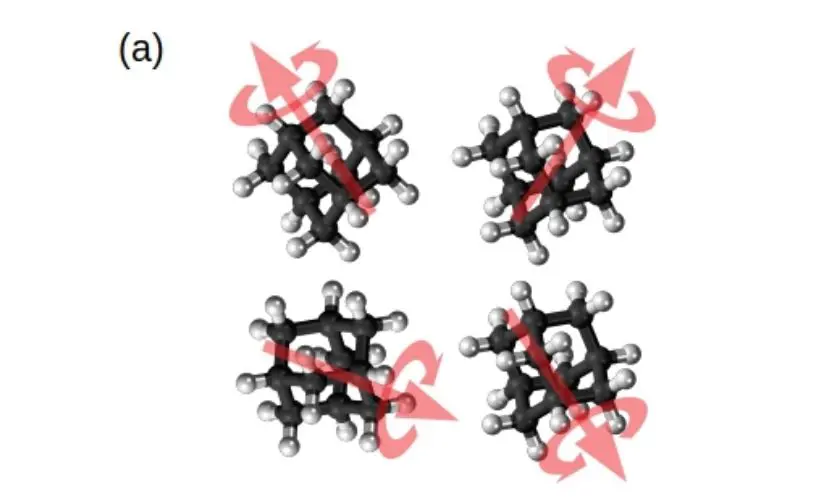
Scientists have demonstrated a novel approach to quantum sensing using multiple solid-state nuclear magnetic resonance (NMR) to detect subtle fluctuations in radio-frequency control fields. The work centers on creating and analysing large clusters of correlated nuclear spins, observed as high-order quantum coherences, to enhance sensing capabilities. Experiments reveal that these spin clusters can sensitively detect pulse-width jitters in radio-frequency control fields at the level of tens of nanoseconds, showcasing a significant advancement in precision measurement. The team generated these high-order coherences using the nuclear spins of adamantane, a polycrystalline powder, and a standard 500MHz NMR spectrometer operating at room temperature.
By manipulating these correlated spins, researchers investigated the interplay between enhanced sensitivity offered by larger coherence orders, their relative distributions within the cluster, and their susceptibility to decoherence. Data shows that even with a non-uniform distribution of coherence orders, an optimal maximum coherence order exists that maximizes sensing efficiency, demonstrating a crucial balance between quantum advantage and signal degradation. To support their experimental findings, scientists developed a simplified numerical model to estimate the corresponding quantum Fisher information, a theoretical benchmark for sensing precision, which complements the experimental results and confirms the potential of this solid-state NMR platform as a valuable testbed for investigating many-body quantum metrology protocols. Measurements confirm that the system’s ability to detect fluctuations scales with the coherence order, offering a pathway towards increasingly sensitive quantum sensors.
Optimal Coherence For Quantum Sensing
This research demonstrates the successful application of multiple-quantum solid-state nuclear magnetic resonance (NMR) for sensitive quantum sensing. Scientists created and manipulated large clusters of correlated nuclear spins, achieving coherence orders of approximately 100, which corresponds to correlated spin clusters containing up to 3000 spins. By introducing controlled fluctuations and monitoring the resulting changes in these clusters, the team quantified sensing efficiency and established a clear relationship between coherence order and sensitivity. The results reveal a non-intuitive finding: sensing efficiency does not simply increase with higher coherence orders.
Instead, an optimal coherence order exists, beyond which sensitivity decreases due to the effects of decoherence, suggesting that excluding the highest coherence orders can improve the performance of this sensing technique. Using this optimized approach, the team detected pulse-width jitters as small as 10 nanoseconds, even with experimental imperfections present. A simplified numerical model, designed to emulate the experimental system, corroborated these findings and further supported the interpretation of the experimental data. The authors acknowledge that the current model is simplified and does not capture all complexities of the system, suggesting that further research is needed to fully explore the potential of solid-state NMR as a platform for many-body quantum metrology and to investigate the limits of this approach for detecting even smaller fluctuations.
🗞 Quantum Sensing via Large Spin-Clusters in Solid-State NMR: Optimal coherence order for practical sensing
🧠 ArXiv: https://arxiv.org/abs/2512.00494