The concept of echo state property (ESP) has been a cornerstone in reservoir computing, enabling output-only training without relying on initial states or far past inputs. However, traditional ESP definitions do not account for non-stationary systems where statistical properties evolve over time. To address this limitation, researchers have introduced new categories of ESP: non-stationary ESP and subspace-and-subset ESP. This study demonstrates the extension of these concepts in quantum reservoir computing (QRC) frameworks, providing a new understanding of practical design considerations for QRC systems.
Can Quantum Reservoir Computing Be Extended?
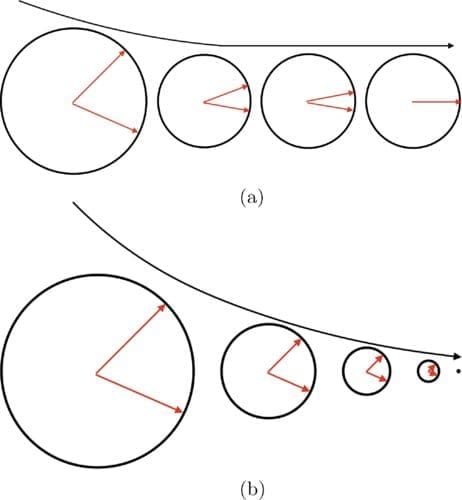
The concept of echo state property (ESP) is a fundamental aspect of reservoir computing, ensuring that output-only training of reservoir networks can be achieved without relying on initial states or far past inputs. However, the traditional definition of ESP does not account for non-stationary systems where statistical properties evolve over time.
To address this limitation, researchers have introduced two new categories of ESP: non-stationary ESP and subspace-and-subset ESP. Non-stationary ESP is designed for potentially non-stationary systems, while subspace-and-subset ESP is tailored for systems whose subsystems possess ESP.
Numerical Demonstrations
To demonstrate the correspondence between non-stationary ESP in quantum reservoir computing (QRC) frameworks and typical Hamiltonian dynamics, researchers employed nonlinear autoregressive moving-average (NARMA) tasks. These tasks involve complex input encoding methods that simulate real-world scenarios.
The study’s findings confirm the correspondence between non-stationary ESP and QRC frameworks by calculating linear-nonlinear memory capacities. These capacities quantify the input-dependent components within reservoir states, providing a new understanding of practical design considerations for QRC systems.
Physical Reservoir Computing
Physical reservoir computing (PRC) has garnered significant attention as a means to mitigate the massive computational resource needs of sophisticated machine learning methods like deep learning. However, not all physical systems are effective as reservoir substrates due to potential initial-state sensitivity in their natural dynamics.
One crucial precondition for excluding such systems is the echo state property (ESP), which requires initial-state dependency to diminish over time. The current state of quantum computing relies on noisy intermediate-scale quantum (NISQ) technology, representing non-fault-tolerant and small-to-medium-sized quantum computer environments.
Quantum Computing Era
The NISQ era has seen a surge in attention towards non-universal quantum computation schemes due to their near-term feasibility on physical devices. Such computational procedures include instantiations of quantum approximate optimization algorithms (QAOA) and quantum-inspired neural networks (QINNs).
These approaches have the potential to revolutionize various fields, including machine learning, optimization, and simulation. However, the development of robust and scalable QRC systems remains a significant challenge.
Quantum Reservoir Computing
Quantum reservoir computing (QRC) is an emerging field that leverages the principles of quantum mechanics to develop novel computational architectures. By exploiting the unique properties of quantum systems, QRC has the potential to overcome some of the limitations of classical reservoir computing.
The study’s findings provide a new understanding of practical design considerations for QRC systems, highlighting the importance of non-stationary ESP in potentially non-stationary systems. This research paves the way for further exploration of QRC and its applications in various fields.
Future Directions
Future directions for this research include exploring the implications of non-stationary ESP on other quantum computing architectures and developing more sophisticated input encoding methods to simulate real-world scenarios.
Additionally, researchers can investigate the application of QRC to various domains, such as machine learning, optimization, and simulation. By pushing the boundaries of what is possible with QRC, scientists can unlock new possibilities for quantum computing and its potential to transform industries.
Conclusion
In conclusion, this study demonstrates the extension of echo state property (ESP) in quantum reservoir computing (QRC) frameworks, providing a new understanding of practical design considerations for QRC systems. The findings highlight the importance of non-stationary ESP in potentially non-stationary systems and pave the way for further exploration of QRC and its applications.
By leveraging the unique properties of quantum systems, researchers can develop novel computational architectures that overcome some of the limitations of classical reservoir computing. As the field of QRC continues to evolve, it is likely to have a profound impact on various domains, from machine learning to optimization and simulation.
Publication details: “Extending echo state property for quantum reservoir computing”
Publication Date: 2024-08-14
Authors: Shumpei Kobayashi, Quoc Hoan Tran and Kohei Nakajima
Source: Physical review. E
DOI: https://doi.org/10.1103/physreve.110.024207