Solving the equations that govern how particles move and spread, crucial for modelling everything from semiconductor behaviour to biological processes, often demands immense computational power. Ellen Devereux and Animesh Datta, both from the University of Warwick, alongside their colleagues, investigate how quantum computers might tackle these challenges, specifically focusing on the drift-diffusion equation in two dimensions. Their work compares the efficiency of different quantum ‘gate sets’, the basic building blocks of quantum programs, in solving this equation, analysing how the complexity of the calculation grows as the desired precision increases. The team’s findings reveal that while quantum solutions show promise, practical limitations arise from the overhead involved in translating the problem into a quantum format, and even modest problem sizes currently exceed the capabilities of existing quantum hardware. This research provides valuable insight into the potential and the practical hurdles of applying quantum computation to real-world modelling problems.
Quantum Drift-Diffusion Algorithm Circuit Depth Analysis
Scientists have compared the efficiency of five different quantum gate sets for solving a drift-diffusion equation in two dimensions, a problem relevant to modelling materials and physical phenomena. The research team analysed circuit depth, a measure of computational complexity, required to implement a quantum algorithm for varying system sizes. Results demonstrate that an unconstrained gate set consistently requires the fewest computational steps, but demands more complex hardware. Clifford+T and Magic T gate sets offer a trade-off between circuit depth and hardware complexity, while restricted gate sets provide further optimisation potential for near-term quantum devices. This work advances the development of efficient quantum algorithms for solving partial differential equations, with implications for modelling physical phenomena in materials science and beyond. The detailed comparison of each gate set highlights the advantages and disadvantages for different quantum computing architectures, revealing that the choice of gate set significantly impacts the scalability and feasibility of implementing the quantum drift-diffusion solver.
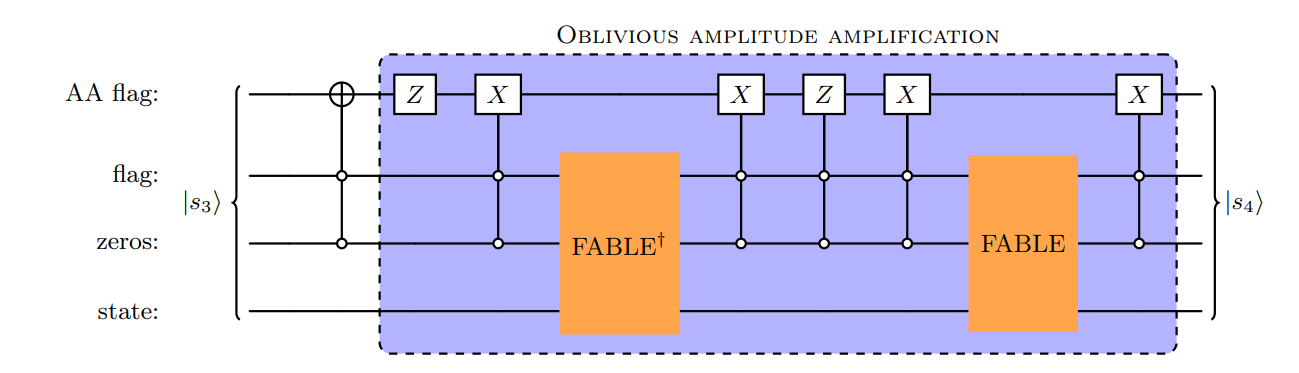
The analysis considered scenarios using up to 22 qubits, demonstrating that scaling with spatial resolution aligns with theoretical predictions. However, scaling with spatial dimension is less efficient due to the computational overhead of block encoding. Furthermore, even for simple problem instances, the demands of the algorithm exceed the capabilities of current quantum hardware.
Quantum Algorithm Solves Fokker-Planck Equation Efficiently
Researchers have developed a quantum algorithm to efficiently solve the Fokker-Planck equation, a fundamental equation used to model diffusion processes in physics and finance. The team implemented and optimised this algorithm on a quantum simulator to reduce complexity and improve accuracy, exploring techniques like low-rank state preparation and carefully analysing the trade-offs between circuit depth, accuracy, and the number of measurements required. The Fokker-Planck equation describes how probability distributions evolve over time for diffusing particles, and is used in fields like Brownian motion and chemical kinetics. The quantum algorithm maps the solution of the equation onto a quantum state, then uses quantum operations to evolve that state in time, potentially offering speedups over classical methods.
The initial probability distribution is encoded into a quantum state through state preparation, and the researchers explored techniques to reduce the complexity of this process. Reducing circuit depth is crucial for running algorithms on real quantum hardware. The team optimised the circuit using low-rank approximations and careful gate scheduling. Extracting the solution from the quantum state requires measurements, and the researchers analysed the errors introduced by this process, determining the number of measurements needed to achieve a desired level of accuracy. They used established mathematical tools to bound these errors.
The low-rank approximation technique significantly reduces circuit complexity by exploiting the sparsity of the initial probability distribution. The researchers found that the number of measurements required is a key factor in the overall performance of the algorithm. Approximations within the algorithm introduce some error, but the results still compare favourably to classical methods. The algorithm’s performance is affected by the dimensionality of the problem. Future research will focus on implementing the algorithm on real quantum hardware, exploring error mitigation techniques, and developing adaptive measurement strategies to reduce the number of measurements required.
Applying the algorithm to more complex problems, such as those with non-constant diffusion coefficients, is also a priority. Comparing the performance of this algorithm with other quantum algorithms for solving partial differential equations will provide valuable insights. This research presents a well-researched and detailed study of a quantum algorithm for solving the Fokker-Planck equation. The authors have made significant progress in optimising the algorithm and analysing its performance. The results are promising and suggest that quantum algorithms have the potential to offer speedups over classical methods for certain problems. This work is a valuable contribution to the field of quantum computing.
Two-Dimensional Drift-Diffusion, Quantum Circuit Limitations
Scientists have conducted a comparative analysis of quantum circuits designed to solve a two-dimensional drift-diffusion equation, employing five distinct gate sets. The team investigated circuit depth and performance using up to 22 qubits, revealing that scaling with spatial resolution, while aligning with theoretical predictions in one dimension, is less efficient in two dimensions due to the computational overhead of block encoding. The analysis demonstrates that even for minimal problem instances, the computational demands exceed the capabilities of current quantum hardware. The study rigorously validated the quantum circuits against both analytical and classical solutions, confirming accuracy within established error margins.
Results indicate that increasing the number of spatial discretisation points reduces discretisation error, but simultaneously increases the number of qubits and gates required, leading to increased quantum error. A balance must be struck between these competing factors to minimise overall error. The authors suggest future work will focus on optimising circuit decomposition and exploring more efficient encoding methods to reduce the computational burden.
🗞 Quantum algorithms for solving a drift-diffusion equation: analysing circuit depths
🧠 ArXiv: https://arxiv.org/abs/2509.21509