Imagine a world where computers operate at temperatures colder than outer space, and games are played using the bizarre rules of quantum mechanics, this future is closer than you think. This Saturday, Ludwig Maximilian University (LMU) Munich will host a Day of Quantum Physics, showcasing the groundbreaking technologies born from a century of quantum mechanics research, a field pioneered by LMU’s own Werner Heisenberg and Erwin Schrödinger. Designated the International Year of Quantum Science and Technology by the United Nations, 2025 marks a pivotal moment for this rapidly evolving field, promising revolutions in computing, materials science, and beyond, and LMU is opening its doors to inspire the next generation of quantum innovators.
LMU Hosts Day of Quantum Physics
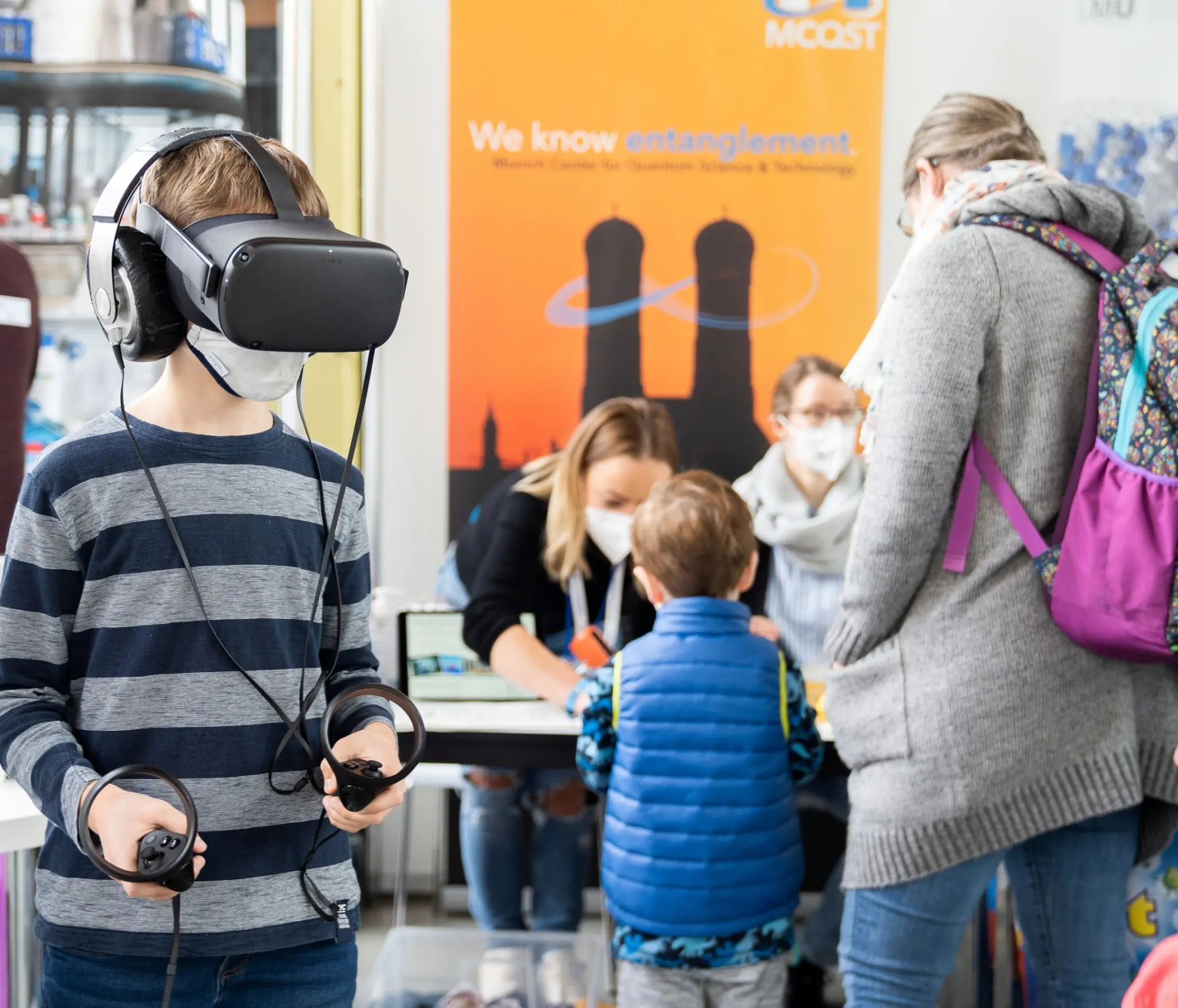
This Saturday, November 8th, 2025, Ludwig Maximilian University (LMU) Munich will host a Day of Quantum Physics, showcasing the latest developments in this rapidly evolving field, and celebrating the centenary of quantum mechanics. Organized by LMU’s Faculty of Physics in collaboration with the Munich Center for Quantum Science and Technology (MCQST), the event will feature lectures and interactive stations at the Main Building, offering visitors a hands-on experience with quantum technologies. The initiative aligns with the United Nations’ designation of 2025 as the International Year of Quantum Science and Technology, recognizing the historical significance of quantum physics – particularly LMU’s role as the academic home of pioneers like Werner Heisenberg and Wolfgang Pauli – and its growing importance for future innovations. From demonstrations of “the world’s coldest computers” to explorations of quantum simulators—a field originating in Munich with Immanuel Bloch’s research—the day aims to inspire the next generation of scientists and demonstrate the exciting, forward-looking research occurring at LMU.
Centennial of Quantum Mechanics
The year 2025 marks the centennial of quantum mechanics, a monumental achievement in physics first formally laid out by pioneers like Werner Heisenberg and Erwin Schrödinger a century ago. This anniversary is being widely celebrated, with the United Nations designating 2025 as the International Year of Quantum Science and Technology. At Ludwig Maximilian University (LMU) in Munich, a hub for early quantum research with figures like Heisenberg, Pauli, and Sommerfeld, the Faculty of Physics is hosting a “Day of Quantum Physics” this Saturday, November 8th. The event showcases not only the historical significance of the field, but also cutting-edge developments like quantum simulators – a field born at LMU in 2002 with Immanuel Bloch’s research – and explorations into quantum communication and cryptography, highlighting the practical applications emerging from a century of quantum understanding.
Quantum Physics: Practical Applications
Beyond its historical significance – marked by a century since the formulation of quantum mechanics and LMU’s role as home to pioneers like Heisenberg and Pauli – quantum physics is increasingly driving practical technological advancements. The Faculty of Physics at LMU, alongside the Munich Center for Quantum Science and Technology, is showcasing developments like quantum computers and communication systems, highlighting a shift from theoretical foundations to tangible applications. Notably, research groups at LMU pioneered the field of quantum simulators in 2002, devices now utilized globally to model complex quantum systems, and continue to develop the theoretical frameworks and algorithms needed to understand these systems. Further research focuses on secure quantum communication and cryptography, demonstrating a broad scope of innovation poised to shape future technologies.
Quantum Research at LMU Today
Quantum research remains a central focus at LMU today, building on a rich historical legacy and driving innovation in cutting-edge technologies. This November, the Faculty of Physics is showcasing its advancements with a Day of Quantum Physics, coinciding with the United Nations’ designation of 2025 as the International Year of Quantum Science and Technology. LMU’s contributions span a wide range of areas, from pioneering work in quantum simulation – a field originating with Immanuel Bloch’s research group in 2002 – to theoretical advancements supporting these experiments and developing complex algorithms. Furthermore, the university is actively engaged in quantum communication and cryptography, demonstrating a comprehensive approach to harnessing the potential of quantum mechanics. This commitment builds upon a century of quantum physics, recognizing the historical significance of LMU as the former academic home of foundational figures like Werner Heisenberg, Erwin Schrödinger, and Wolfgang Pauli, all shaped by the teachings of Arnold Sommerfeld.