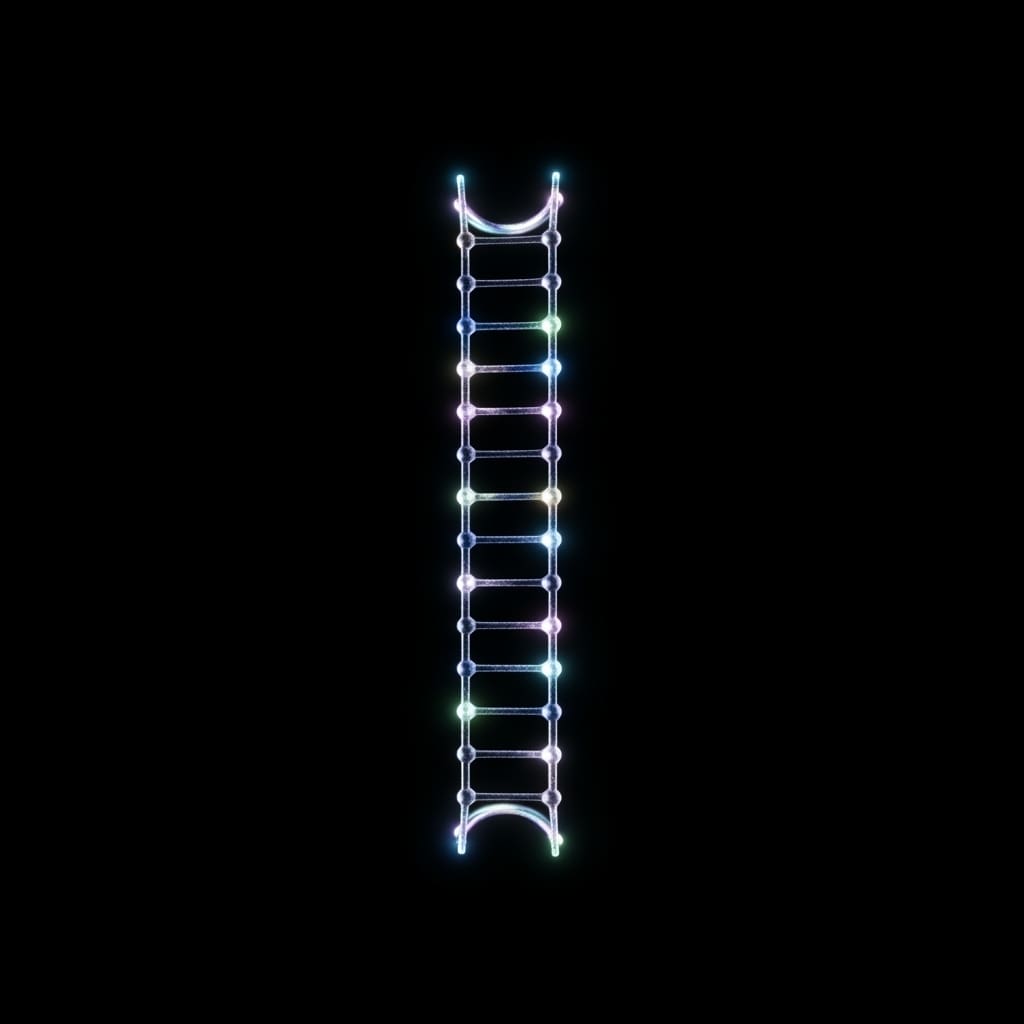
The behaviour of superconductivity in disordered materials presents a fundamental challenge to condensed matter physics, and recent work by Eyal Walach and Efrat Shimshoni, both from Bar-Ilan University, sheds new light on this complex phenomenon. They investigate the properties of a two-legged Josephson ladder, a system where superconductivity can be dramatically altered by disorder, potentially leading to a variety of distinct phases of matter. Their research reveals that strong disorder generates three separate phases, including a novel intermediate state between superconductivity and insulation, and demonstrates that this insulating phase closely resembles a spin glass. This discovery significantly advances our understanding of how disorder impacts superconductivity and provides a new framework for exploring exotic phases of matter in low-dimensional systems.
Disorder and Quantum Phases in Josephson Ladders
blem in a model of a two-legged Josephson ladder subjected to a wide spatial distribution of its parameters along the legs. In contrast, we assume the system to have a perfect Z2 symmetry to interchange between the legs, and investigate the effects of spatial randomness which preserves this symmetry.
Disorder Drives Quantum Phase Transitions
Okay, here’s a breakdown of the provided text, focusing on its content and purpose. It’s a lengthy scientific paper (or a substantial excerpt from one) dealing with condensed matter physics, specifically the behavior of disordered systems and the transitions between different phases of matter.
The paper investigates disordered systems where the arrangement of atoms or particles is not perfectly ordered, such as amorphous materials and certain types of superconductors. It focuses on quantum phase transitions, which are transitions between different quantum states of matter driven not by temperature changes, as in classical phase transitions, but by changes in parameters like disorder, magnetic field, or pressure. A central theme is the competition between localization, where electrons or other particles become trapped in specific regions, and delocalization, where particles move freely throughout the material. This competition is crucial for understanding conductivity and other physical properties, especially in systems with strong disorder where randomness significantly alters material behavior.
Key concepts explored include Anderson localization, where electrons in a disordered material become localized due to interference effects leading to a loss of conductivity, and bosonization, a mathematical technique that maps interacting fermionic particles into non-interacting bosonic particles to simplify analysis. The paper also discusses quantum criticality, which describes system behavior near a quantum phase transition characterized by strong fluctuations, and Griffiths singularities, which are rare localized regions that behave differently from the average and contribute to unusual physical properties. Vortex physics is examined in the context of superconductors, where magnetic flux vortices are influenced by disorder, and many-body localization is considered as an exotic form of localization in strongly interacting systems where all many-body states become localized.
The study relies heavily on theoretical modeling and calculations to understand these systems. It makes extensive use of renormalization group techniques, which systematically eliminate short-wavelength fluctuations in systems with many degrees of freedom. Numerical simulations are likely used to support theoretical predictions and explore more complex scenarios, and bosonization remains a key mathematical tool throughout the analysis.
The structure of the paper appears to build a theoretical framework for understanding the interplay between disorder, interactions, and quantum phase transitions. It likely begins by establishing the theoretical background through a review of relevant concepts and existing theories, then presents a refined model or approach for strongly disordered systems. Key results are derived through calculations and predictions of material properties, followed by a discussion connecting these results to experimental observations and potential applications.
The paper references numerous experimental studies, indicating that the theoretical work is motivated by real-world observations. These include studies on high-temperature superconductors, amorphous materials, two-dimensional electron gases, and ultracold atom systems, all of which are highly sensitive to disorder and quantum effects.
An extensive list of references, exceeding 46 entries, demonstrates that the work is grounded in a broad body of existing research in condensed matter physics. The references span topics such as Anderson localization, quantum phase transitions, strongly correlated systems, disordered systems, superconductivity, and theoretical methods including renormalization group techniques and bosonization.
In summary, this is a highly technical paper aimed at researchers in condensed matter physics. It presents a theoretical investigation of strongly disordered quantum systems, focusing on the interplay between disorder, interactions, and quantum phase transitions. The work is driven by experimental motivations and has important implications for understanding a wide range of materials and physical phenomena.
Disorder Drives Phases in Josephson Ladders
This research establishes a detailed phase diagram for strongly disordered Josephson ladders, revealing how disorder fundamentally alters the transition between superconductivity and insulation. By employing a real-space renormalization group technique, scientists identified three distinct phases within the disordered system: a disordered superconducting phase, a novel Bose glass phase, and a disordered insulating phase exhibiting characteristics of a spin glass. This contrasts with simpler models and demonstrates that disorder plays a crucial role in shaping the behavior of these systems., The team’s analysis goes beyond characterizing a single parameter of disorder, instead focusing on the entire distribution of parameters to accurately model the strong disorder present in the system. This approach allowed them to map the insulating phase onto a well-known spin-chain model, providing a deeper understanding of its properties.
Furthermore, the researchers validated their findings using both numerical simulations and master equation analysis, strengthening the robustness of their conclusions., The authors acknowledge that their model simplifies certain aspects of real materials and that further investigation is needed to fully account for all complexities. They suggest that future work could explore the impact of different types of disorder and investigate the behavior of these systems in higher dimensions. Despite these limitations, this research provides a significant advancement in understanding the interplay between disorder and quantum phases in superconducting systems, offering valuable insights for the design of novel electronic materials.
👉 More information
🗞 Quantum Phases of a Strongly Disordered Two-Legged Josephson Ladder
🧠 ArXiv: https://arxiv.org/abs/2512.19808