Superfluorescence, a phenomenon where materials emit a burst of coherent light from collectively excited atoms, typically requires precise optical stimulation, but recent work demonstrates a surprising new trigger: ionizing radiation. Matteo L. Zaffalon, Andrea Fratelli, and Taras Sekh, alongside colleagues at the Università degli Studi di Milano Bicocca, ETH Zürich, and the Istituto Italiano di Tecnologia, report the first observation of superfluorescence initiated by high-energy photons in carefully constructed lead-halide perovskite nanocrystal superlattices. This breakthrough reveals that secondary electrons generated by radiation can efficiently induce cooperative emission bursts, achieving an exceptionally short scintillation lifetime of approximately 40 picoseconds and establishing a new class of coherent scintillating metamaterials. By demonstrating a direct link between radiation and optical excitation, this research opens a pathway towards the development of ultrafast, highly sensitive radiation detectors and advanced nanotechnological scintillators with applications in diverse fields.
Electrical Control of Semiconductor Superfluorescence
This research demonstrates electrical control over superfluorescence within a semiconductor structure, offering advantages for potential device applications. The team successfully triggered and modulated superfluorescent emission by manipulating the concentration of charge carriers within a gallium arsenide/aluminium gallium arsenide quantum well structure. This control is achieved by applying a voltage, allowing precise tuning of the conditions necessary for this collective emission. The study observed a distinct peak in the emitted light spectrum, indicating the collective emission process, and showed that its intensity changed significantly with the applied voltage. These findings represent a significant step towards creating electrically driven superfluorescent sources, potentially enabling novel optoelectronic devices with enhanced performance and functionality.
Perovskite Nanocrystal Radiative Decay at Varying Temperatures
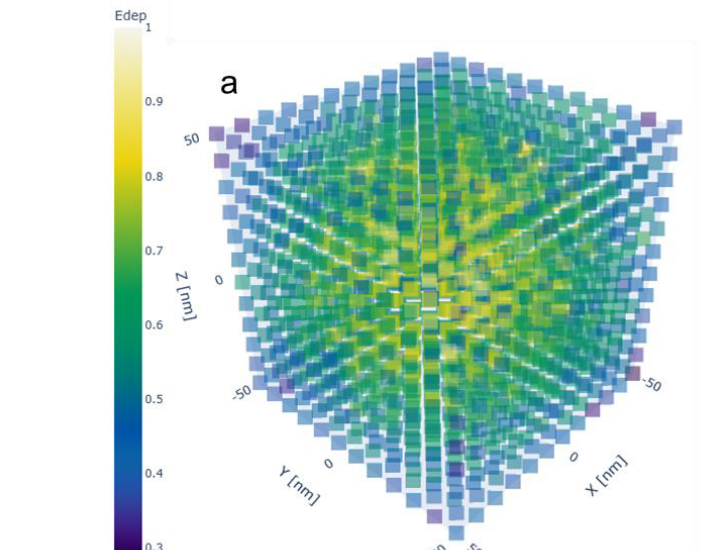
Spectroscopic analysis demonstrates the intrinsic radiative properties of cesium-bromide perovskite nanocrystals arranged into superlattices across a range of temperatures. Comparisons between photoluminescence and radioluminescence reveal insights into the initial population of excited states, and analysis of superfluorescent decay traces reveals the effective lifetime of the superfluorescent component. Modeling and simulation illustrate how energy is deposited within the superlattices, highlighting the importance of the ordered nanocrystal arrangement for efficient energy transfer. The data demonstrates a clear correlation between excitation levels, temperature, and the characteristics of the superfluorescent emission, providing a comprehensive understanding of the experimental methods and data analysis techniques used in the study.
Ionizing Radiation Triggers Perovskite Superfluorescence
Scientists have, for the first time, observed superfluorescence in lead-halide perovskite nanocrystal superlattices when triggered by ionizing radiation. Using cesium-bromide nanocrystals arranged into superlattices, the team demonstrated that secondary electrons generated by high-energy photons can efficiently induce bursts of cooperative emission, a phenomenon known as superfluorescence. This breakthrough introduces a new class of coherent scintillating materials with an exceptionally fast scintillation lifetime of approximately 40 picoseconds. Experiments revealed a strong analogy between optical and ionizing excitation, both leading to high densities of excited electrons that drive superfluorescent emission, even at mild cryogenic temperatures.
The data shows that over 80% of the emitted light originates from superfluorescence, despite the presence of thermal disorder, making this process technologically accessible. Importantly, the absence of spectral overlap between the emitted light and the material’s absorption edge eliminates reabsorption losses, further enhancing performance. Monte Carlo simulations validated the experimental observations, accurately modeling energy deposition within the superlattices. These findings open new avenues for developing ultrafast reabsorption-free scintillator metasolids with potential applications in time-of-flight radiation detection technologies, medical imaging, and high-energy physics.
Researchers have successfully demonstrated superfluorescence in lead-halide perovskite nanocrystal superlattices when triggered by ionizing radiation. This achievement marks the first observation of this phenomenon induced by anything other than intense optical stimulation, opening new avenues for the development of advanced materials. The team confirmed minimal self-absorption losses due to the absence of spectral overlap between the emitted light and the material’s absorption edge, establishing these perovskite superlattices as a new class of solution-processable scintillators, offering the potential for ultrafast detection architectures and novel signal processing techniques.
🗞 Radiation-Triggered Superfluorescent Scintillation in Quantum-Ordered Perovskite Nanocrystal Superlattices
🧠 ArXiv: https://arxiv.org/abs/2509.18767