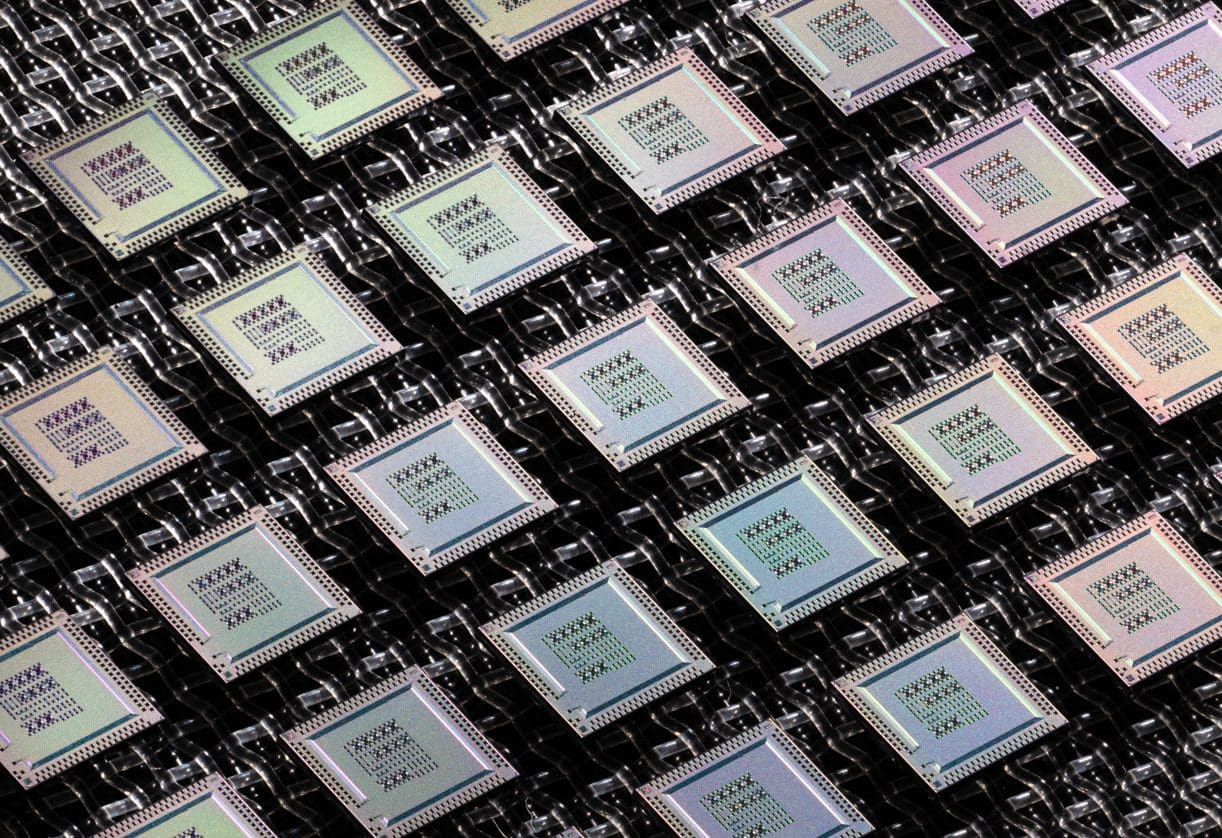
Quantum Motion, a UK-based quantum computing company, has achieved a major milestone in scalable quantum computing by demonstrating rapid large-scale characterization of quantum devices fabricated using commercial semiconductor processes. The company designed a silicon chip featuring an integrated array of 1024 quantum dots and validated them in less than five minutes, at least one hundred times faster than current methods.
This achievement was made possible through a partnership with GlobalFoundries, a leading semiconductor manufacturer, which produced the chips on its 300mm 22FDX platform. James Palles-Dimmock, CEO of Quantum Motion, and Ted Letavic, SVP and Corporate Fellow at GlobalFoundries, highlighted the significance of this collaboration, which combines deep quantum expertise with world-class semiconductor manufacturing. The partnership aims to develop quantum processors based on a scalable silicon platform, paving the way for high-volume production of quantum chips and advancing the field of quantum computing.
Quantum Motion’s Milestone
Quantum Motion, a UK-based quantum computing scale-up, has achieved a significant milestone in the development of scalable quantum computing. The company has successfully demonstrated the rapid, large-scale characterization of quantum devices fabricated using commercial semiconductor processes. This achievement was made possible through a partnership with GlobalFoundries, a renowned semiconductor manufacturer. Quantum Motion’s innovative approach involves designing silicon chips featuring integrated arrays of quantum dots, which can be validated at a much faster rate than current state-of-the-art methods.
The company’s chip, Bloomsbury, features an array of 1024 quantum dots on an area of less than 0.1mm² and was fabricated using GlobalFoundries’ 300mm 22FDX platform. This platform leverages industry-leading capabilities such as power-efficient edge processing, a wider temperature range (1K and below), and system-on-chip integration. The back gate bias capability of FDX enables seamless cryogenic tuning and control, providing a significant advantage compared to bulk silicon solutions for readout and control operations. Quantum Motion’s achievement highlights the potential of using existing high-volume manufacturing platforms for silicon quantum processors.
The partnership between Quantum Motion and GlobalFoundries exemplifies the strength of combining deep quantum expertise with world-class semiconductor manufacturing. By working together, the companies can ensure that cutting-edge quantum designs are realized using robust and reliable processes, paving the way for high-volume production of quantum chips. This collaboration has significant implications for the development of scalable quantum computing, as it demonstrates that silicon-based quantum chips can be fabricated using established semiconductor processes.
Quantum Motion’s CEO, James Palles-Dimmock, emphasized the importance of this achievement, stating that it shows that scalable manufacturing techniques are compatible with the stringent demands of quantum computing. This milestone bridges the gap between quantum research and industrial-scale production, bringing the company closer to its goal of creating practical quantum processors. Ted Letavic, SVP and Corporate Fellow at GlobalFoundries, also expressed enthusiasm for the collaboration, highlighting the potential of the company’s 22FDX technology platform to drive advancements in quantum computing.
Quantum Computing and Scalability
Quantum computing has the potential to revolutionize various fields, including chemistry, materials science, medicine, and artificial intelligence. However, progressing from small quantum processors to large-scale quantum computers requires an approach that can measure each qubit in a large array without needing a vast number of input/output connections to the chip. Quantum Motion’s approach addresses this challenge by integrating qubits and control electronics on the same chip, advancing towards the goal of creating practical quantum processors.
The company’s focus on scalability is crucial for the development of fault-tolerant quantum computing architectures. By developing arrays of qubits based on ubiquitous silicon technology, Quantum Motion aims to support the most powerful quantum algorithms, targeting solutions to currently intractable problems. The company’s expertise in quantum theory, engineering, and software enables it to refine chip designs and deliver increasing levels of quantum/classical integration.
The scalability of quantum computing is a complex challenge that requires innovative solutions. Quantum Motion’s approach involves using commercial semiconductor manufacturing processes to fabricate silicon quantum processors. This approach has the potential to enable high-volume production of quantum chips, making quantum computing more accessible and affordable. The company’s partnership with GlobalFoundries is a significant step towards achieving this goal, as it provides access to world-class semiconductor manufacturing capabilities.
The development of scalable quantum computing also requires advancements in materials science and engineering. Quantum Motion’s use of silicon technology is a key aspect of its approach, as it enables the creation of arrays of qubits that can be integrated with control electronics on the same chip. The company’s expertise in quantum theory and engineering enables it to optimize the design of its chips, ensuring that they meet the stringent requirements of quantum computing.
Quantum Motion’s Technology Platform
Quantum Motion is developing a revolutionary technology platform that involves not just a qubit, but a scalable array of qubits based on silicon technology. The company’s focus on fault-tolerant quantum computing architectures enables it to support the most powerful quantum algorithms, targeting solutions to currently intractable problems. Quantum Motion’s approach involves integrating qubits and control electronics on the same chip, advancing towards the goal of creating practical quantum processors.
The company’s technology platform has significant implications for various fields, including chemistry, materials science, medicine, and artificial intelligence. By developing fault-tolerant quantum computing architectures, Quantum Motion aims to enable the solution of complex problems that are currently intractable using classical computers. The company’s expertise in quantum theory, engineering, and software enables it to refine chip designs and deliver increasing levels of quantum/classical integration.
Quantum Motion’s use of silicon technology is a key aspect of its approach, as it enables the creation of arrays of qubits that can be integrated with control electronics on the same chip. The company’s partnership with GlobalFoundries provides access to world-class semiconductor manufacturing capabilities, enabling the high-volume production of quantum chips. This collaboration has significant implications for the development of scalable quantum computing, as it demonstrates that silicon-based quantum chips can be fabricated using established semiconductor processes.
The company’s technology platform is also focused on delivering practical quantum processors that can be used in various applications. Quantum Motion’s approach involves developing arrays of qubits that can be integrated with control electronics on the same chip, enabling the creation of fault-tolerant quantum computing architectures. The company’s expertise in quantum theory, engineering, and software enables it to refine chip designs and deliver increasing levels of quantum/classical integration.
Future Developments and Applications
Quantum Motion plans to build on the success of its Bloomsbury chip and the GlobalFoundries partnership, refining chip designs and delivering increasing levels of quantum/classical integration. The company’s focus on scalability and fault-tolerant quantum computing architectures enables it to support the most powerful quantum algorithms, targeting solutions to currently intractable problems.
The potential applications of Quantum Motion’s technology platform are vast and varied. The company’s focus on chemistry, materials science, medicine, and artificial intelligence enables it to develop solutions that can have a significant impact on various industries. By developing fault-tolerant quantum computing architectures, Quantum Motion aims to enable the solution of complex problems that are currently intractable using classical computers.
The development of scalable quantum computing also has significant implications for the future of computing. Quantum Motion’s approach involves using commercial semiconductor manufacturing processes to fabricate silicon quantum processors, enabling high-volume production of quantum chips. This collaboration with GlobalFoundries demonstrates that silicon-based quantum chips can be fabricated using established semiconductor processes, bringing the company closer to its goal of creating practical quantum processors.
Quantum Motion’s technology platform has the potential to revolutionize various fields and enable the solution of complex problems that are currently intractable. The company’s focus on scalability, fault-tolerant quantum computing architectures, and silicon technology enables it to develop innovative solutions that can have a significant impact on various industries. As the company continues to refine its chip designs and deliver increasing levels of quantum/classical integration, it is likely to play a key role in shaping the future of quantum computing.
Conclusion
Quantum Motion’s breakthrough in scalable quantum computing has significant implications for the development of fault-tolerant quantum computing architectures. The company’s partnership with GlobalFoundries demonstrates that silicon-based quantum chips can be fabricated using established semiconductor processes, enabling high-volume production of quantum chips. Quantum Motion’s focus on scalability, fault-tolerant quantum computing architectures, and silicon technology enables it to develop innovative solutions that can have a significant impact on various industries.
The potential applications of Quantum Motion’s technology platform are vast and varied, with implications for chemistry, materials science, medicine, and artificial intelligence. The company’s expertise in quantum theory, engineering, and software enables it to refine chip designs and deliver increasing levels of quantum/classical integration. As the company continues to build on the success of its Bloomsbury chip and the GlobalFoundries partnership, it is likely to play a key role in shaping the future of quantum computing.
The development of scalable quantum computing requires innovative solutions that can address the complex challenges involved. Quantum Motion’s approach involves using commercial semiconductor manufacturing processes to fabricate silicon quantum processors, enabling high-volume production of quantum chips. The company’s focus on fault-tolerant quantum computing architectures enables it to support the most powerful quantum algorithms, targeting solutions to currently intractable problems.
In conclusion, Quantum Motion’s breakthrough in scalable quantum computing has significant implications for the development of fault-tolerant quantum computing architectures. The company’s partnership with GlobalFoundries and its focus on scalability, fault-tolerant quantum computing architectures, and silicon technology enable it to develop innovative solutions that can have a significant impact on various industries. As the company continues to refine its chip designs and deliver increasing levels of quantum/classical integration, it is likely to play a key role in shaping the future of quantum computing.
External Link: Click Here For More