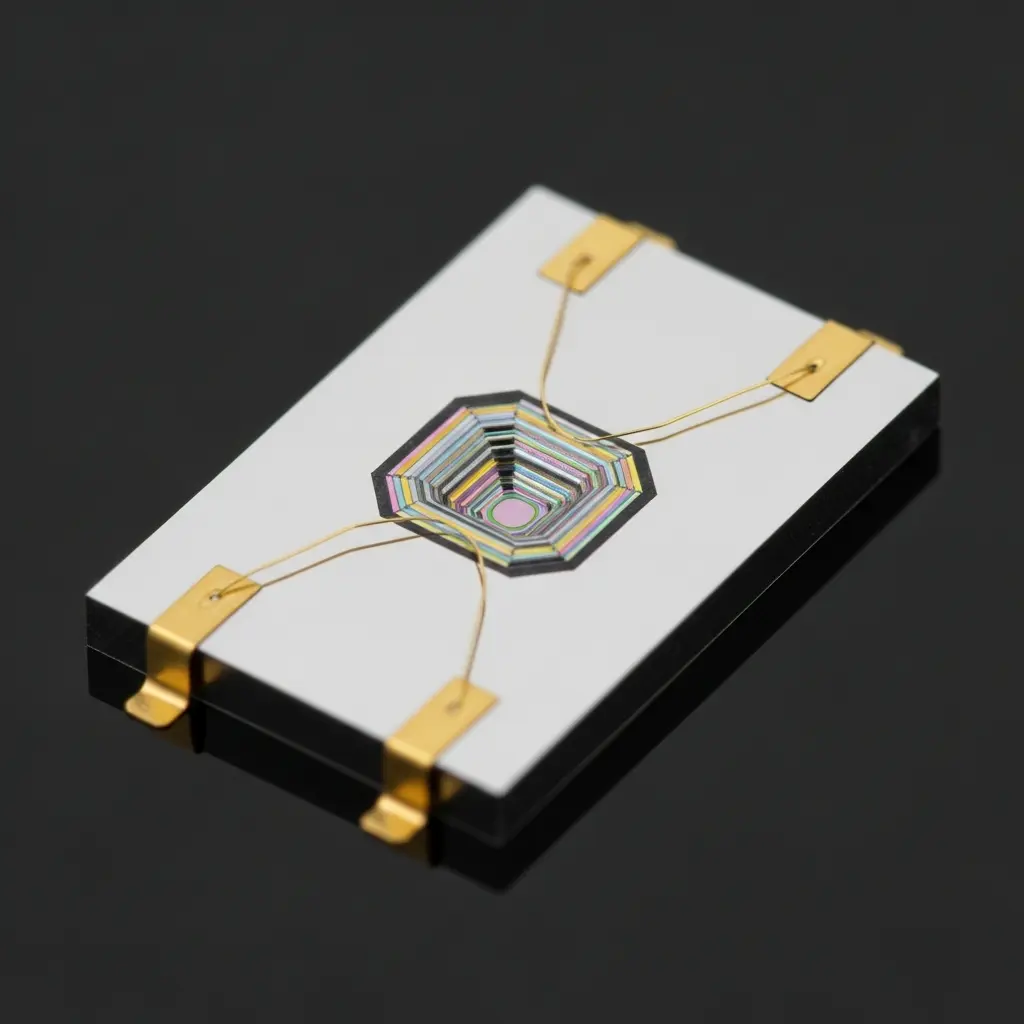
The behaviour of light and matter within specially designed microcavities presents a fascinating challenge for physicists, and recent work by Thi-Hau Nguyen, Thi-Hong-Hai Do, and Van-Nham Phan from institutions including the Graduate University of Science and Technology, Vietnam Academy of Science and Technology, sheds new light on this area. The team theoretically investigates how electrons and holes, with differing masses, interact with light within these microcavities, revealing a complex interplay that leads to the formation of distinct, coherent states. This research demonstrates a clear transition from disordered systems to ordered condensates as mass imbalances decrease, offering insights into the fundamental physics of light-matter coupling and potentially paving the way for novel optoelectronic devices. By modelling the behaviour of these particles, the scientists identify specific signatures in their momentum and energy distributions, providing a roadmap for experimental verification of these newly predicted states and a deeper understanding of polariton condensation.
The team theoretically explores how electrons and holes, differing in mass, interact with light within these structures, revealing a complex interplay that leads to the formation of distinct, coherent states. This research demonstrates a clear transition from disordered systems to ordered condensates as mass imbalances decrease, offering insights into the fundamental physics of light-matter coupling and potentially paving the way for novel optoelectronic devices. By modelling these particles, the scientists identify specific signatures in their momentum and energy distributions, providing a roadmap for experimental verification of these newly predicted states and a deeper understanding of polariton condensation.,.
Polariton Condensate Formation via Hartree-Fock Approximation
This study pioneers a theoretical approach to understanding the interplay of electron-hole pairs and light within microcavities, focusing on the formation of polariton condensates. Researchers employed the unrestricted Hartree-Fock approximation to develop a set of self-consistent equations that determine the behaviour of excitonic and photonic order parameters within a two-band electronic model. This method accounts for both the attractive force between electrons and holes and the strong coupling between the system and light, allowing for detailed analysis of condensate formation. The team solved the complex many-particle Hamiltonian using this approximation, a technique proven effective for strongly correlated electronic systems.
Analysis of these equations reveals a complex interplay between different condensate states, including excitonic-like polaritons, standard polaritons, and photonic-like polaritons, as the mass imbalance is adjusted. The team observed a clear transition from a disordered state to the formation of these distinct condensate phases as the mass imbalance decreased. Further investigation revealed that increasing the excitation density expands the range of possible condensate states, while lowering the mass imbalance leads to the emergence of coherent bound states prior to robust condensate formation.,.
Mass Imbalance Drives Polariton Condensate Transitions
This research presents a detailed theoretical examination of polariton condensation within microcavities, focusing on how imbalances in the effective mass of electrons and holes influence the formation of these condensates. Scientists employed the unrestricted Hartree-Fock approximation to develop a set of equations that determine the behaviour of excitonic and photonic components within the system, accounting for both electron-hole attraction and light-matter coupling. The team’s calculations predict the emergence of coherent bound states prior to the formation of robust condensates when mass imbalance is reduced, evidenced by specific features in the system’s susceptibility functions. The researchers characterized these states by analyzing the momentum distribution of electron-hole pairs and the photonic density, as well as examining the wave-number-resolved photoemission spectra of electrons, holes, and photons. These measurements provide detailed insights into the spatial and energy characteristics of the different condensate phases, confirming the theoretical predictions and demonstrating the ability to control condensate properties through external parameters. This work establishes a significant understanding of the competition between excitonic, polaritonic, and photonic condensation states and their tendencies when the system is driven out of equilibrium.,.
Mass Imbalance Drives Polariton Condensate Transition
This research details a theoretical investigation into polariton condensation within microcavities, revealing how the balance between electron and hole masses significantly influences the resulting quantum states. Scientists developed a comprehensive model accounting for both the attractive force between electrons and holes and the strong interaction between matter and light, employing a sophisticated mathematical approach to describe the system’s behaviour. The analysis demonstrates a clear transition in condensate states as the mass imbalance decreases, moving from predominantly excitonic to increasingly photonic polariton condensates. The findings align with experimental observations from similar microcavity systems, confirming the model’s accuracy in capturing key physical phenomena. The research acknowledges that the current work focuses on ground state equilibrium conditions, and future investigations will explore the topological properties of these condensates and their behaviour in non-equilibrium scenarios.
👉 More information
🗞 Quantum coherent states of mass-imbalanced electron-hole system within optical microcavities
🧠 ArXiv: https://arxiv.org/abs/2512.07294