The behaviour of electrons confined to two-dimensional materials presents a long-standing puzzle, with competing tendencies towards ordered insulating states and freely moving metallic states, particularly when electron interactions are strong. Abijith Krishnan from the Massachusetts Institute of Technology, Ajesh Kumar from the University of Cologne, and T. Senthil investigate this competition, revealing how defects within these insulating materials can trigger a transition to a novel, potentially topologically ordered, state of matter. Their work demonstrates that the specific arrangement of electrons in the initial insulating state dictates the type of emergent order that appears upon melting, and crucially, establishes a direct link between the defects within the insulator and the exotic particles, known as anyons, that characterise the resulting state. This discovery advances understanding of how complex electronic phases emerge in materials and offers potential routes towards designing materials with tailored quantum properties.
Quantum Phases, Transitions and Emergent Order
This research explores the fascinating world of quantum materials, investigating how electrons interact to create exotic states of matter. Scientists are uncovering a range of quantum phases, including ordered and disordered arrangements, that go beyond traditional solids, liquids, and gases. A central focus is understanding how these phases transition into one another, particularly through continuous changes driven by quantum fluctuations, highlighting the emergence of fractionalization, where fundamental particles split into unusual excitations, and topological order, a state characterized by robust quantum properties. The team investigates how symmetry plays a crucial role in determining the possible phases of matter and how breaking or enhancing symmetries can lead to new phenomena.
Researchers are also studying phases where electrons fractionalize into exotic excitations, often linked to topological order and the quantum Hall effect, a state with unusual transport properties. Symmetry-protected topological phases, characterized by robust topological order, and fracton phases, with immobile excitations, are also under investigation. This work extends to disordered systems, where imperfections can lead to quantum melting transitions, and to two-dimensional materials like graphene, where exotic quantum phases have been observed.
Charge Liquids and Topological Order Emergence
This research details a comprehensive investigation into two-dimensional electronic systems and the emergence of exotic insulating and superconducting states. Scientists have explored the competition between Wigner-Mott insulators, which arise from strong electron repulsion, and metallic states driven by electron kinetic energy, revealing that unique charge liquid states can emerge when these energies are comparable, potentially exhibiting topological order, a state characterized by robust, protected quantum properties. These charge liquids maintain the symmetry of the original material while exhibiting insulating behaviour. The team demonstrated that the type of topological order present in these charge liquids is intimately linked to the charge ordering within the parent Wigner-Mott insulator.
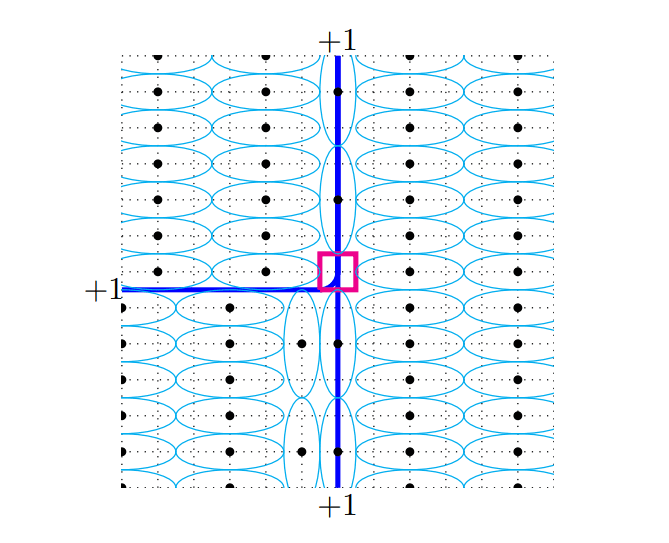
Specifically, they found that for certain filling fractions, a direct transition between the simplest Wigner-Mott insulator and the simplest topologically ordered state is impossible, revealing constraints on the allowed pathways between these phases. The study describes the “melting” process of these Wigner-Mott insulators as the proliferation of topological defects, localized disturbances in the electronic order, which play a crucial role as precursors to the anyon excitations found within the charge liquid phase. Anyons are exotic particles with unique exchange statistics, potentially useful for fault-tolerant quantum computation. The research establishes a detailed theoretical framework describing how the condensation of specific defect configurations leads to the emergence of Z2 topological order, restoring lattice symmetries. Further investigation focused on minimal bosonic Wigner-Mott insulators, revealing that the system’s behaviour is governed by a complex interplay of vortices and internal gauge fields. Scientists showed that the vortex Hamiltonian exhibits distinct degenerate minima, leading to distinct species of vortices, and constructed a Lagrangian that accurately describes the transition from a superfluid phase to the Wigner-Mott insulator.
Quantum Charge Liquids Emerge From Insulators
This research investigates the behaviour of electrons confined to two-dimensional materials, specifically exploring the transitions between insulating and metallic states as the balance between electron interactions and movement changes. The team demonstrates that when moving from a Wigner-Mott insulator, a state where electrons strongly repel each other and become localized, to a metallic state, an intermediate phase called a quantum charge liquid can emerge, notable because it maintains the symmetry of the original material while exhibiting insulating properties. The work establishes a connection between the specific arrangement of electrons in the insulating state and the type of topological order that appears in the quantum charge liquid. Importantly, the researchers found that for certain arrangements of electrons in the insulator, a direct transition to the simplest possible topologically ordered state is impossible, revealing constraints on the allowed pathways between these phases.
They describe this transition as a “melting” process, where defects within the insulating state act as precursors to the unusual electron excitations found in the quantum charge liquid. The authors acknowledge that their findings are based on specific models and assumptions, which may not fully capture the complexity of real materials. Future research directions could explore the impact of these factors and investigate the experimental signatures of these quantum charge liquids in materials like transition metal dichalcogenides. This work provides a theoretical framework for understanding the behaviour of strongly correlated electrons in two dimensions and offers insights into the potential for discovering novel quantum phases of matter.
👉 More information
🗞 Defect mediated quantum melting of charge ordered insulators
🧠 ArXiv: https://arxiv.org/abs/2510.00099