Professor Fabio Boschini and his team at the Institut national de la recherche scientifique (INRS) and UBC’s Stewart Blusson Quantum Matter Institute (Blusson QMI) have highlighted the effectiveness of a technique called time- and angle-resolved photoemission spectroscopy (TR-ARPES) in quantum materials research. The technique, which allows researchers to explore the properties of quantum materials through light-matter interaction, has been described as a powerful tool for future applications. The research, published in Reviews of Modern Physics, also involved Marta Zonno from Canadian Light Source (CLS) and Andrea Damascelli from Blusson QMI.
Quantum Materials Research: The Emergence of TR-ARPES Technique
Quantum materials research is a rapidly evolving field with the potential to revolutionize various industries, including mining, energy, transportation, and medical technology. A key player in this advancement is the time- and angle-resolved photoemission spectroscopy (TR-ARPES) technique. This method allows scientists to investigate the equilibrium and dynamical properties of quantum materials through light-matter interaction.
A recent review paper published in the esteemed Reviews of Modern Physics journal highlights the growing significance of TR-ARPES. Authored by Professor Fabio Boschini from the Institut national de la recherche scientifique (INRS), along with colleagues Marta Zonno from Canadian Light Source (CLS) and Andrea Damascelli from UBC’s Stewart Blusson Quantum Matter Institute (Blusson QMI), the paper underscores how TR-ARPES has matured into a robust technique over the past two decades.
TR-ARPES: A Revolutionary Tool for Quantum Materials Research
The review paper offers an extensive overview of research utilizing TR-ARPES and its increasing importance in examining light-induced electron dynamics and phase transitions in a broad array of quantum materials. The scientific community is currently exploring new ways to manipulate the electronic, transport, and magnetic properties of quantum materials. One such method is the light-matter interaction, which promises to offer fine control over the properties of quantum materials on ultrafast timescales.
TR-ARPES is an ideal technique for this purpose, as it provides direct insight into how light excitation modifies electronic states with time, energy, and momentum resolution. According to Blusson QMI Scientific Director Andrea Damascelli, TR-ARPES has initiated a new phase in quantum materials research, enabling scientists to perturb the system and observe its response, thereby revealing its hidden properties.
Collaboration: The Key to TR-ARPES Success
The success of TR-ARPES is largely attributed to the integration of condensed matter spectroscopy (ARPES) with ultrafast lasers (photonics), fostering collaboration between research groups from both fields. Significant advancements in developing new laser sources capable of producing light with precise characteristics have also contributed to the technique’s success.
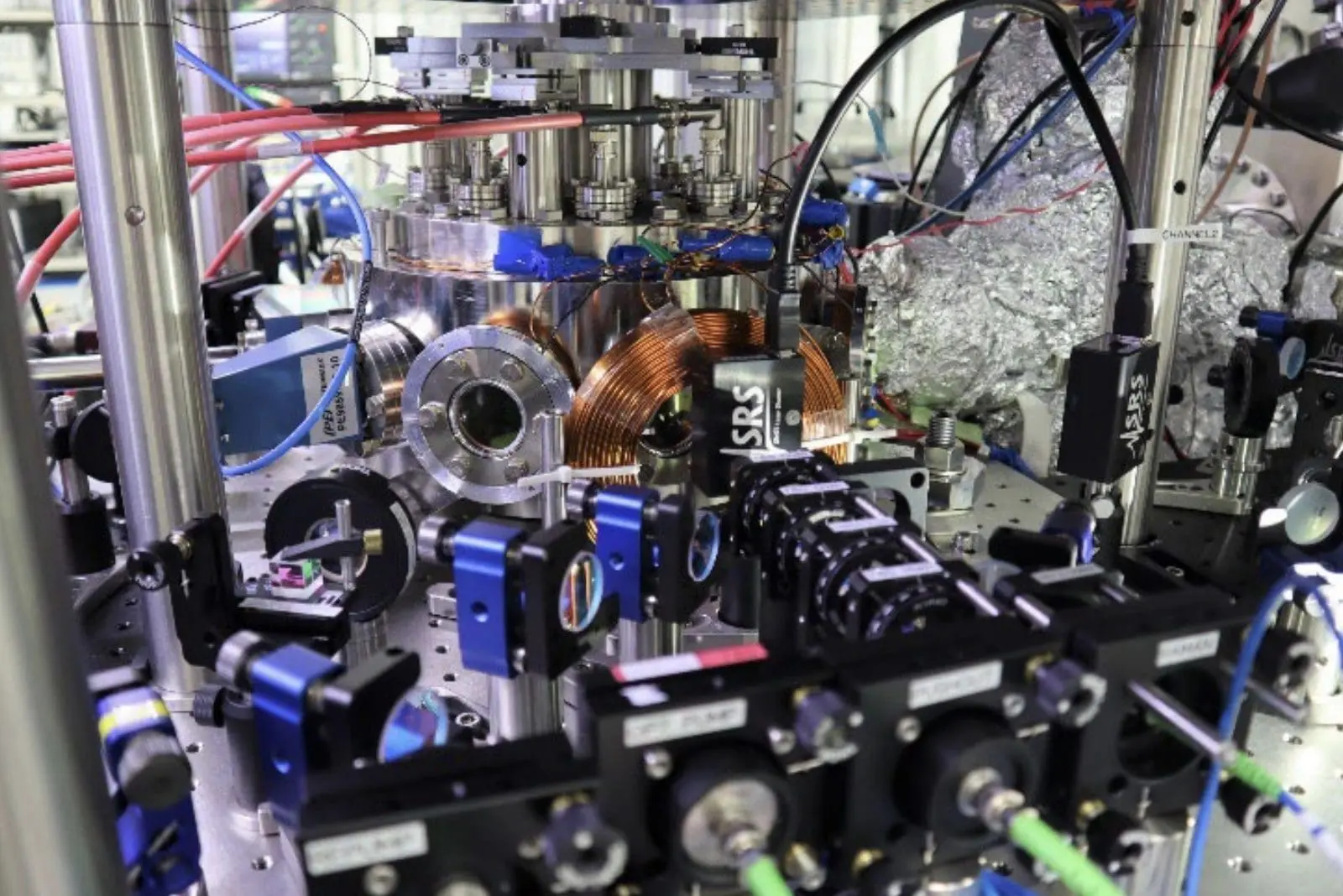
Professor Boschini is collaborating with Professor François Légaré, a full professor at INRS and an expert in ultrafast laser science and technology. Together, they have constructed and are operating a state-of-the-art TR-ARPES endstation with unique intense long-wavelength excitation capabilities at the Advanced Laser Light Source (ALLS) laboratory.
TR-ARPES: A Mature Technique with a Bright Future
According to Professor Boschini, TR-ARPES is now a mature technique with a proven impact on various branches of physics and chemistry. The support from the Canada Foundation for Innovation (CFI), the governments of Québec (MEIE) and Canada, and LaserNetUS, as well as the recent CFI Major Science Initiatives program, has placed them in a privileged position to open the TR-ARPES endstation at ALLS to national and international users.
The future of TR-ARPES looks promising, with further experimental and theoretical developments on the horizon. As Boschini concludes, “even more exciting times lie ahead.”
External Link: Click Here For More