Quantum machine learning, a field that merges quantum computing and machine learning principles, is showing promise in various scientific and industrial applications. The models, based on Quantum Support Vector Classification (QSVC) and Quantum Support Vector Regression (QSVR), are resistant to noise and adaptable to different datasets. The IonQ Harmony quantum processor is used to test these models, with results consistent with noiseless quantum circuit simulations. While noise is a common issue in quantum computing, the QSVC and QSVR models have shown robustness and maintained performance even in its presence. Further research is needed to fully explore the potential of quantum machine learning.
What is Quantum Machine Learning?
Quantum machine learning is an emerging field that combines the principles of quantum computing and machine learning. This rapidly growing field has the potential to revolutionize various scientific research and industries by offering more efficient ways to classify and recognize complex patterns. Quantum machine learning models are based on quantum support vector classification (QSVC) and quantum support vector regression (QSVR). These models are investigated using a quantum circuit simulator, both with and without noise, as well as the IonQ Harmony quantum processor.
Quantum machine learning models are designed to be resistant to noise and adaptable to various datasets. This adaptability is demonstrated by the use of different datasets for QSVC and QSVR tasks. For QSVC tasks, a dataset containing fraudulent credit card transactions and image datasets (the MNIST and the FashionMNIST datasets) are used. For QSVR tasks, a financial dataset and a materials dataset are used.
The performance of these quantum machine learning models is comparable to that obtained from noiseless quantum circuit simulations. This is particularly true for the QSVC models, which use 4 qubits of the trapped-ion quantum computer. The results are consistent with the analysis of device noise simulations with varying qubit gate error rates.
How Does Quantum Support Vector Classification Work?
Quantum Support Vector Classification (QSVC) is a method used in quantum machine learning to classify data. In this study, the QSVC models were tested using a dataset containing fraudulent credit card transactions and image datasets. The performance of the QSVC models, which used 4 qubits of the trapped-ion quantum computer, was found to be comparable to that obtained from noiseless quantum circuit simulations.
This suggests that the QSVC models are resistant to noise, a common issue in quantum computing. The results also indicate that the QSVC models are adaptable to various datasets, as demonstrated by their effective use with different types of data. This adaptability is a key advantage of quantum machine learning, as it allows for the application of these models in a wide range of fields and industries.
The performance of the QSVC models was also consistent with the analysis of device noise simulations with varying qubit gate error rates. This consistency further supports the robustness of the QSVC models and their potential for practical application in real-world scenarios.
What is Quantum Support Vector Regression?
Quantum Support Vector Regression (QSVR) is another method used in quantum machine learning. In this study, the QSVR models were tested using a financial dataset and a materials dataset. The performance of the QSVR models was improved by applying a low-rank approximation to the noisy quantum kernel in combination with hyperparameter tuning in εSVR.
The alignment between the noiseless and noisy quantum kernels, as measured by the Frobenius inner product, can serve as an indicator of the relative prediction performance on noisy quantum devices in comparison with their ideal counterparts. This suggests that the quantum kernel, as described by the shallow quantum circuit, can be effectively used for both QSVC and QSVR tasks.
What is the Role of the IonQ Harmony Quantum Processor?
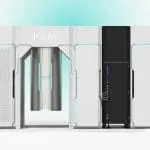
The IonQ Harmony quantum processor plays a crucial role in the investigation of quantum machine learning models. This processor is used to test the performance of the QSVC and QSVR models, both with and without noise. The results obtained from the IonQ Harmony quantum processor are consistent with those obtained from noiseless quantum circuit simulations, suggesting that the processor is effective in simulating the behavior of quantum machine learning models.
The IonQ Harmony quantum processor also provides a practical platform for testing the adaptability of the quantum machine learning models to various datasets. This adaptability is a key feature of quantum machine learning, as it allows for the application of these models in a wide range of fields and industries.
How Does Noise Affect Quantum Machine Learning Models?
Noise is a common issue in quantum computing that can affect the performance of quantum machine learning models. In this study, the researchers investigated the effects of noise on the QSVC and QSVR models by conducting simulations with varying qubit gate error rates.
The results suggest that the quantum machine learning models are resistant to noise. The performance of the QSVC models, which used 4 qubits of the trapped-ion quantum computer, was found to be comparable to that obtained from noiseless quantum circuit simulations. This suggests that the QSVC models are robust and can maintain their performance even in the presence of noise.
For the QSVR models, the performance was improved by applying a low-rank approximation to the noisy quantum kernel in combination with hyperparameter tuning in εSVR. This suggests that the QSVR models can also effectively handle noise and maintain their performance.
What is the Future of Quantum Machine Learning?
The results of this study suggest that quantum machine learning has a promising future. The QSVC and QSVR models demonstrated their resistance to noise and adaptability to various datasets, suggesting their potential for practical application in a wide range of fields and industries.
The use of the IonQ Harmony quantum processor also demonstrated the feasibility of testing and implementing quantum machine learning models in real-world scenarios. As quantum computing technology continues to advance, it is likely that the capabilities and applications of quantum machine learning will continue to expand.
However, further research is needed to fully understand the potential and limitations of quantum machine learning. This includes investigating the effects of noise on quantum machine learning models and exploring ways to improve their performance and adaptability. With continued research and development, quantum machine learning could revolutionize various fields and industries, offering more efficient and effective solutions to complex problems.
Publication Date: 2024-05-18
Authors: Teppei Suzuki, Takashi Hasebe and Tsubasa Miyazaki
Source: Quantum Machine Intelligence/Quantum machine intelligence
DOI: https://doi.org/10.1007/s42484-024-00165-0