Quantum systems confined to one dimension often exhibit spontaneous symmetry breaking, transitioning between phases with distinct properties, and researchers intensely study these phenomena across multiple areas of physics. Jamil Khalouf-Rivera, Miguel Carvajal, and Francisco Pérez-Bernal, from the Universities of Córdoba, Huelva, and Granada, investigate how these symmetry-breaking phases can emerge even when conventional parity symmetry is absent. Their work demonstrates that similar behaviour arises through alternative symmetries present in certain systems, revealing a surprising robustness to symmetry breaking. By modelling a Kerr parametric oscillator, the team shows how doubly-degenerate energy levels can occur despite the lack of parity symmetry, a finding with potential implications for designing protected quantum systems and advancing the development of driven circuits. The observed spectral features strongly suggest the presence of previously unrecognised symmetries within these systems, opening new avenues for exploration in quantum mechanics.
One-dimensional quantum systems that undergo spontaneous symmetry-breaking, possessing both a symmetric and a broken-symmetry phase, receive intense study across various branches of physics. This research investigates the consequences of antiunitary symmetries on the behaviour of one-dimensional quantum systems, focusing on how they induce symmetry-breaking and affect the system’s properties. This work contributes to a deeper understanding of quantum phase transitions and the role of symmetry in determining the behaviour of quantum systems, extending established knowledge beyond systems with conventional parity symmetry.
Dissipative Phase Transitions in Superconducting Circuits
This research explores dissipative phase transitions and quantum phenomena in engineered superconducting circuits, investigating how these circuits can simulate complex quantum systems and observe novel quantum effects. Investigations encompass both first- and second-order transitions, utilizing Kerr nonlinearity to create strong interactions necessary for observing interesting quantum effects. Researchers create and manipulate double-well potentials in superconducting circuits to study quantum tunneling and how symmetries, particularly time-reversal symmetry, are broken, potentially offering insights into materials science, condensed matter physics, and quantum chemistry. Carefully engineered dissipative superconducting circuits serve as a versatile platform for exploring fundamental quantum phenomena, simulating complex quantum systems, and potentially enabling new quantum technologies.
Scientists are pushing the boundaries of what can be achieved with these circuits, embracing the role of dissipation beyond traditional coherent quantum dynamics. This research places strong emphasis on dissipation as a resource, departing from traditional quantum computing which focuses on minimizing it. Key concepts underpinning this work include circuit quantum electrodynamics and Kerr nonlinearity, alongside dissipative quantum systems and phase transitions. Potential applications include developing new types of qubits and quantum gates for quantum computing, simulating complex materials and chemical reactions, developing highly sensitive sensors, and exploring new quantum phenomena. In conclusion, this is a highly specialized and cutting-edge research area with the potential to lead to significant advances in quantum technology and fundamental physics.
Degenerate States in Non-Parity Symmetric Systems
Scientists demonstrate the existence of doubly-degenerate energy levels in one-dimensional quantum systems lacking conventional parity symmetry, a phenomenon enabled by an antiunitary symmetry related to time-reversal. This work utilizes a Kerr parametric oscillator model with one- and two-photon drives to illustrate how degeneracy arises even when parity symmetry is broken, revealing a new pathway to stabilize quantum states. Calculations show that the classical limit of the system exhibits a Hamiltonian dependent on both coordinate and momentum, allowing for the emergence of these degenerate states. Experiments reveal that the energy spectra of the Hamiltonian are significantly impacted by the control parameters associated with the one- and two-photon drives.
Specifically, scientists observed that for certain parameter values, parity symmetry is broken, yet the system retains a symmetry linked to time-reversal, resulting in the appearance of doubly-degenerate states. Analysis of the energy contours demonstrates that the degeneracy scales exponentially with the system size, suggesting potential applications in quantum computation and state protection. For the lowest energy eigenstates, scientists observed that the values of the coordinate and momentum operators exhibit distinct behaviour depending on the control parameters. Calculations demonstrate that the energy gaps scale identically in systems with and without parity symmetry, confirming the robustness of the observed degeneracy. These findings demonstrate a new mechanism for stabilizing quantum states in systems lacking conventional symmetry, potentially opening avenues for advanced quantum technologies.
Degeneracy Beyond Parity Symmetry Emerges
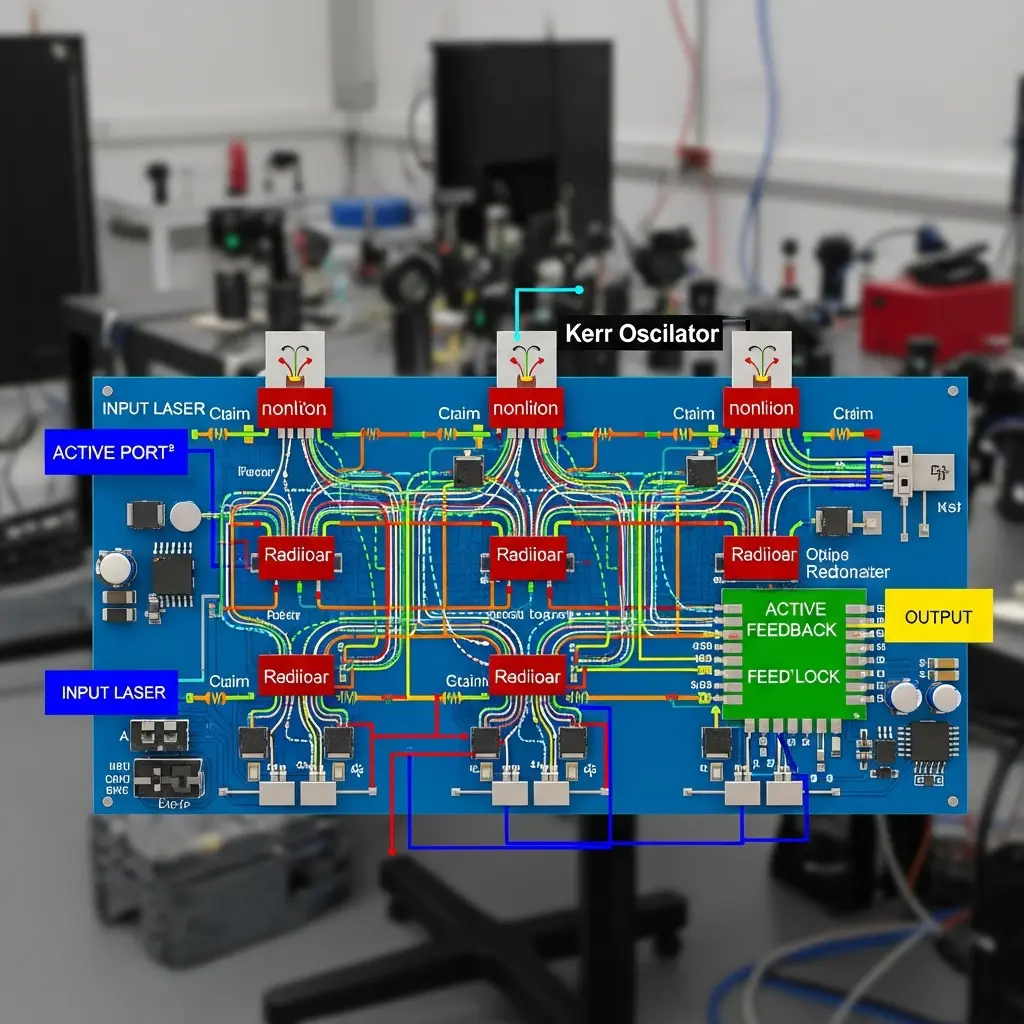
This research demonstrates that doubly-degenerate energy levels can emerge in one-dimensional quantum systems even when parity symmetry is absent, a phenomenon achieved through antiunitary symmetries affecting momentum or coordinate dependence in the system’s classical limit. Scientists confirmed that the energy gap between these doubly-degenerate levels diminishes exponentially as the system approaches its classical limit, mirroring behaviour observed in systems with parity symmetry. This finding expands understanding of symmetry breaking and degeneracy beyond traditional parity-symmetric systems. The implications of this work extend to practical applications, particularly in the field of superconducting circuits, which are increasingly used for quantum computing and simulation. Researchers highlight that the demonstrated degeneracy could potentially stabilize quantum states in systems lacking parity conservation, offering a pathway to more robust quantum technologies. They successfully modeled this behaviour using a Hamiltonian representing driven Kerr parametric oscillators, a system increasingly reproducible in superconducting circuits.
🗞 Degeneracy beyond the parity-symmetry protection in one-dimensional spinless models: The parity-violating Kerr parametric oscillator
🧠 ArXiv: https://arxiv.org/abs/2511.09164