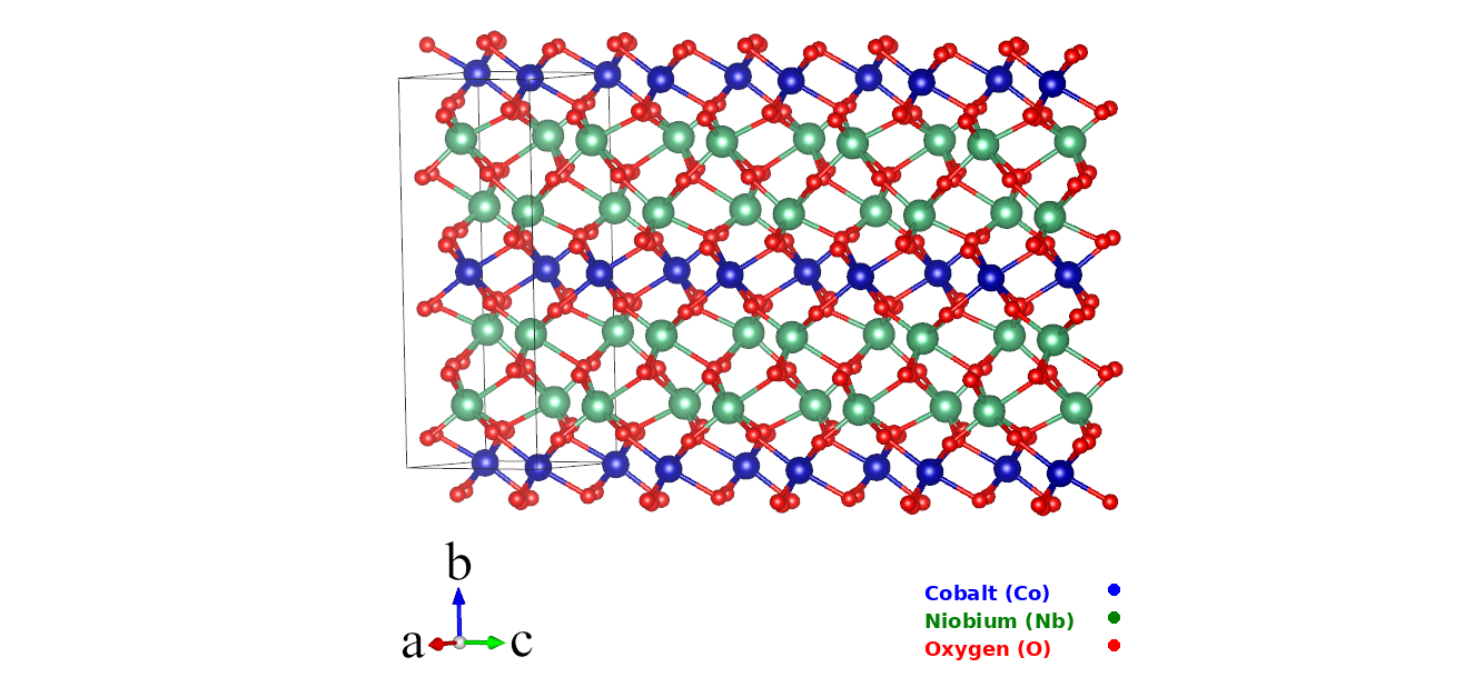
The unusual magnetic material CoNbO exhibits a fascinating blend of properties, displaying three-dimensional magnetic order at low temperatures while behaving as a one-dimensional system when subjected to a magnetic field, a behaviour enabled by its unique zig-zag chain structure. Logan Sowadski and Thomas Vojta, both from Missouri University of Science and Technology, investigated how introducing randomness into this system alters its critical properties, specifically focusing on the effects of site dilution. Their work establishes that this dilution leads to an unexpected activated scaling behaviour at the critical point, and surprisingly, the resulting critical exponents align with those expected from a disordered three-dimensional magnetic system, despite the material’s strong structural anisotropy. This research offers new insights into the interplay between dimensionality, disorder, and critical phenomena in magnetic materials, and provides a framework for interpreting experimental observations in similar systems.
Disorder’s Impact on Quantum Magnetic Transitions
This research investigates quantum phase transitions in disordered systems, focusing on the Ising model with a transverse field to understand how disorder affects critical behavior and the emergence of novel quantum phases. Researchers utilize Monte Carlo simulations to study these complex systems, revealing that disorder significantly alters the critical behavior, potentially blurring phase transitions and leading to new phases. Rare region effects, where unusual regions dominate a disordered system’s behavior, play a crucial role in determining its properties, potentially leading to an infinite disorder fixed point, a state of extreme disorder independent of microscopic details. Spatial anisotropy, where interactions depend on direction, can lead to one-dimensional behavior in the classical Ising model, but the team developed and implemented sophisticated Monte Carlo algorithms to explore these complex scenarios. Further investigation could explore specific types of disorder and how the choice of disorder model affects results, while understanding the experimental relevance of these theoretical results and identifying targeted materials is crucial.
Anisotropic Lattice Simulations with Bar Geometry
Scientists investigated the critical behavior of a quasi-one-dimensional magnetic system, focusing on the impact of random site dilution on its properties. To accurately capture the system’s characteristics, researchers developed a unique approach to sample geometry and data analysis, addressing challenges posed by strong spatial anisotropy. They elongated the lattice in the direction of strong coupling, creating a bar geometry where the length in that direction was significantly larger than other dimensions, ensuring more easily identifiable phase transitions during analysis. Initial tests utilized length ratios between 2 and 10, while simulations of diluted systems employed a ratio of 40, with careful control over the imaginary time length relative to spatial dimensions. Researchers recognized that disorder breaks the symmetry between space and time, necessitating independent treatment of the imaginary time length and requiring it to have a different scale dimension than spatial dimensions. They hypothesized that correlations in space and time follow activated scaling, and determined an ‘optimal’ value of the imaginary time length by analyzing the parabolic shape of the Binder cumulant, allowing them to employ conventional finite-size scaling techniques.
Site Dilution Alters Critical Magnetic Behaviour
This research presents a detailed investigation into the magnetic properties of a unique material, exploring how the introduction of missing magnetic atoms, known as site dilution, affects its behavior. The team developed a sophisticated computational model to simulate the material’s behavior, incorporating the effects of randomly distributed missing atoms, revealing unconventional scaling behavior at a critical point. To achieve these results, scientists mapped the complex quantum mechanical problem onto a classical model, allowing them to utilize efficient Monte Carlo simulations. The simulations demonstrate that the critical behavior is strongly influenced by the degree of site dilution, providing valuable insights into the interplay between disorder and magnetism. The work establishes a clear connection between the material’s structural arrangement and its magnetic response, paving the way for future investigations into similar systems and potential applications in magnetic materials science.
Disorder Drives Three-Dimensional Quantum Criticality
This research successfully investigates the impact of disorder on the quantum phase transition occurring in quasi-one-dimensional magnetic materials, specifically focusing on cobalt niobate. By modelling the effects of random site dilution, the team demonstrates that the system undergoes a quantum phase transition exhibiting unconventional scaling behavior, indicative of an infinite-randomness fixed point. Critically, the calculated critical exponents align with those established for the disordered three-dimensional transverse-field Ising model, diverging significantly from the behavior expected of a purely one-dimensional system.
🗞 Quantum critical behavior of diluted quasi-one-dimensional Ising chains
🧠 ArXiv: https://arxiv.org/abs/2511.01661