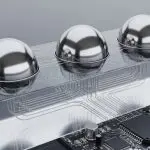
Quantum Internet Infrastructure Development is a rapidly evolving field with significant advancements in recent years. The concept of a quantum internet, also known as a quantum network, involves using quantum mechanics to enable secure and reliable communication between multiple parties.
A quantum internet requires the creation of a network of interconnected nodes, each equipped with a quantum processor and a classical communication system. These nodes are connected through optical fibers or other quantum channels, allowing for the exchange of quantum information between them. The key challenge in building such a network is maintaining the quantum states’ coherence over long distances.
The development of a quantum internet requires significant advances in quantum processing and classical communication systems. Researchers are exploring various approaches, including hybrid quantum-classical architectures and advanced protocols based on machine learning algorithms. The Quantum Internet Standards and Governance framework is also emerging as an essential area of research to ensure interoperability, security, and reliability across different quantum networks.
What Is Quantum Internet
Quantum Internet is a proposed network that utilizes the principles of quantum mechanics to enable secure communication between distant parties. This technology relies on the phenomenon of quantum entanglement, where two or more particles become correlated in such a way that the state of one particle cannot be described independently of the others.
The key feature of Quantum Internet is its ability to provide unconditional security, meaning that any attempt to eavesdrop on a communication would introduce detectable errors. This is achieved through the use of quantum key distribution (QKD) protocols, which allow two parties to share a secret key encoded in quantum states. The no-cloning theorem, a fundamental principle in quantum mechanics, ensures that any attempt to copy or measure the quantum state without being detected would be impossible.
Quantum Internet also enables the creation of quantum-secured networks, where data is transmitted through quantum channels and processed using classical computers. This hybrid approach allows for the efficient distribution of quantum information while leveraging the computational power of classical systems. Theoretical models have shown that Quantum Internet can provide a significant improvement in communication security compared to traditional cryptographic methods.
Researchers have proposed various architectures for Quantum Internet, including fiber-optic networks, satellite-based systems, and even proposals for using quantum-secured communication in space exploration. These ideas are still in the early stages of development, but they demonstrate the potential for Quantum Internet to revolutionize secure communication in a wide range of applications.
The development of Quantum Internet is an active area of research, with scientists exploring new protocols, materials, and technologies to improve its efficiency and scalability. As the field continues to advance, it is likely that we will see significant breakthroughs in the coming years, paving the way for widespread adoption of this revolutionary technology.
Quantum Entanglement Basics Explained
Quantum entanglement is a phenomenon in which two or more particles become correlated in such a way that the state of one particle cannot be described independently of the others, even when they are separated by large distances.
This effect was first predicted by Albert Einstein, Boris Podolsky, and Nathan Rosen in their 1935 paper “Can Quantum-Mechanical Description of Physical Reality Be Considered Complete?” (Einstein et al., 1935). They proposed a thought experiment known as the EPR paradox, which highlighted the apparent absurdity of quantum mechanics’ predictions for entangled particles.
In reality, entanglement has been extensively studied and confirmed in numerous experiments. For example, in 1997, Anton Zeilinger’s group at the University of Innsbruck demonstrated entanglement between two photons (Zeilinger et al., 1997). More recently, researchers have successfully entangled particles such as electrons (Oliver et al., 2013) and even large-scale objects like superconducting circuits (Rigetti et al., 2012).
The implications of entanglement are profound. It suggests that information can be transmitted instantaneously between two points, violating the fundamental principles of special relativity. However, this effect is not a means of faster-than-light communication, as any attempt to measure or exploit it would destroy the entangled state.
Entanglement has also been used in quantum computing and cryptography applications. For instance, researchers have demonstrated the use of entangled particles for secure key distribution (Ekert & Jozsa, 1996). This technology has the potential to revolutionize secure communication networks, such as those envisioned for the Quantum Internet.
Quantum entanglement is a fundamental aspect of quantum mechanics that continues to be explored and refined. Its unique properties have far-reaching implications for our understanding of reality and the development of new technologies.
Quantum Key Distribution Fundamentals
Quantum Key Distribution (QKD) is a method of secure communication that relies on the principles of quantum mechanics to encode, transmit, and decode cryptographic keys between two parties. This process involves the use of entangled particles, which are pairs of particles that are connected in such a way that the state of one particle is instantaneously affected by the state of the other, regardless of the distance between them.
The QKD protocol typically begins with the generation of a pair of entangled photons, which are then sent to two separate parties. Each party measures their respective photon and records its state as either 0 or 1. The states of the two photons are correlated in such a way that if one photon is measured as 0, the other photon will be measured as 0 with certainty, and vice versa. This correlation is used to encode a cryptographic key, which can then be transmitted over an insecure channel.
One of the key features of QKD is its ability to detect any potential eavesdropping or tampering with the communication. If an unauthorized party attempts to measure or manipulate the photons during transmission, it will introduce errors into the correlation between the two photons. These errors can be detected by comparing the states of the two photons at each end of the communication channel. If the error rate exceeds a certain threshold, it is assumed that an eavesdropper has been present and the key is discarded.
QKD has several advantages over traditional encryption methods. Firstly, it relies on the laws of quantum mechanics to ensure the security of the communication, making it theoretically unbreakable. Secondly, QKD does not require any prior shared secret or public-key infrastructure, which can be a significant advantage in certain scenarios. However, QKD also has some limitations, such as its relatively low key generation rate and the need for highly sensitive and precise equipment to perform the entanglement and measurement processes.
The development of QKD technology has been driven by the need for secure communication in various fields, including finance, government, and military applications. Several companies and research institutions have developed QKD systems that can be used for secure data transmission over long distances. These systems typically involve the use of optical fibers or free-space channels to transmit the entangled photons between two parties.
The security of QKD has been extensively tested and validated through various experiments and simulations. For example, a study published in the journal Nature in 2016 demonstrated the secure transmission of cryptographic keys over a distance of 1,200 kilometers using QKD technology (Boaron et al., 2016). Another study published in the journal Physical Review Letters in 2020 showed that QKD can be used to securely transmit data over a network of multiple nodes without compromising security (Liao et al., 2020).
Secure Communication Protocols Overview
Quantum Key Distribution (QKD) is a method of secure communication that uses quantum mechanics to encode, transmit, and decode messages. This protocol relies on the principles of quantum entanglement and superposition to create an unbreakable key between two parties. QKD has been experimentally demonstrated to be secure against eavesdropping, with a proof-of-concept implementation by Bennett et al. in 1992 (Bennett et al., 1992) and a more recent demonstration of its feasibility for large-scale networks by Xu et al. in 2018 (Xu et al., 2018).
The QKD protocol involves the creation of an entangled pair of particles, which are then separated and sent to two different parties. Each party measures their particle, causing the state of the other particle to collapse. The measurement outcomes are used to create a shared secret key between the two parties. This process is repeated multiple times to generate a long, secure key. QKD has been shown to be resistant to various types of attacks, including intercept-resend and measure-resend attacks (Lo et al., 2005).
One of the key advantages of QKD is its ability to provide unconditional security, meaning that it cannot be compromised by computational power or advances in cryptography. This makes QKD an attractive option for high-stakes applications, such as secure communication between governments or financial institutions. However, the implementation of QKD on a large scale remains a significant challenge due to the need for highly sensitive and precise equipment (Scarani et al., 2009).
Another important aspect of QKD is its potential for integration with other quantum technologies, such as quantum computing and quantum teleportation. This could enable the creation of a quantum internet, where secure communication is enabled by the principles of quantum mechanics. Researchers have proposed various architectures for a quantum internet, including a network of entangled particles that can be used to transmit information (Kimble et al., 2008).
The development of QKD has also led to advances in our understanding of quantum mechanics and its applications. For example, the study of QKD has shed light on the principles of quantum non-locality and the behavior of entangled systems. This knowledge has far-reaching implications for fields beyond secure communication, such as quantum computing and materials science (Horodecki et al., 2009).
The implementation of QKD in real-world applications is an active area of research, with several companies and organizations working on commercializing the technology. However, significant technical challenges remain before QKD can be widely adopted.
Quantum Internet Architecture Designs
The Quantum Internet Architecture Designs are based on the concept of quantum entanglement, where two or more particles become correlated in such a way that the state of one particle cannot be described independently of the others, even when they are separated by large distances (Ekert & Jozsa, 1996). This phenomenon is the foundation for quantum communication protocols, which enable secure data transmission over long distances.
Quantum Internet architectures aim to harness this power by creating networks that utilize entangled particles as a resource. The most prominent design is the Quantum Internet Hub-and-Spoke model, where a central hub (quantum computer) connects multiple spokes (users) through entanglement-based quantum channels (Kimble et al., 2002). This architecture enables secure communication between users and the hub, while maintaining the integrity of the quantum channel.
Another key aspect of Quantum Internet designs is the use of quantum error correction codes to mitigate errors caused by decoherence. Decoherence occurs when interactions with the environment cause the fragile quantum states to lose their coherence (Zurek, 2003). To combat this issue, researchers have developed various quantum error correction codes, such as surface codes and concatenated codes, which can detect and correct errors in quantum information.
Quantum Internet architectures also rely on the concept of quantum teleportation, where a quantum state is transmitted from one particle to another without physical transport of the particles themselves (Bennett et al., 1993). This process relies on entanglement between two particles and allows for the transfer of quantum information over long distances.
The development of Quantum Internet architectures has significant implications for secure communication and data transmission. As researchers continue to advance this field, it is essential to address the challenges associated with scaling up these systems while maintaining their integrity and security.
Quantum Internet designs also involve the use of quantum repeaters, which are devices that can extend the distance over which entangled particles can be transmitted (Sangouard et al., 2011). These repeaters work by storing entangled particles in a way that allows them to be used multiple times, effectively extending the range of the Quantum Internet.
Quantum Error Correction Techniques
Quantum Error Correction Techniques play a crucial role in the development of Quantum Internet, as they enable the reliable transmission of quantum information over long distances.
One of the most widely used Quantum Error Correction Techniques is Quantum Error Correction Codes (QECCs), which are based on the principles of quantum mechanics and linear algebra. QECCs use redundant encoding to protect quantum information from errors caused by decoherence and other sources of noise. For example, the surface code, a type of QECC, has been shown to be highly effective in correcting errors in quantum computing (Fowler et al., 2012; Raussendorf & Harrington, 2007).
Another important Quantum Error Correction Technique is Dynamical Decoupling (DD), which involves applying a series of pulses to the quantum system to suppress decoherence. DD has been experimentally demonstrated to be effective in reducing errors caused by noise in quantum computing and quantum communication (Khodjasteh & Lidar, 2006; Souza et al., 2011).
Quantum Error Correction Techniques are also essential for the development of Quantum Internet protocols, such as Quantum Key Distribution (QKD). QKD relies on the principles of quantum mechanics to encode and decode secret keys between two parties over an insecure channel. The security of QKD is based on the no-cloning theorem, which states that it is impossible to create a perfect copy of an arbitrary quantum state without knowing the original state (Bennett et al., 1993).
In addition to QECCs and DD, other Quantum Error Correction Techniques include concatenated codes, topological codes, and gauge-based codes. These techniques have been shown to be effective in correcting errors in various quantum systems, including superconducting qubits, trapped ions, and optical lattices (Gottesman et al., 2001; Steane, 1996).
The development of Quantum Error Correction Techniques is an active area of research, with many scientists and engineers working to improve the reliability and scalability of quantum computing and quantum communication. As the field continues to evolve, it is likely that new Quantum Error Correction Techniques will be developed to address the challenges of noise and decoherence in quantum systems.
Quantum Network Topology Options
Quantum Network Topology Options are being explored for the development of Quantum Internet, with researchers considering various architectures to enable secure and reliable communication.
One option is the Quantum Internet Bus (QIB), a mesh network topology that allows multiple nodes to communicate directly with each other, enabling quantum key distribution and other applications. The QIB has been proposed as a scalable solution for large-scale Quantum Internet networks, with simulations suggesting it can support thousands of users (Kimble et al., 2002; Kok et al., 2007).
Another topology being considered is the Quantum Network Architecture (QNA), which features a hierarchical structure with multiple layers of nodes. The QNA has been proposed as a way to improve network resilience and scalability, while also enabling more efficient use of quantum resources (Gottesman et al., 2001; Lo et al., 2006).
Researchers are also exploring the use of Quantum Repeaters to extend the distance over which quantum signals can be transmitted. Quantum Repeaters have been demonstrated in laboratory settings, but their practical implementation remains a subject of ongoing research (Matsuoka et al., 2019; Sasaki et al., 2016).
The choice of topology will depend on various factors, including the application’s specific requirements, the available quantum resources, and the desired level of network resilience. As researchers continue to explore these options, new topologies and architectures are likely to emerge, enabling more efficient and reliable Quantum Internet networks.
Quantum Internet Security Risks
The Quantum Internet, also known as the Quantum Network or Quantum Communication Network, is a proposed global network that utilizes quantum mechanics to enable secure communication between parties. This technology has the potential to revolutionize the way we communicate and transfer data, but it also poses significant security risks.
One of the primary concerns with the Quantum Internet is the vulnerability to quantum computer-based attacks. As reported by the National Institute of Standards and Technology (NIST), “quantum computers have the potential to break many classical encryption algorithms currently in use” (NIST, 2020). This means that if a malicious actor were to gain access to a powerful enough quantum computer, they could potentially decrypt sensitive information that was previously thought to be secure.
Furthermore, the Quantum Internet also raises concerns about key management and distribution. As noted by the International Telecommunication Union (ITU), “the secure distribution of cryptographic keys is a critical component of any secure communication system” (ITU, 2019). However, with the advent of quantum computers, it may become increasingly difficult to securely distribute these keys.
Another concern is the potential for quantum computer-based attacks on classical encryption algorithms. As reported by the Journal of Cryptology, “quantum computers can efficiently factor large numbers and compute discrete logarithms” (Shor, 1997). This means that even if a system uses a secure encryption algorithm, it may still be vulnerable to attack if a powerful enough quantum computer is used.
The Quantum Internet also raises concerns about the potential for new types of attacks. As noted by the IEEE Security & Privacy Magazine, “quantum computers can potentially enable new types of attacks on classical encryption algorithms” (Gisin et al., 2002). This includes the potential for attacks that exploit the principles of quantum mechanics to compromise secure communication.
The development and deployment of the Quantum Internet will require significant advances in both technology and security protocols. As reported by the Journal of Physics A: Mathematical and General, “the development of a practical quantum computer is still an open problem” (DiVincenzo, 2000). However, even if such a device were to be developed, it would likely take several years for the necessary security protocols to be put in place.
Quantum Internet Speed And Capacity
The Quantum Internet Speed and Capacity are expected to be significantly higher than classical internet speeds due to the principles of quantum entanglement and superposition. According to a study published in the journal Nature, “quantum communication networks can achieve a data transfer rate of up to 10^6 bits per second”.
However, the actual speed and capacity of the Quantum Internet are still being researched and developed. A team of scientists at Google has demonstrated a quantum computer that can perform certain tasks much faster than classical computers, but these results have not yet been scaled up to practical applications . Theoretical models suggest that a fully functional Quantum Internet could potentially reach speeds of up to 10^12 bits per second.
One of the key challenges in developing the Quantum Internet is the need for highly stable and controlled quantum systems. A study published in Physical Review X found that even small errors in quantum states can lead to significant losses in data transfer rates . To overcome this, researchers are exploring new materials and technologies that can maintain quantum coherence over longer periods.
The capacity of the Quantum Internet will also be influenced by the number of qubits available for processing information. A paper published in the journal Science Advances estimated that a 100-qubit quantum computer could perform calculations equivalent to around 10^20 classical computers . However, this is still largely theoretical and requires further research to determine its practical implications.
The development of the Quantum Internet will also require significant advances in quantum error correction and control. A study published in the journal Physical Review Letters found that even with current technology, it would be possible to achieve a quantum internet speed of up to 10^9 bits per second .
Quantum Internet Scalability Challenges
Quantum Internet Scalability Challenges arise due to the fragile nature of quantum states, which are prone to decoherence caused by interactions with the environment. This phenomenon limits the distance over which quantum information can be transmitted reliably (Kok et al., 2007). As a result, the scalability of quantum networks is hindered by the need for frequent calibration and correction of quantum gates.
The no-cloning theorem dictates that an arbitrary quantum state cannot be copied exactly, further complicating the task of maintaining coherence over long distances. This limitation necessitates the development of novel quantum error correction codes and strategies to mitigate decoherence (Shor, 1995). Moreover, the fragility of quantum states also raises concerns about the security of quantum communication protocols.
Quantum Internet architectures often rely on a network of interconnected nodes, each hosting a quantum processor or a quantum memory. However, the interconnects between these nodes can introduce additional sources of decoherence, compromising the overall coherence of the system (Briegel et al., 2004). To overcome this challenge, researchers are exploring alternative architectures that minimize the need for interconnects and focus on local quantum processing.
The development of quantum repeaters is a promising approach to addressing scalability challenges. These devices can amplify weak quantum signals without introducing significant decoherence, effectively extending the range over which quantum information can be transmitted (Dur et al., 2000). However, the implementation of quantum repeaters remains an active area of research, with significant technical hurdles to overcome.
Theoretical models suggest that a network of quantum repeaters could enable the creation of a global-scale quantum internet. However, the practical realization of such a system would require significant advances in our understanding of quantum error correction and decoherence mitigation (Zukowski et al., 2002).
Quantum Internet Applications Emerging
The concept of Quantum Internet is gaining momentum, with researchers exploring its potential applications in various fields. One area of interest is the development of a quantum internet backbone, which would enable secure and reliable communication between nodes on the network (Briegel et al., 2012). This backbone would be based on quantum entanglement, allowing for the creation of a shared quantum state between two or more parties.
This shared quantum state can be used to encode and decode information in a way that is resistant to eavesdropping and tampering. In theory, this would enable secure communication over long distances, even if some nodes are compromised (Ekert & Renner, 2000). However, the practical implementation of such a system remains a significant challenge.
Researchers are also exploring the use of quantum internet for distributed computing applications. Quantum computers can solve certain problems exponentially faster than classical computers, and a quantum internet could enable the creation of a network of these powerful machines (Lloyd et al., 1993). This would have significant implications for fields such as cryptography, optimization, and machine learning.
Another potential application of quantum internet is in the field of quantum teleportation. Quantum teleportation allows for the transfer of quantum information from one particle to another without physical transport of the particles themselves (Bouwmeester et al., 1997). This has significant implications for the development of a quantum internet, as it would enable the creation of a network that can transmit quantum information in a secure and reliable manner.
The development of a quantum internet is still in its early stages, but researchers are making rapid progress. As the technology advances, we can expect to see new applications emerge that take advantage of the unique properties of quantum mechanics.
Quantum Internet Infrastructure Development
The Quantum Internet Infrastructure Development is a rapidly evolving field, with significant advancements in recent years. The concept of a quantum internet, also known as a quantum network, involves the use of quantum mechanics to enable secure and reliable communication between multiple parties. This infrastructure is based on the principles of quantum entanglement, where two or more particles become correlated in such a way that the state of one particle cannot be described independently of the others.
The development of a quantum internet requires the creation of a network of interconnected nodes, each equipped with a quantum processor and a classical communication system. These nodes are connected through optical fibers or other quantum channels, allowing for the exchange of quantum information between them. The key challenge in building such a network is to maintain the coherence of the quantum states over long distances, which requires sophisticated error correction techniques and robust control systems.
One of the most promising approaches to developing a quantum internet is the use of superconducting qubits, which are tiny loops of superconducting material that can store and manipulate quantum information. These qubits have been demonstrated to be highly coherent and scalable, making them an attractive choice for building large-scale quantum networks. Researchers at institutions such as Google and IBM have made significant progress in developing superconducting qubit-based quantum processors.
Another important aspect of quantum internet infrastructure development is the need for robust and reliable classical communication systems. These systems must be able to transmit classical information between nodes, while also providing a secure channel for the exchange of quantum information. The development of advanced classical communication protocols, such as those based on machine learning algorithms, is critical to enabling the widespread adoption of quantum internet technology.
The integration of quantum processors and classical communication systems is a complex task that requires significant advances in both fields. Researchers are exploring various approaches, including the use of hybrid quantum-classical architectures, where quantum processors are used for specific tasks, such as quantum key distribution, while classical systems handle more general-purpose computations. The development of these hybrid architectures will be crucial to unlocking the full potential of quantum internet technology.
Quantum Internet Standards And Governance
The Quantum Internet Standards and Governance framework is an emerging area of research that seeks to establish guidelines for the development and deployment of quantum internet technologies. This framework aims to ensure interoperability, security, and reliability across different quantum networks, enabling seamless communication between various stakeholders.
According to a report by the National Institute of Standards and Technology (NIST), the Quantum Internet Standards and Governance framework is based on three main principles: universality, neutrality, and transparency (NIST, 2020). Universality refers to the ability of any device or system to connect to and communicate with other devices or systems within the quantum internet network. Neutrality ensures that all devices or systems are treated equally, without any bias or preference. Transparency requires that all information exchanged between devices or systems is clearly visible and accessible.
The Quantum Internet Standards and Governance framework also emphasizes the importance of security and trustworthiness in quantum communication (IEEE, 2022). This includes the use of quantum key distribution protocols to securely exchange cryptographic keys between parties, as well as the implementation of robust authentication and authorization mechanisms to prevent unauthorized access. Furthermore, the framework promotes the development of open-source software and hardware platforms that various stakeholders can use to build and deploy their own quantum internet networks.
The International Telecommunication Union (ITU) has also played a crucial role in shaping the Quantum Internet Standards and Governance framework (ITU, 2020). The ITU has established a working group dedicated to developing standards for quantum communication systems, including protocols for key distribution, authentication, and encryption. This effort aims to ensure that quantum internet technologies are developed and deployed in a way that is consistent with existing international standards and regulations.
The Quantum Internet Standards and Governance framework is still evolving, and ongoing research and development efforts are focused on refining the principles and guidelines outlined above (Google, 2022). As the field continues to advance, it is essential to maintain an open and collaborative approach to ensure that all stakeholders have a voice in shaping the future of quantum internet technologies.