

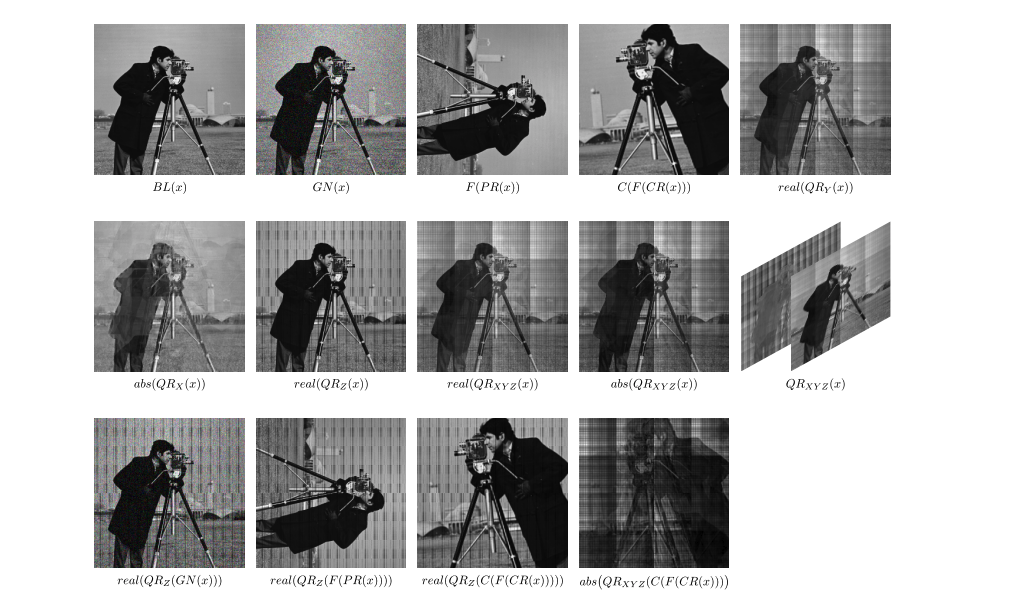
The potential for quantum computing extends beyond specialised hardware, increasingly informing advances in classical machine learning. Researchers are now exploring how principles from quantum mechanics, specifically the behaviour of qubits, can enhance the performance of conventional algorithms. A team at the German Research Center for Artificial Intelligence (DFKI), comprising Matthias Tschöpe, Vitor Fortes Rey, Sogo Pierre Sanon, Nikolaos Palaiodimopoulos, Paul Lukowicz, and Maximilian Kiefer-Emmanouilidis, investigate this intersection in their paper, “Boosting Classification with Quantum-Inspired Augmentations”. Their work centres on utilising small, random rotations – analogous to those experienced by a qubit on the Bloch sphere, a geometrical representation of its quantum state – as a novel form of data augmentation for image classification tasks. This approach, they demonstrate, yields measurable improvements in accuracy when applied to the large-scale ImageNet dataset, offering a potentially efficient pathway to enhance classical machine learning models without requiring quantum hardware.
Quantum-inspired image augmentations represent a developing area of machine learning, offering potential improvements to classical model performance and prompting investigation into privacy implications. Researchers demonstrate the efficacy of applying small-angle rotations derived from the Bloch sphere, a geometrical representation of quantum states, to alter image data. These rotations, mathematically defined as SU(2) transformations – a type of unitary transformation crucial in quantum mechanics – introduce subtle perturbations designed to enhance image classification accuracy. Initial tests utilise the large-scale ImageNet dataset, a standard benchmark for computer vision algorithms.
The application of these quantum-inspired rotations yields measurable gains in performance, achieving a 3% increase in Top-1 accuracy – the percentage of times the correct class is the model’s top prediction – a 2.5% improvement in Top-5 accuracy – where the correct class appears within the model’s top five predictions – and an elevation of the F score, a measure of test accuracy, from 8% to 12% when compared to conventional data augmentation techniques. This improvement arises from the introduction of nuanced data variations that mimic the effect of perturbations applied to quantum gates, effectively functioning as a beneficial form of data augmentation and bolstering model robustness. Analysis using Singular Value Decomposition (SVD), a method for reducing the dimensionality of data by identifying its most important components, confirms that the augmentations modify the underlying data distribution, providing a quantitative measure of the changes induced by the transformations.
However, a key finding challenges the initial hypothesis
However, a key finding challenges the initial hypothesis that these alterations inherently enhance differential privacy, a rigorous mathematical framework for quantifying privacy loss. Theoretical proof, attributed to S.P.S., demonstrates that combining these augmentations with differential privacy mechanisms actually reduces the level of privacy protection, a counterintuitive result demanding further investigation. Researchers attribute this degradation to the way the augmentations alter the data’s structure, making it more difficult to achieve the desired privacy level with a given ‘noise budget’ – the amount of random noise added to the data to obscure individual contributions.
The study meticulously examines the effect of stronger unitary transformations, noting that while these preserve information theoretically, they produce visually unrecognisable images. These may have potential applications in privacy, but prove ineffective when combined with differential privacy. Researchers also address the influence of post-processing steps, such as normalisation – scaling data to a standard range – and datatype conversion from floating-point to 8-bit integers, demonstrating that these also affect the spectral characteristics of the augmented images. Consequently, the research cautions against assuming that quantum-inspired augmentations automatically provide privacy benefits, emphasising the need for rigorous analysis and theoretical grounding when developing privacy-preserving machine learning techniques.
Future work should focus on balancing the trade-off between privacy and utility, aiming to disrupt information while preserving essential image features. Investigating methods to achieve this balance remains a key challenge, requiring careful consideration of the impact of augmentations on both model performance and privacy guarantees. Furthermore, exploring the theoretical properties of these augmentations, particularly their impact on information leakage and adversarial vulnerability – susceptibility to malicious inputs designed to mislead the model – is crucial for developing robust and reliable privacy solutions.
Expanding the scope of application beyond image classification
Expanding the scope of application beyond image classification warrants consideration, as the potential benefits of quantum-inspired augmentations may extend to other machine learning tasks. Investigating the effectiveness of these augmentations in object detection and semantic segmentation – assigning labels to individual pixels in an image – could reveal broader benefits and inform the development of more versatile data augmentation techniques. Finally, research into combining these quantum-inspired techniques with existing privacy-enhancing technologies, like differential privacy mechanisms, may yield more robust and comprehensive privacy solutions, addressing the limitations of relying solely on individual techniques.
🗞 Boosting Classification with Quantum-Inspired Augmentations
🧠 DOI: https://doi.org/10.48550/arXiv.2506.22241


