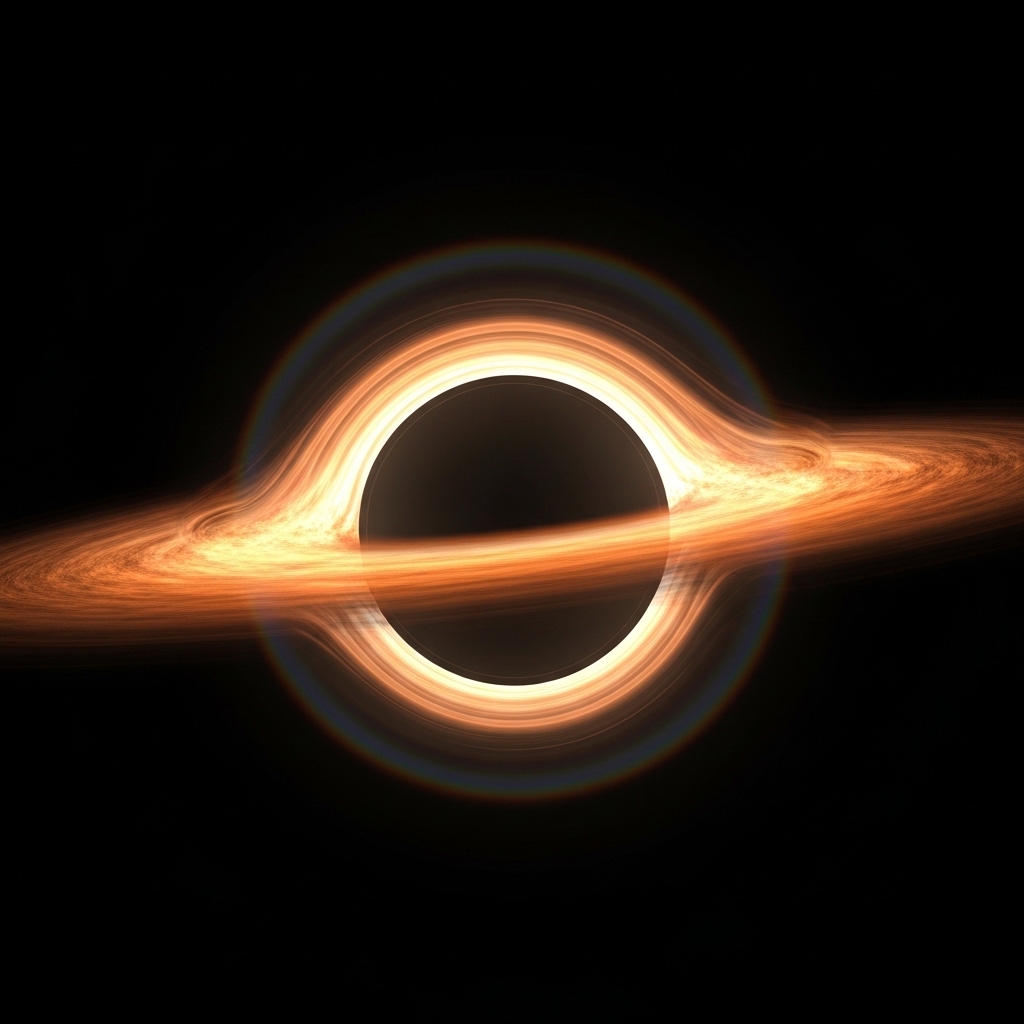
The fundamental connection between gravity and quantum information receives fresh scrutiny in new research exploring the role of holographic central charge in black hole physics, a concept central to the Anti-de Sitter/Conformal Field Theory correspondence. Yahya Ladghami and Taoufik Ouali, from Mohammed I University in Morocco, alongside their colleagues, demonstrate how this central charge dictates the behaviour of black holes and their relationship to information stored on the boundary of spacetime. The team reveals that a large central charge aligns with classical black hole behaviour, while a smaller charge introduces quantum corrections, influencing stability and entropy, and ultimately impacting the long-standing information loss paradox. By applying the island formula, they successfully recover the Page curve, showing how unitarity is restored during black hole evaporation, with the central charge directly influencing the rate of entanglement entropy change and providing a crucial link between quantum field theory and the thermodynamics of black holes.
The investigation establishes a correspondence between the large central charge of the boundary conformal field theory and classical gravity, while a small central charge corresponds to quantum gravity as described by Loop Quantum Gravity. Furthermore, the thermodynamic behaviour of AdS-Schwarzschild black holes is studied for both large and small central charges, revealing distinct characteristics dependent on the boundary central charge.
Black Hole Entropy and Information Paradox Studies
This work explores connections between black hole physics, quantum gravity, and the information paradox, utilizing the AdS/CFT correspondence as a key tool. A significant focus lies on understanding black hole entropy, the nature of their horizons, and potential resolutions to the information loss paradox, including concepts like firewalls, the ER=EPR proposal, and the island formula. The foundational work of Hawking, Bekenstein, and Bardeen, establishing the concept of black hole entropy and temperature, serves as a basis for this research. Scientists employ the AdS/CFT correspondence to study black holes non-perturbatively, mapping problems in quantum gravity to more tractable problems in quantum field theory.
Loop Quantum Gravity is also considered as an alternative approach to quantum gravity alongside string theory. Recent research focuses on applying the island formula to various black hole scenarios and exploring its implications for the information paradox, alongside investigations into corrections to black hole thermodynamics and black holes in modified gravity theories. The research demonstrates that a large central charge in the boundary theory corresponds to classical gravity, while a small central charge describes a regime governed by loop quantum gravity. This work rigorously explores the thermodynamic behavior of AdS-Schwarzschild black holes under both these conditions. Experiments reveal that classical AdS-Schwarzschild black holes, arising from large central charges, exhibit two distinct phases: unstable small black holes and stable large black holes.
Conversely, black holes formed with small central charges are consistently stable, and their entropy is demonstrably smaller than that of their classical counterparts. The team calculated the Hawking temperature, demonstrating how the central charge influences the thermal properties of the black hole. To investigate the information loss paradox, scientists employed the island formula to reconstruct the Page curve, a key indicator of unitarity in black hole evaporation. Results demonstrate that before the Page time, the entanglement entropy of Hawking radiation increases linearly with time, with the slope directly determined by the central charge of the boundary theory.
After the Page time, an “island” emerges within the black hole, effectively restoring unitarity and yielding a constant entropy consistent with the Page curve, with a logarithmic correction related to the boundary central charge. The study details the form of the AdS-Schwarzschild black hole solution in loop quantum gravity, incorporating quantum gravity corrections proportional to a parameter influenced by the central charge. These findings deliver a crucial framework for understanding the interplay between quantum gravity, black hole thermodynamics, and the holographic principle.
🗞 Holographic Central Charge Effects on Black Hole Thermodynamics and Quantum Information
🧠 ArXiv: https://arxiv.org/abs/2512.24808