The representation of complex systems as graphs underpins numerous fields, from social network analysis to materials science, necessitating robust methods for processing the inherent complexities of such data. Recent research explores the potential of quantum graph recurrent neural networks (QGRNNs), a computational approach leveraging principles of quantum mechanics to model dynamics on graph-structured data, to address challenges in classical data processing. Jawaher Kaldari and Saif Al-Kuwari, working independently, present a study detailed in their article, “Feature Prediction in Quantum Graph Recurrent Neural Networks with Applications in Information Hiding”, which demonstrates the efficacy of QGRNNs in reconstructing node features within classical datasets, achieving high accuracy and enabling near-perfect classification. Their work extends beyond feature extraction, proposing a novel information hiding technique where messages are embedded within a graph’s structure and retrieved with demonstrated robustness even as message complexity increases, suggesting potential applications in secure communication and data privacy.
Quantum Graph Recurrent Neural Networks (QGRNNs) represent a developing computational architecture that combines the strengths of graph neural networks with principles from quantum computing, offering a new approach to data processing. Researchers currently explore these networks for processing classical, graph-structured data, with a focus on node feature reconstruction and secure information hiding, potentially yielding improved performance and privacy. This innovative approach establishes a pathway towards advanced data analysis and secure communication protocols, utilising the unique capabilities of quantum mechanics to address limitations inherent in classical computation.
The research details a novel QGRNN, a computational architecture integrating graph neural networks with quantum computing principles. It processes graph-structured data by representing the graph’s structure using the Ising model, a mathematical framework originating in statistical mechanics that describes interacting spins on a lattice. This allows the network to leverage quantum phenomena for information processing. The QGRNN reconstructs node features within classical datasets with high accuracy, achieving near-perfect classification performance, demonstrating its capacity for feature extraction from complex relational data.
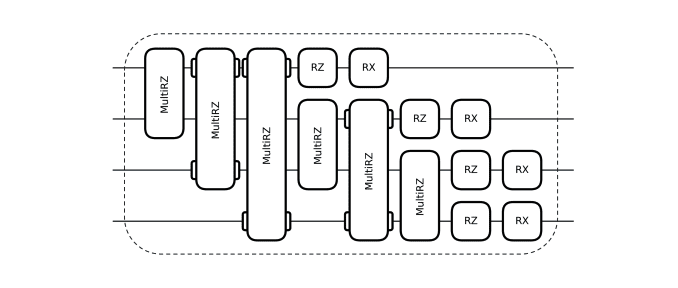
The core innovation lies in leveraging quantum techniques, including quantum walks, the Ising model, quantum kernels, the swap test, and the Quantum Approximate Optimisation Algorithm (QAOA), within a recurrent neural network designed to operate on graph data. The Ising model, originally developed to describe ferromagnetism, serves as a crucial component in representing the connections and states of nodes within the graph, allowing the network to effectively capture and process complex relationships. Quantum walks, a quantum mechanical analogue of random walks, enable efficient exploration of the graph structure. Quantum kernels, derived from quantum states, provide a means of measuring similarity between data points in a high-dimensional quantum feature space. The swap test, a quantum algorithm, assesses the overlap between two quantum states, and QAOA, a hybrid quantum-classical algorithm, optimises solutions to combinatorial problems. Researchers actively investigate these techniques to enhance the network’s performance and scalability.
Furthermore, the study introduces a steganographic technique based on QGRNNs, enabling the embedding of messages within a graph structure, offering a new approach to secure communication. Retrieval accuracy remains high even with increasing dictionary sizes and message lengths, indicating the scalability and robustness of the approach. The network effectively encodes secrets within the quantum domain, offering a potential pathway for privacy-preserving computations and secure communication.
These findings demonstrate the viability of QGRNNs for processing classical data and performing secure communication, contributing to the growing field of quantum machine learning and offering a pathway towards enhanced feature extraction, privacy-preserving computations, and advanced steganographic techniques.
Researchers actively explore future directions, including developing more efficient quantum algorithms and exploring the potential of QGRNNs for other applications, such as drug discovery and materials science. They also investigate methods for scaling up QGRNNs to handle larger and more complex datasets, paving the way for real-world applications. The ongoing research promises to unlock the full potential of QGRNNs and establish them as a powerful tool for data analysis and secure communication.
👉 More information
🗞 Feature Prediction in Quantum Graph Recurrent Neural Networks with Applications in Information Hiding
🧠 DOI: https://doi.org/10.48550/arXiv.2506.23144