Quantum computing relies on manipulating qubits with incredibly precise timing, and researchers continually seek ways to perform these operations faster, a challenge complicated by the inherent fragility of quantum states. Deniz Türkpençe and Selçuk Çakmak, from Samsun University, alongside their colleagues, now demonstrate a method for executing single-qubit gates at speeds previously thought unattainable. Their work explores driving these gates in a ‘diabatic’ regime, moving beyond the standard approach and achieving comparable accuracy with significantly shorter control pulses. This breakthrough offers a promising pathway towards building faster, more efficient quantum processors, potentially reducing the overall complexity required for fault-tolerant quantum computation and accelerating progress in the field.
The choice of drive frequency and other control parameters directly determines the duration of quantum gate operations. Because current devices remain too noisy to reach fault tolerance, reducing gate durations, and thereby the overall circuit depth, is of critical importance. This work presents a model of single qubit gate execution in both the adiabatic regime, where standard approximations hold true, and the diabatic regime, where these approximations no longer apply. Using parameters representative of superconducting qubits, the researchers investigate how gates can be driven at durations well below conventional timescales, and they examine the associated limitations and performance trade-offs.
Fast Qubit Control And Pulse Optimisation
Scientists are exploring the limits of controlling quantum systems, specifically superconducting qubits, by using extremely short pulses of electromagnetic radiation. The research delves into the theoretical underpinnings of these fast controls, the practical limitations imposed by the physics of the qubits and control hardware, and potential strategies to overcome these limitations. The work examines fast quantum control, where pulses potentially approaching the femtosecond timescale are used to manipulate qubit states, allowing for more complex quantum operations within a given time frame. Scientists contrast adiabatic, slow and gradual control, with non-adiabatic, fast and abrupt control, noting that while adiabatic control is easier to implement, non-adiabatic control is faster but requires careful consideration of the system’s dynamics to avoid errors. Pulse shaping, the design of pulses that selectively excite specific transitions in the qubit, is also crucial, minimizing unwanted effects. The research considers fundamental concepts like Bloch equations and Rabi oscillations, used to describe the evolution of a qubit’s state under an electromagnetic field, and addresses decoherence, the loss of quantum information due to environmental interactions, suggesting fast control may mitigate these effects.
Faster Quantum Gates With Shorter Pulses
Scientists have achieved significant progress in the development of faster quantum logic gates, demonstrating the potential to overcome limitations in current quantum computing technology. This work focuses on precisely controlling single-qubit gates, exploring how ultrashort control pulses can dramatically reduce gate operation times without sacrificing accuracy. Experiments reveal that by driving gates with pulses significantly shorter than previously thought possible, comparable fidelities can be maintained. Specifically, the team investigated scenarios using parameters representative of superconducting qubits, and demonstrated that ultrashort pulses in the diabatic regime can achieve fidelities comparable to those obtained under standard conditions.
This is particularly important because current superconducting quantum computers have already reached single-qubit logic gate fidelities of 0. 999, and two-qubit gate fidelities of 0. 995, indicating that further improvements in fidelity are less critical than reducing gate duration. This research delivers a pathway to building more efficient quantum computers by minimizing the impact of noise and decoherence, which are major obstacles to applying quantum computers to real-world problems.
Diabatic Gates Achieve High Fidelity Performance
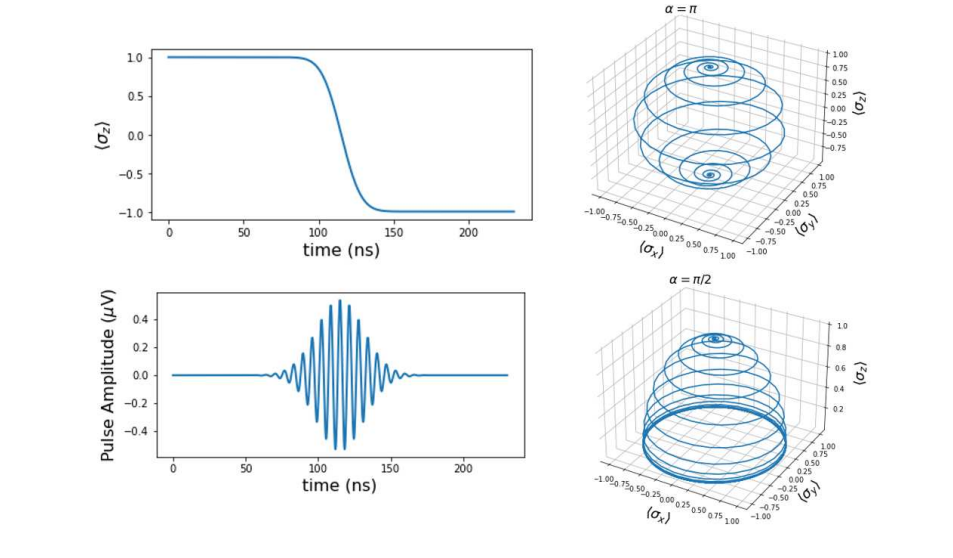
This work presents a detailed investigation into the dynamics of quantum systems driven by classical fields, exploring both adiabatic and diabatic control regimes. Simulations demonstrate that ultrashort, high-amplitude pulses in the diabatic regime can achieve fidelities exceeding 99. 9%, comparable to those obtained under standard adiabatic conditions. This finding suggests a pathway to significantly reduce quantum logic gate realization times, potentially by orders of magnitude, in current noisy intermediate-scale quantum computers. The study also highlights limitations inherent in the transmon qubit architecture when subjected to these short, strong fields. Researchers observed that the transmon’s limited anharmonicity presents challenges for implementing logic gates with ultrashort pulse areas, suggesting that exploring alternative qubit architectures, such as the flux qubit, which offers greater anharmonicity, may prove beneficial. This research provides valuable insights into optimizing quantum control techniques and offers a promising route towards building faster and more efficient quantum computers.
🗞 Ultrafast Single-Qubit Gates in the Diabatic Regime
🧠 ArXiv: https://arxiv.org/abs/2509.23467