

The Eigenstate Thermalization Hypothesis (ETH) seeks to explain how statistical mechanics arises in isolated quantum systems, and recent work has focused on understanding the behaviour of physical properties within the system’s energy levels. Elisa Vallini from the University of Cologne, Laura Foini from the CNRS, and Silvia Pappalardi, also from the University of Cologne, and their colleagues, now refine this hypothesis by investigating the impact of local rotational invariance, a property stemming from the statistical behaviour of the system under small changes. Employing tools from free probability, the team derives analytical predictions for subtle corrections to how these properties correlate, offering a more precise characterisation of the ETH ansatz. This advancement not only improves our theoretical understanding of thermalisation in quantum systems, but also establishes a clear link between statistical properties and the empirical averages commonly used in studying these complex systems, validated through numerical simulations.
Floquet System Matrix Element Verification
Scientists rigorously tested a theoretical model describing the behavior of periodically driven quantum systems, known as Floquet systems. The research focused on calculating and analyzing matrix elements, essential for understanding the system’s evolution over time. The team performed extensive numerical simulations, including systems with inherent randomness, to validate the model’s predictions, averaging results over many configurations to ensure statistical accuracy. The researchers employed a smoothing technique to improve the precision of their calculations and carefully analyzed how results changed with system size.
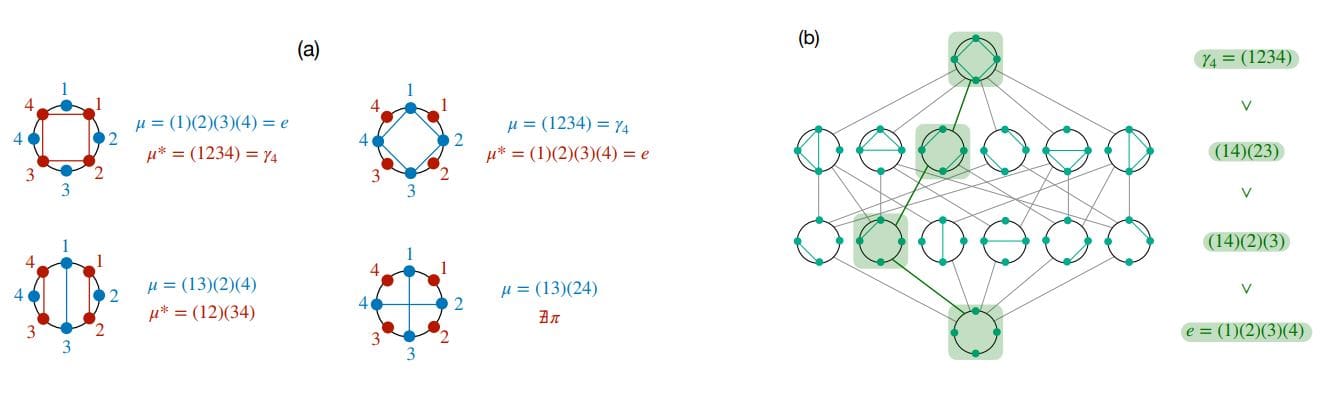
Comparisons between simulations and theoretical predictions confirmed the model’s validity, revealing predictable factorization behavior in the matrix elements, simplifying analysis. The study also demonstrated how disorder affects matrix elements, altering their scaling laws and factorization properties, with observed differences in proportionality factors between systems with different symmetries, suggesting symmetry-breaking effects. The simulations produced detailed data, visualized through numerous plots, showcasing the relationship between matrix elements and system parameters. Building on recent advances in full ETH, which considers complex interactions, the team utilized tools from free probability theory to explore the implications of local rotational invariance. This approach allows for quantitative predictions and analytical characterization of correlations between matrix elements, refining the existing ETH framework. The researchers employed a unique technique involving the analysis of partitions on a lattice, identifying partitions at a given distance to determine subleading contributions.
They mapped relationships between products of matrix elements and their corresponding partitions, utilizing the lattice structure to analyze relevant configurations. To validate their analytical predictions, scientists performed numerical simulations, comparing the results with theoretical calculations. The study demonstrated that subleading contributions can be understood as leading contributions from configurations with one additional distinct index, effectively simplifying the analysis. Scientists explored how statistical mechanics emerges in isolated systems by focusing on the behavior of matrix elements of physical observables within the energy eigenbasis, developing analytical predictions for subleading corrections to matrix-element correlations, thereby improving the precision of the ETH framework. Experiments revealed that the statistical properties of matrix elements under random basis changes are directly linked to empirical averages over energy windows, a crucial connection for understanding complex systems. The team validated these analytical predictions through numerical simulations performed on non-integrable Floquet systems, demonstrating strong agreement between theory and observation.
The study introduces toy models to analyze rotational invariance, beginning with a global model exhibiting rotational invariance across the entire system. Scientists derived closed formulas for leading and subleading contributions, expressed in terms of free cumulants on a lattice of non-crossing partitions. Further refinement involved a local model incorporating local rotational invariance, achieved by dividing the energy range into disjoint intervals, allowing for improved formulas incorporating energy dependence. Scientists have explored the behaviour of matrix elements of physical observables within the energy eigenbasis, building on recent developments in ‘full ETH’ which accounts for complex, multi-point correlations. By employing tools from free probability theory, the team investigated how local rotational invariance, a property emerging from the statistical behaviour of observables under small changes to the system’s Hamiltonian, influences these matrix elements. The work delivers analytical predictions for subleading corrections to matrix element correlations, refining the existing ETH framework. Crucially, the analysis establishes a connection between the statistical properties of matrix elements under random basis changes and the empirical averages commonly used in numerical simulations of these systems, confirmed through numerical simulations in non-integrable Floquet systems. The authors acknowledge that their model relies on certain approximations concerning the degree of locality in the rotational invariance, noting that extending the analysis to explore more complex interactions and many-body systems represents a natural direction for future research, potentially investigating implications for systems with stronger disorder or longer-range interactions.
👉 More information
🗞 Refinements of the Eigenstate Thermalization Hypothesis under Local Rotational Invariance via Free Probability
🧠 ArXiv: https://arxiv.org/abs/2511.23217


