Researchers at Google Quantum AI have achieved a significant milestone in quantum error correction by demonstrating surface codes on superconducting quantum processors. Fault-tolerant quantum computing requires robust mechanisms to detect and correct errors arising from decoherence and operational noise. Surface codes are widely regarded as one of the most practical solutions due to their high error thresholds and reliance on local interactions, making them well suited for scalable hardware implementations.
Experimental Implementation and Methodology
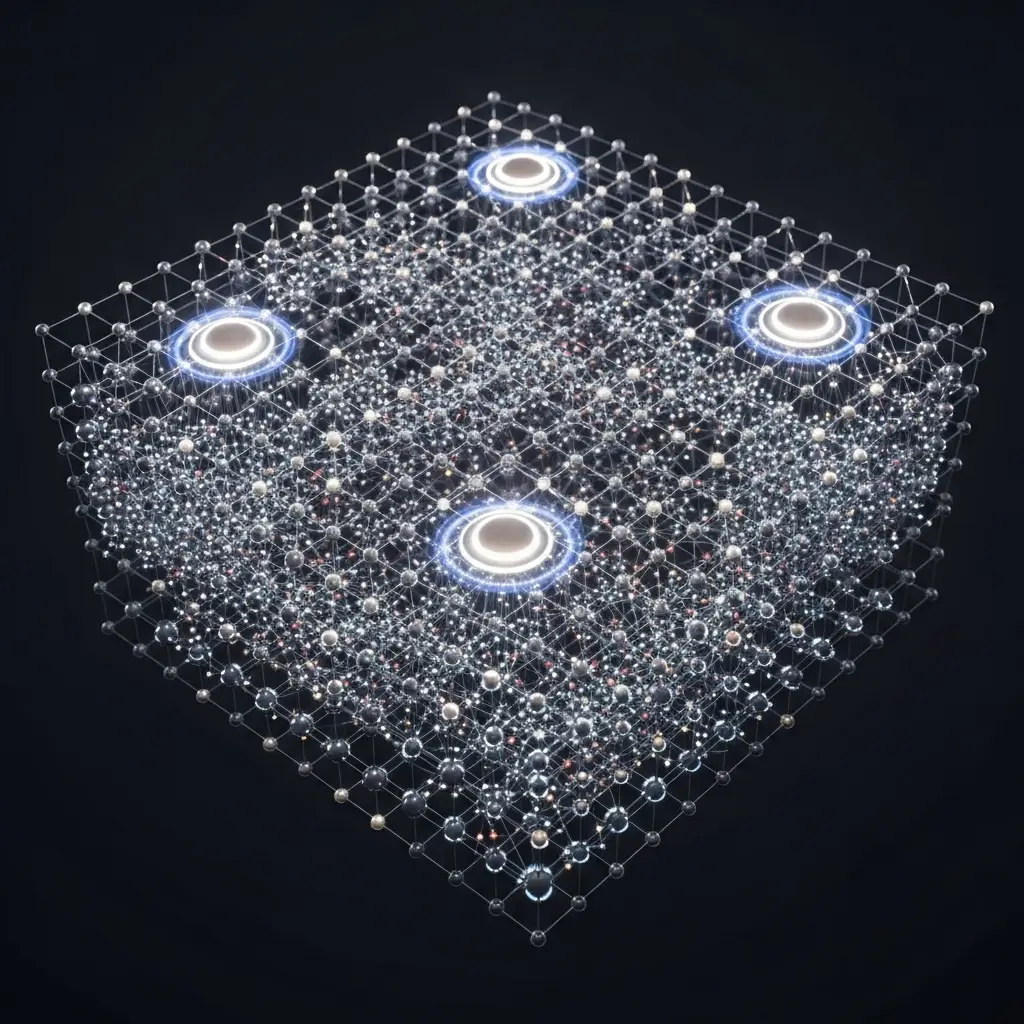
In this study, the team implemented distance-3 surface codes on a 49-qubit superconducting processor, enabling continuous, real-time syndrome extraction. A key innovation was the development of a novel decoding algorithm capable of processing syndrome measurements on microsecond timescales, allowing rapid feedback and correction. High-fidelity two-qubit gates and optimized readout protocols were essential in maintaining coherence while performing the complex measurement cycles required for effective error detection.
Performance and Error Suppression
The experimental results showed logical error rates as low as 10⁻⁴ per correction cycle, significantly below the commonly accepted fault-tolerance threshold of 10⁻³. The system demonstrated coherent storage of logical qubits for more than 100 microseconds, representing a two- to three-orders-of-magnitude improvement in error suppression compared to earlier approaches. These benchmarks confirm the effectiveness of surface codes under realistic operating conditions.
Implications for Fault-Tolerant Quantum Computing
👉 More information
🗞 Quantum Error Correction with Surface Codes on Superconducting Processors
🧠 DOI: https://doi.org/10.48550/arXiv.2507.08774