Quantum imaging represents a potentially revolutionary leap forward for biomedical research, and scientists are now harnessing the unusual properties of light to create images with unprecedented clarity and sensitivity. Vahid Salari, Yingwen Zhang, Sepideh Ahmadi, and colleagues are at the forefront of this exciting field, exploring how quantum phenomena like entanglement and squeezing can overcome the limitations of traditional imaging techniques. Their work details a range of quantum optical methods, including quantum coherence tomography and microscopy, offering the promise of superior resolution, reduced radiation exposure, and improved detection of subtle biological features. This research provides a comprehensive overview of these emerging technologies, paving the way for the development of safer, more precise, and ultimately more effective biomedical tools.
Quantum imaging is emerging as a transformative approach for biomedical applications, applying nonclassical properties of light to overcome fundamental limits of conventional techniques. These methods promise superior spatial resolution, enhanced signal-to-noise ratios, and improved sensitivity for a range of biological investigations, potentially enabling earlier and more accurate diagnoses of disease. The field builds upon decades of research in quantum optics and photonics, now converging with advances in biological imaging and medical diagnostics to create powerful new tools for life science research and clinical practice. This interdisciplinary approach seeks to push the boundaries of what is currently possible in biomedical imaging, offering the potential to reveal previously hidden details of biological systems and improve healthcare outcomes.
Correlated Photons Illuminate Ghost Imaging Techniques
Quantum imaging techniques, such as ghost imaging, utilize correlated photon pairs to form an image by illuminating an object with one photon while detecting its correlated partner. Variations include thermal ghost imaging, which uses classically correlated photons from thermal light sources, and compressive ghost imaging, which combines ghost imaging with compressive sensing for efficient image reconstruction. Snapshot spectral imaging captures spectral information across a range of wavelengths in a single shot, potentially enhanced by quantum correlations, while light field microscopy captures both intensity and direction of light, enabling 3D reconstruction and depth-of-field extension.
Ultra-weak photon emission (UPE) refers to the emission of extremely faint light from biological systems. Research focuses on detecting and characterizing these faint signals, investigating their biological origins, and studying how UPE patterns change over time and correlate with biological processes. UPE holds promise as a non-invasive biomarker for diseases like cancer and Alzheimer’s, and for monitoring biological processes such as metabolic activity and oxidative stress. Key technologies supporting this research include single-photon detectors, correlated photon sources, high-sensitivity cameras, and sophisticated data processing algorithms.
Quantum Imaging Reveals Limits of Entanglement Benefit
Researchers are pioneering quantum imaging techniques with the potential to revolutionize biomedical applications. These approaches leverage nonclassical light properties, such as entanglement and correlations, to achieve superior spatial resolution, enhanced signal-to-noise ratios, improved phase sensitivity, and reduced radiation exposure for delicate biological samples. Investigations into fluorescence-detected two-photon absorption using entangled photon pairs revealed that while higher photon fluxes yielded fluorescence, the conditions approached classical behavior, diminishing any quantum benefit and challenging claims of reduced photodamage. Differential interference microscopy utilizing quantum correlations demonstrated improved sensitivity in phase measurements and higher signal-to-noise ratios, achieved by illuminating sample sections with correlated light beams and analyzing relative phases to reconstruct full images.
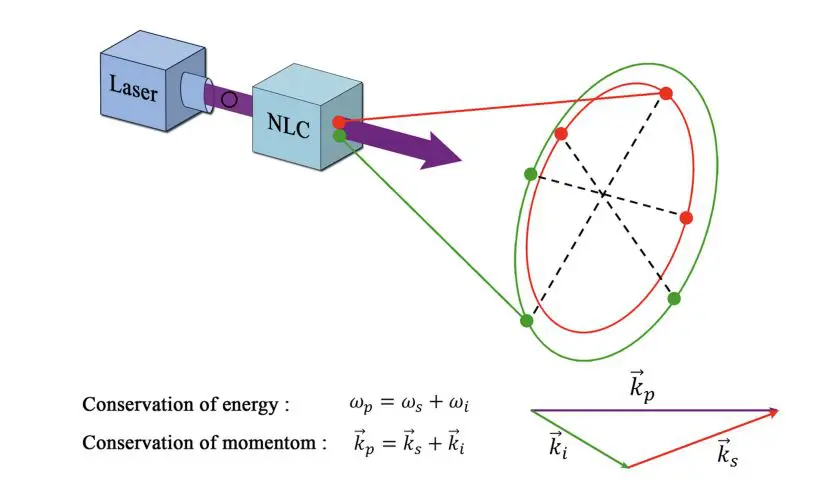
Quantum ghost imaging (GI), based on correlations between entangled photons, employs a single-pixel detector to interrogate an object while a multi-pixel detector records idler photons, forming an image through coincidence detection even without direct interaction between idler photons and the sample. Experiments show that quantum GI delivers higher contrast, visibility, and a wider field-of-view compared to classical GI, while also eliminating a significant featureless background present in classical images, resulting in a lower signal-to-noise ratio for classical GI at equal photon numbers. Furthermore, researchers demonstrated that quantum GI can image through scattering media and operate with nondegenerate photon pairs, optimizing detection by tailoring wavelengths to sample spectral responses. Heralded imaging improves signal-to-noise ratios by recording photons only when a heralding photon is detected, ensuring genuine photon-pair events are registered.
Quantum Imaging Advances Biomedical Research Potential
This review demonstrates the potential of quantum imaging techniques to advance biomedical research, offering possibilities for higher resolution, improved contrast in scattering tissues, and functional imaging with reduced light exposure. Quantum optical coherence tomography, quantum microscopy, ghost imaging, multi-parameter imaging, and ultra-weak photon emission imaging all present advantages over conventional methods, potentially minimizing photodamage to sensitive biological samples and enabling new insights in fields like neuroscience, ophthalmology, and regenerative medicine. Specifically, these quantum approaches offer the potential for enhanced axial resolution, lower light dose imaging, higher contrast, and simultaneous multi-parameter data acquisition without compromising resolution. Despite these promising advancements, significant challenges remain in translating these techniques into widespread clinical application. Environmental noise, decoherence, and low signal-to-noise ratios currently limit performance, alongside the restricted penetration depth of quantum signals within biological tissues. Future research will need to address these limitations to fully realize the benefits of quantum imaging and unlock its potential for impactful biomedical tools, focusing on improving signal acquisition, mitigating noise, and enhancing penetration depth.
🗞 Quantum Optical Techniques for Biomedical Imaging
🧠 ArXiv: https://arxiv.org/abs/2511.03935