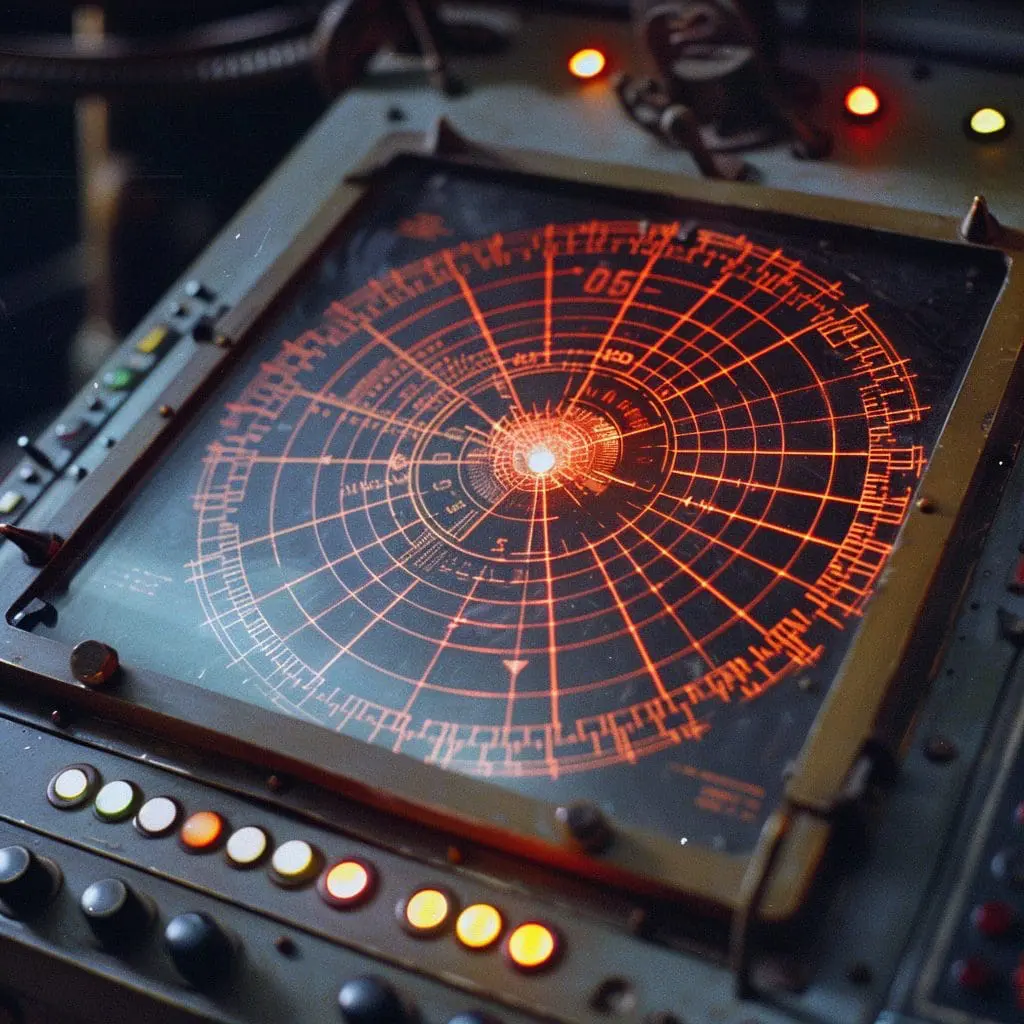
In a recent article, Dr. Michal Krelina from the Czech Technical University in Prague explores the potential of quantum-enhanced radars and electronic warfare. Quantum technology, which harnesses properties like superposition and entanglement at the fundamental level of individual quantum systems, has significant potential in military applications. Quantum-enhanced radars could offer improved sensitivity, particularly in detecting targets with minimal radar cross-sections and weak return signals. Quantum clocks could refine GPS accuracy to the picosecond level. Quantum transducers could improve efficiency in complex signal-processing tasks. Companies like Honeywell and British Telecom are already developing and testing these technologies.
Quantum Technologies: Transforming Radars and Electronic Warfare
Quantum Technology (QT) is a rapidly evolving field that leverages quantum properties such as superposition and entanglement at the fundamental level of individual quantum systems, including electrons, ions, and atoms. This article explores the potential of quantum-enhanced radars and electronic warfare, focusing on their near to mid-term operational viability, particularly in the air and space domains.
Quantum-Enhanced Radars: A New Era in Sensing and Imaging
Quantum-enhanced radars harness the power of quantum properties to improve radar capabilities. Two promising technologies in this area are based on Rydberg atoms and Nitrogen-Vacancy (NV) centres, both applicable for narrow and wideband RF scanning and reception.
Rydberg atoms involve exciting an inner electron to high energy levels using finely-tuned lasers, turning the atom into a highly sensitive electric dipole. This sensitivity allows the atom to respond to specific RF signals based on the electron’s energy level. The external RF field causes the electron to deexcite, emitting a photon in the optical domain for detection.
NV centres in diamonds are artificial defects in a diamond crystal lattice formed by a nitrogen atom adjacent to a vacant lattice site. This structure yields a unique electronic state with an unpaired electron that can be manipulated and read. When a static magnetic field gradient is applied, the NV centres become sensitive to RF fields. Changes in the RF field affect the resonance in fluorescence, which is detectable optically.
These technologies offer high sensitivity to electric (RF) fields, improved resistance to interference and jamming, self-calibration capabilities, and small sensor sizes. They also boast broad tunability and resistance to strong electromagnetic (EM) pulses.
Quantum Clocks: Ultra-High-Precision Timekeeping
Quantum clocks, especially those based on optical lattice and trapped ion technologies, mark a substantial leap over traditional atomic clocks, entering the realm of ultra-high-precision timekeeping. Quantum clocks surpass traditional atomic clocks in precision and accuracy. The quantum logic clock, for instance, achieved a fractional frequency inaccuracy of merely 9.4 × 10⁻¹⁹ as of 2019. This translates to a time deviation of only one second over more than 33 billion years, which is approximately three orders of magnitude more accurate than atomic fountain clocks.
Quantum clocks have two primary applications. Firstly, they are used for the distribution of precise time, such as in Global Navigation Satellite Systems (GNSS) like GPS. Secondly, portable, albeit less precise, quantum clocks are used for local measurements. Such precise timing is crucial for various quantum sensing and measurement systems, ranging from quantum gravimetry and magnetometry to quantum inertial navigation and computing. Moreover, their enhanced precision can significantly benefit classical radar and electronic warfare systems.
Quantum Transducers: Bridging the Gap between Microwave and Optical Signals
Quantum transducers are pivotal in transferring (quantum) information from the microwave domain to the optical regime. These transducers employ various mechanisms, such as electro-optical and magneto-optical devices, opto-mechanical structures, and atoms with appropriate energy level spacings, to facilitate coherent signal conversion.
Converting microwave signals to optical frequencies via quantum transducers offers distinct advantages over traditional microwave signal processing. This conversion enables information mapping from a narrow-bandwidth microwave field to a broader optical frequency range. This capability is crucial for coherent frequency-division multiplexing (FDM), which enables the simultaneous processing of multiple signals within the optical domain rather than relying on several parallel microwave channels.
Conclusion: The Future of Quantum Technologies in Military Applications
Quantum technologies hold immense potential within the military domain, specifically in radars and electronic warfare for air and space operations. Quantum sensors already show high levels of technological readiness, and their application in diverse and challenging military environments appears close. These advancements are not just theoretical; practical demonstrations in real-world scenarios aboard ships, aircraft, and drones highlight the transition of these technologies from laboratory settings to operational fields.
External Link: Click Here For More

See today’s quantum computing news on Quantum Zeitgeist for the latest breakthroughs in qubits, hardware, algorithms, and industry deals.