The increasing reliance on image-based diagnosis in dermatology necessitates substantial, high-quality datasets, a requirement often hampered by issues of class imbalance, patient privacy, and inherent biases within existing collections. Researchers are now exploring the potential of quantum computing to address these challenges, but current quantum image generation techniques typically produce low-resolution, grayscale outputs. A team led by Qingyue Jiao from the University of Notre Dame and Kangyu Zheng from Rensselaer Polytechnic Institute, alongside Yiyu Shi and Zhiding Liang, present a novel approach in their paper, ‘HybridQ: Hybrid Classical-Quantum Generative Adversarial Network for Skin Disease Image Generation’.
Their work details a hybrid classical-quantum generative adversarial network (GAN), a type of machine learning model, that overcomes limitations in quantum image generation by fusing classical and quantum latent spaces, enabling the creation of colour medical images with improved quality and classification performance, and doing so with significantly reduced computational demands.
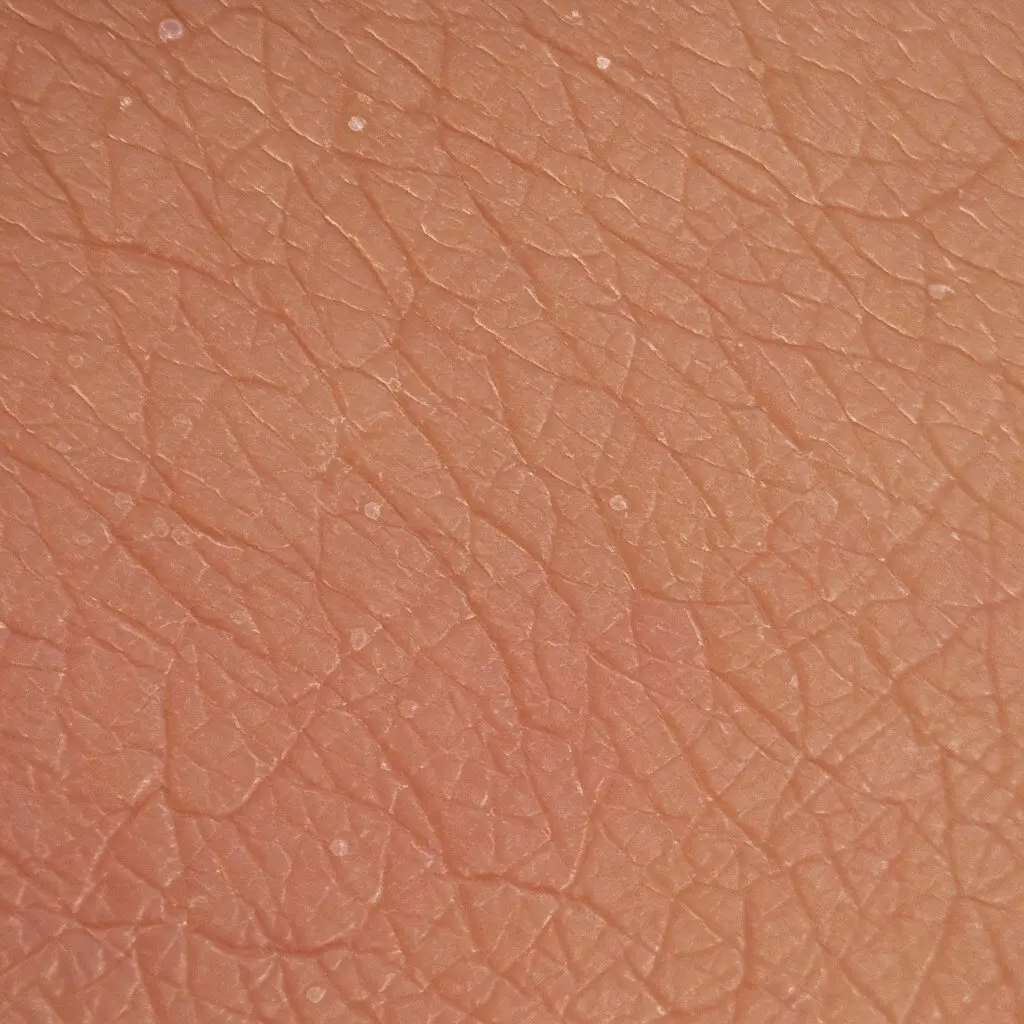
Advancements in computer-assisted diagnosis increasingly depend on robust machine learning models for skin disease detection, yet these models require substantial, high-quality datasets for effective training. Existing skin disease datasets frequently suffer from class imbalance, where some diseases are far more represented than others, raise privacy concerns, and exhibit object bias, meaning the images may not accurately reflect the diversity of real-world presentations. Consequently, effective data augmentation techniques, methods to artificially expand the dataset, are crucial. Recent research presents a novel hybrid classical-quantum generative adversarial network (GAN) designed to overcome limitations of both classical and existing quantum approaches to medical image generation. A GAN consists of two neural networks, a generator which creates new data instances, and a discriminator which evaluates their authenticity.
The study addresses a key challenge in quantum image generation: the production of low-quality, grayscale images. Current quantum image generation techniques often struggle to produce images with the detail and colour necessary for accurate medical diagnosis. Researchers developed a classical-latent space fusion technique, integrating classical data processing with quantum computation, that enables the generation of colour medical images, a significant improvement over current quantum-based methods. This fusion allows the model to leverage the strengths of both classical and quantum computing, resulting in higher-quality images.
The model’s efficiency is particularly noteworthy, as it achieves comparable performance gains to state-of-the-art classical generative models while requiring substantially fewer parameters, the adjustable elements within the model, and training epochs, complete passes through the training dataset. This reduction in computational demand not only accelerates model development but also lowers the barrier to entry for researchers and clinicians with limited computational resources. The ability to train complex models with fewer resources is a significant advantage for wider adoption.
The validation of the model’s robustness on real IBM quantum hardware further solidifies its potential for practical deployment in real-world clinical settings. While quantum computers are still in their early stages of development, demonstrating performance on actual hardware is a crucial step towards clinical translation. The successful integration of classical and quantum computing techniques opens up exciting new avenues for research in medical image analysis.
By leveraging the strengths of both paradigms, researchers can develop more powerful and efficient models that address critical challenges in disease diagnosis and treatment. This work lays a strong foundation for future exploration in this rapidly evolving field, paving the way for more accurate, efficient, and accessible diagnostic tools.
The research team meticulously designed and implemented the hybrid classical-quantum GAN, carefully optimising the fusion strategy between classical and quantum latent spaces. They rigorously evaluated the model’s performance on a comprehensive dataset of skin lesion images, demonstrating its ability to generate realistic and diverse images. The generated images were assessed using established metrics for image quality and realism, confirming their clinical utility.
The findings of this study have significant implications for the field of medical image analysis. The hybrid classical-quantum GAN offers a promising solution to the challenges of data scarcity and computational cost, enabling the development of more accurate and efficient diagnostic tools. The model’s ability to generate realistic colour medical images enhances its clinical utility, facilitating more informed decision-making by healthcare professionals.
The research team plans to investigate further the potential of hybrid classical-quantum models for other medical imaging applications, such as cancer detection and neurological disease diagnosis. They also aim to develop more sophisticated fusion strategies that leverage the unique capabilities of both classical and quantum computing paradigms. This ongoing research promises to unlock new possibilities for medical image analysis and improve patient outcomes.
This study demonstrates the potential of quantum computing to enhance medical image analysis, offering a pathway towards more accurate and efficient diagnostic tools. The hybrid classical-quantum GAN effectively addresses the limitations of traditional quantum methods, generating realistic colour medical images with superior quality. The model’s efficiency and robustness make it a promising candidate for real-world clinical applications.
👉 More information
🗞 HybridQ: Hybrid Classical-Quantum Generative Adversarial Network for Skin Disease Image Generation
🧠 DOI: https://doi.org/10.48550/arXiv.2506.21015