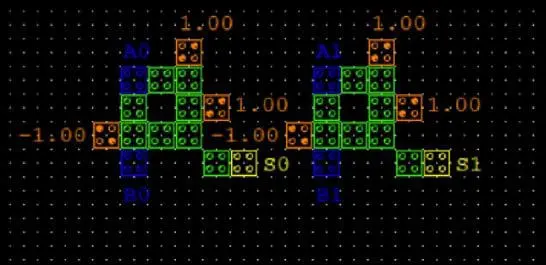
Quantum Dot Cellular Automata (QCA) is emerging as a potential successor to Complementary Metal-Oxide-Semiconductor (CMOS) technology, which has been the backbone of the semiconductor industry for decades. QCA addresses some of CMOS’s major challenges, such as size limitations and power consumption. Researchers from the JSS Academy of Technical Education in Noida, India, have designed a 2-bit Arithmetic Logic Unit (ALU) using QCA technology, demonstrating its potential and setting a benchmark against conventional CMOS designs. This development is a significant step towards overcoming the limitations of CMOS technology and a promising glimpse into the future of circuit design.
What is Quantum Dot Cellular Automata (QCA) and How Does it Work?
Quantum Dot Cellular Automata (QCA) is a revolutionary technology that is stepping into the spotlight as a potential successor to Complementary Metal-Oxide-Semiconductor (CMOS) technology, which has dominated the world of Very Large Scale Integration (VLSI) for the past two decades. QCA employs quadratic cells containing four potential wells situated at the corners, linked by electron tunnel junctions. Each cell accommodates precisely two electrons, which due to their repulsive forces, occupy opposing corners. This yields two possible configurations, one representing binary 0 (low) and the other binary 1 (high).
QCA-based circuits function through four distinct clock phases: Switch, Hold, Release, and Relax. During the Switch phase, neighboring cells influence the polarization of additional electrons within a cell, resulting in the cell acquiring a specific binary value. In the Hold phase, the potential barrier reaches its maximum, closing the tunnel junctions to prevent electron switching and maintaining their polarity. During the Release phase, the potential barrier gradually decreases, prompting the tunnel junctions to open and causing cells to lose their polarity. Finally, during the Relax phase, the potential barrier is minimal and tunnel junctions remain open, resulting in cells having no impact on neighboring cells.
What are the Limitations of CMOS Technology?
While CMOS technology has been the backbone of the semiconductor industry for several decades, it is not without its challenges. As semiconductor technology advances and the demand for smaller, more powerful devices increases, the size limitations of CMOS become a challenge. As components on a chip shrink, quantum effects become more pronounced, leading to issues such as increased leakage currents and reduced reliability.
Power consumption is another critical concern with the miniaturization of transistors. As the size of transistors decreases, the power density increases, leading to higher power consumption and heat generation. This can result in challenges related to cooling and energy efficiency. Moreover, as more transistors are packed onto a chip, managing the heat generated becomes a significant challenge. Excessive heat can degrade the performance and reliability of the components, necessitating advanced cooling solutions.
How Does QCA Address the Limitations of CMOS?
QCA technology addresses some of CMOS’s major pain points like slow switching speeds and doesn’t require additional power sources, making it both efficient and environmentally friendly. This is not just an incremental improvement; it’s a bold leap into the future of circuit design. The proposed QCA-based Arithmetic Logic Unit (ALU) delivers a trifecta of benefits: streamlined circuit design, exceptional space efficiency, and reduced quantum cost—all while keeping performance sharp in terms of latency and area usage.
The 2-bit ALU encompasses a suite of operations: addition, subtraction, multiplication, division, bitwise AND, OR, XOR, and XNOR. The design of this ALU in QCA technology is a testament to the potential of QCA circuits and a significant step towards overcoming the limitations of CMOS technology.
What is the Future of Circuit Design?
The future of circuit design lies in technologies like QCA that offer solutions to the growing challenges of CMOS. As the demand for smaller, more powerful devices continues to grow, technologies that can deliver high performance while addressing issues like power consumption, heat dissipation, and size limitations will be at the forefront.
The development of a 2-bit ALU using QCA technology is a significant milestone in this direction. It not only showcases the potential of QCA circuits but also sets a benchmark against conventional CMOS designs. With its streamlined circuit design, exceptional space efficiency, and reduced quantum cost, the QCA-based ALU is a promising glimpse into the future of circuit design.
What are the Implications of this Research?
The research conducted by Gaurang Tyagi, Sadhana Kumari, Ayushi Ojha, and Shivanshu Nanda from the Department of Electronic and Communication Engineering at JSS Academy of Technical Education in Noida, India, has significant implications for the future of circuit design. Their work on the design of a 2-bit ALU using QCA technology not only demonstrates the potential of QCA circuits but also provides a viable solution to the challenges posed by CMOS technology.
Their research is a significant contribution to the field of electronic and communication engineering, offering a fresh perspective on circuit design and paving the way for future advancements in this area. The successful design of a 2-bit ALU using QCA technology is a testament to the potential of this technology and a significant step towards overcoming the limitations of CMOS technology.
Conclusion
In conclusion, Quantum Dot Cellular Automata (QCA) is a promising technology that offers a fresh solution to the growing challenges of CMOS technology. The successful design of a 2-bit ALU using QCA technology by the team from JSS Academy of Technical Education in Noida, India, is a significant milestone in this direction. It not only showcases the potential of QCA circuits but also sets a benchmark against conventional CMOS designs. With its streamlined circuit design, exceptional space efficiency, and reduced quantum cost, the QCA-based ALU is a promising glimpse into the future of circuit design.
Publication Date: 2024-05-09
Authors: Gaurang Tyagi, Ayushi Ojha and Sachikanta Nanda
Source: International Journal of Advanced Research in Science, Communication and Technology
DOI: https://doi.org/10.48175/ijarsct-18128